


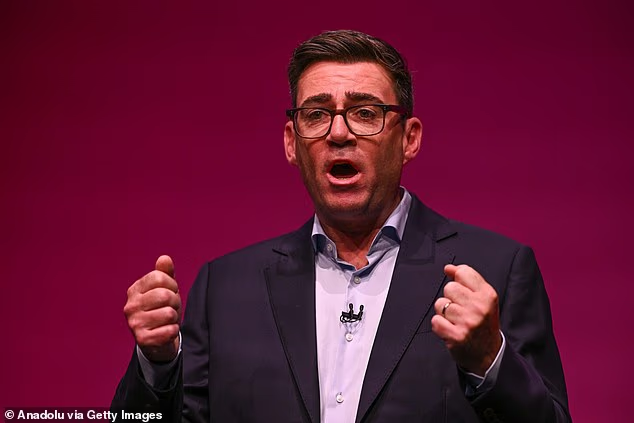
Andy Burnham has acknowledged that Britain is facing an energy crisis this winter, but declined to promise further help for households or rule out a rise in fuel duty at the Budget.
The warning came as energy bills were forecast to increase by a further 16 per cent in January, while motorists face record pump prices amid disruption linked to the situation in the Middle East.
Mr Burnham said a warning from the boss of EDF that the country was heading towards a crisis was not an “overstatement”, describing the outlook as “challenging”.
However, he stopped short of committing to scrap a scheduled increase in fuel duty or guaranteeing additional cost-of-living support when the Budget is delivered on October 28.
Instead, Mr Burnham stressed the limited room for manoeuvre created by the state of the public finances. Inflation, weaker growth and rising debt costs have reduced Chancellor John Healey’s headroom against the Government’s fiscal rules.
Economists believe the Chancellor will need to consider spending cuts or tax rises at the Budget, although reductions in spending would face strong opposition from Labour MPs.
Speaking on BBC Breakfast, Mr Burnham pointed to the removal of 5 per cent VAT from electricity bills until March. The typical saving of £45 has already been more than cancelled out, however.
“I’m considering everything that might help people in very difficult times and I will be honest and say every possible measure is being looked at,” he said.
“The question I’ve got is, ‘how many can I afford?’ What can we do given the state of the public finances?”
He added: “People wouldn’t thank me for making unfunded payments that then cause pressure on mortgages – and we’ve seen that in the past and we’re not going back there.”
Mr Burnham said the Government would work to ease the pressure on households, but argued that longer-term solutions included bringing water under stronger public control, along with action on energy and housing reform.
“I would be the first to say it’s hard – and the long-term answer is to put water under stronger public control – energy, housing reform, those are the long-term answers,” he said.
