


Humanoid robots are moving from science fiction towards commercial use, with Agility Robotics entering the Nasdaq this month, Tesla beginning production of its Optimus machine and OpenAI developing a model designed to control robots.
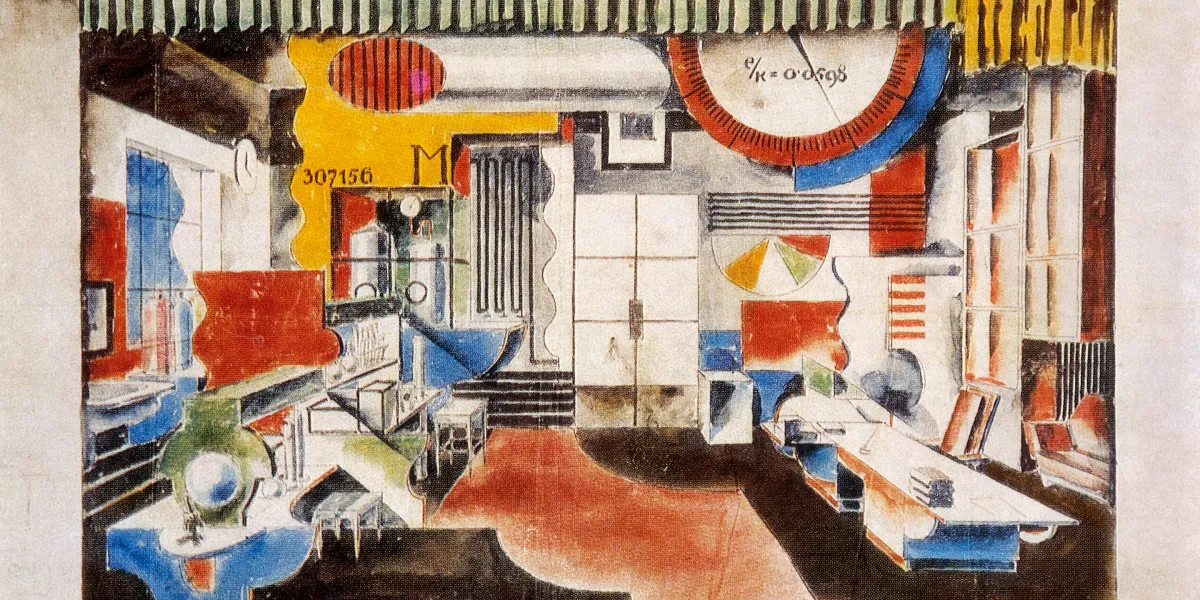
The advances mark a new phase in a century-old debate about automation, first dramatised by Czech playwright Karel Čapek in his 1921 play R.U.R. (Rossum’s Universal Robots). The word “robot” came from the Czech term robota, referring to forced labour owed by a serf to a lord.
Čapek imagined mass-produced workers that looked human but had no wages, rights or independent will. His play presented a promise that continues to underpin the robotics industry: a workforce that does not tire, strike or demand pay.
Agility Robotics, which makes the two-legged Digit, began trading after merging with Churchill Capital Corp XI. The company says it has more than 300 million dollars in committed multi-year orders from customers including Amazon, GXO, Schaeffler and Toyota’s Canadian manufacturing arm.
Tesla has said it has started building Optimus on a former car-production line in Fremont, California. OpenAI, meanwhile, has brought its separate robotics team into its main research operation as its general-purpose models begin controlling robots directly. It is developing a humanoid of its own, with a first demonstration targeted for 2027.
The technology remains at an early stage. Tesla chief executive Elon Musk has described Optimus as “early production”, saying the initial ramp-up was “shallow” and “somewhat bumpy”. He has also acknowledged that parts of the design are still changing, the robot’s hands are not perfected and substantial work remains on the software.
Musk said Tesla may need to build between 10,000 and 20,000 robots simply to generate the training data required by the system. Deliveries outside the company are expected around the end of next year, with full production rates taking “at least a year, maybe a little longer”, he said.
Despite those qualifications, Musk has called Optimus “the biggest product on Earth” and said no rival is close to Tesla in developing a general-purpose humanoid robot. In October 2025, he wrote that “AI and robots will replace all jobs”.
His proposed answer to the resulting loss of wages is a “universal high income” funded by federal payments. The proposal has not explained who would pay for it, and Erica Groshen, a senior economics adviser at Cornell University’s ILR School and a former US Bureau of Labor Statistics commissioner, pointed to a tension between such payments and support for “very low taxes”.
If automation directs more income towards the owners of capital, Groshen said, those businesses would owe society taxes that could be used to compensate people who lose out.
Humanoid robots remain the visible part of a wider automation drive
The most significant changes to employment are not currently being delivered by machines with faces and legs. Industrial automation has long relied on robotic arms, wheeled systems and software, which can be cheaper and more reliable for specific tasks than a general-purpose humanoid.
The first robot to hold a regular industrial job was an arm-like Unimate, installed at a General Motors plant in New Jersey in 1961. It pulled hot die-cast components from a press, carrying out repetitive work without fatigue.
Machines that could walk later became public spectacles. Honda’s ASIMO could bow and climb stairs before being retired in 2022, but it never held a job. For decades, the robots used in factories had no legs, while the robots with legs had no work.
US manufacturing employment fell from about 19.6 million jobs in 1979 to roughly 11.5 million in 2010. Automation contributed to the decline, alongside trade, particularly with China, and increased productivity.
Amazon illustrates the distinction. The company bought Kiva in 2012 and said it had deployed its millionth robot by the middle of 2025, approaching its workforce of about 1.56 million people at the time.
Its warehouse fleet includes mobile machines and robotic arms known as Robin, Cardinal, Sparrow and Vulcan. Amazon says they use computer vision and machine learning to select, sort and store items, while its spokesperson Xavier Van Chau describes them as “the state of the art in physical AI”.
Amazon began testing Agility’s Digit in October 2023, using it to move empty containers. Three years later, it has not announced a wider deployment.
Van Chau said the company had carried out “limited testing” of Digit and that “more research and development will be needed”. Amazon has also invested in robotics through its Amazon Industrial Innovation Fund.
Internal documents have projected that automation could allow Amazon to avoid hiring more than 600,000 US workers by 2033. Van Chau said leaked documents could provide “an incomplete and misleading picture” and appeared to represent the work of one team rather than the company’s overall hiring strategy.
He argued that advanced robotic facilities require 30 per cent more employees in reliability, maintenance and engineering roles. Amazon’s headcount still increased in 2025 to about 1.58 million, although the pace of hiring may be slowing.
Robotics race raises questions over jobs and national borders
China is currently the main manufacturing base for humanoid robots. Chinese companies shipped more than 97 per cent of the world’s humanoids in the first half of 2026, although most of those machines were used for research, education, exhibitions and government data centres rather than production.
About 69 per cent of humanoids went to those uses, down from 83.8 per cent in 2025. The figures suggest that the industry is expanding while still being some distance from replacing large numbers of workers on factory floors.
US authorities have responded by drawing a distinction between robots according to where they were made. On 28 July, the Federal Communications Commission added foreign-produced mobile robots, including humanoids, to its Covered List, preventing new models from receiving US authorisation on national security grounds.
Chase Kaniecki, a Washington-based partner at Cleary Gottlieb, described the measure as “really like an import ban for national security”. He said companies using foreign-made robots or components would need to move much more of their supply chains onshore to qualify.
The policy risks creating separate American and Chinese robotics industries. In Čapek’s play, the owners attempt to prevent their robots from forming alliances by giving workers in different factories different languages. The plan fails when the robots discover a common identity through their shared labour.
Alisa Zhulina, an associate professor of theatre studies at New York University, said Čapek’s robots were essentially serfs. She described the playwright as “more a liberal than a communist”, noting that he opposed communism and fascism rather than rejecting markets or technology outright.
She said the play was also a satire of the industrial obsession with efficiency. A decade before its premiere, Frederick Taylor’s The Principles of Scientific Management had argued for removing waste from every movement on the factory floor.
As assembly lines developed, workers were increasingly treated as inputs to be adjusted to the pace of production. The ambition, Zhulina said, was to make “the worker really efficient and the machine really efficient and merge them together”.
A century later, artificial intelligence is being presented as the system’s mind, while humanoid robots are intended to provide its physical hands.
In March, Melania Trump welcomed Figure AI’s Figure 03 to the White House as her “first American-made humanoid guest”. She predicted that artificial intelligence would move “from our mobile phones to humanoids that deliver utility” and imagined a humanoid tutor called Plato.
The political and corporate enthusiasm echoes the sales pitch made by Domin, the general manager in R.U.R., who claims robots will mean “there will be no poverty”. Musk’s vision of an “age of abundance” follows a similar logic, although the practical timetable for Optimus has repeatedly slipped.
In January, Musk acknowledged that Optimus was not being used in Tesla’s factories “in a material way”. Tesla said it would end Model S and Model X production to make room for the robot at Fremont. Its latest shareholder letter says production has now begun, but the company’s own description remains one of gradual development rather than mass deployment.
The economic risk does not appear in any single company’s accounts. For an individual business, replacing a wage bill with machines may reduce costs and increase output. Across the economy, however, wages are also income and consumer demand.
Economists continue to debate how much lost employment and income could be recovered through cheaper goods and new forms of work. Groshen identifies three possible sources of jobs: those who supply the technology, those who adopt it and those whose work has little to do with it.
Lower prices could leave consumers with more money to spend elsewhere, creating demand in other parts of the economy. But the transition may be held back by differences in timing, geography and skills, as well as by whether workers have a meaningful voice in the process. In some cases, Groshen said, that voice comes from a union.
Čapek did not end R.U.R. with the uprising itself. In the final section, the last surviving human sends two robots that have learnt to love one another into the world as a new Adam and Eve.
The play required the destruction of the old order to make its point. The modern robotics industry is still trying to determine whether the same transformation can be managed without destroying the economic system that gives the machines their value.
