


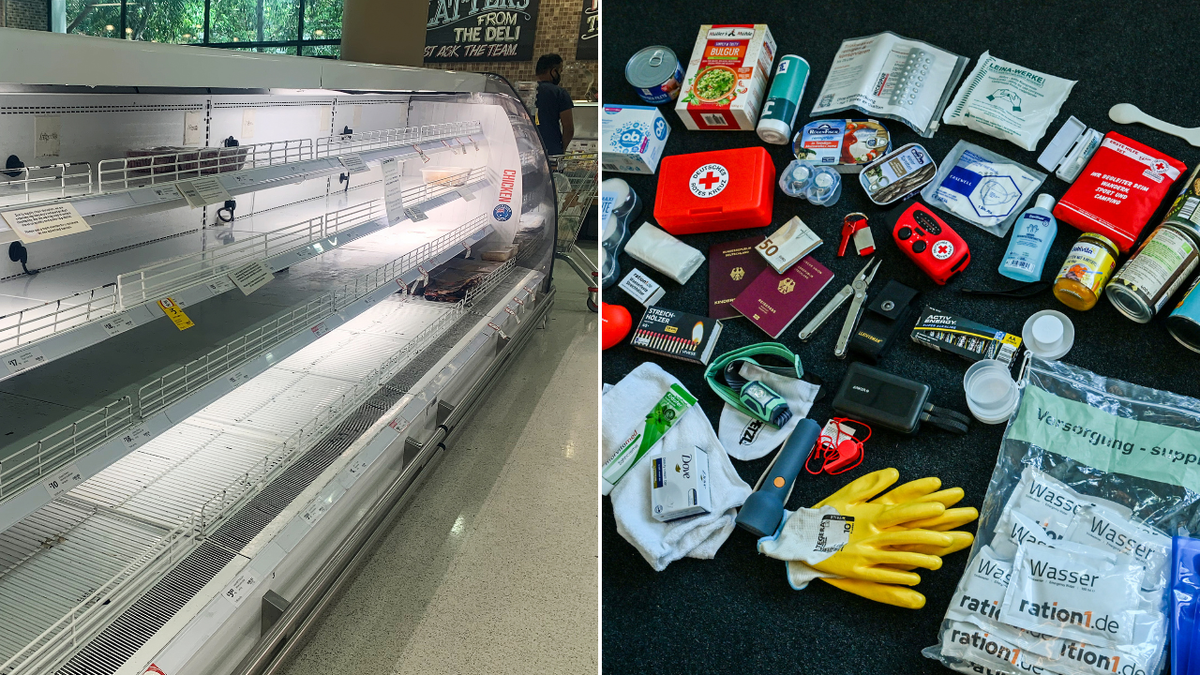
Australians are being urged to prepare for a sudden emergency by keeping three days’ worth of essential supplies and a ready-to-carry “go bag”, as former ADF soldier and survivalist Travis Goldie warns that mental preparation can be just as important as equipment.
The advice comes amid concerns about war, natural disasters and cyber attacks affecting metropolitan and urban areas. A Red Cross poll found that one in three Australians were not confident they would know what to do when disaster struck.
Although the Australian government has not issued the same stockpiling call as countries including the UK, a growing community of so-called preppers is sharing practical advice based on the increasing frequency and intensity of natural disasters.
What Australians should keep in a go bag
Goldie said having food, water and medicine for at least three days was “a great starting place”. Essential documents, including passports and identification, should also be included in case people need to leave their homes quickly.
“You need to stock that really basic stuff that everyone probably already thinks about,” he said.
Households should consider their individual needs, he added, particularly where someone has a condition such as diabetes and relies on regular medication or specific foods.
The supplies should be kept in an easily accessible spare bag so they can be picked up quickly during an evacuation. Goldie cautioned against overpacking, saying people should choose only items they could carry if travelling by vehicle was no longer possible.
One commonly overlooked item is a small FM-AM radio, preferably rechargeable or fitted with a hand crank. Goldie said emergency information in Australia was often broadcast on FM or AM, meaning a radio could remain useful if phone towers were damaged during a natural disaster or conflict.
Some preppers also recommend spare batteries, chargers and a small solar panel for powering electronic devices. Others suggest including face masks for protection from toxic chemicals, although Goldie said the priority was being ready to leave at short notice.
Mental preparation for natural disasters
Goldie’s own experience includes surviving the Ash Wednesday bushfires in 1983, helping residents in Katherine as floodwaters rose in 1998, and living through floods in Brisbane and cyclones in Darwin.
He said people who had mentally prepared were more likely to leave safely when disaster struck. Those living in flood-prone areas, for example, could plan their route to a friend’s house or another safe location before an emergency developed.
“The thing that no natural disaster can take away from you is your mental preparation and any training that you’ve done,” Goldie said.
He encouraged people to learn practical skills before they were needed, whether that involved using a radio or navigating without electronic devices. The advice comes as the government warns about a so-called super El Nino weather event this summer.
