


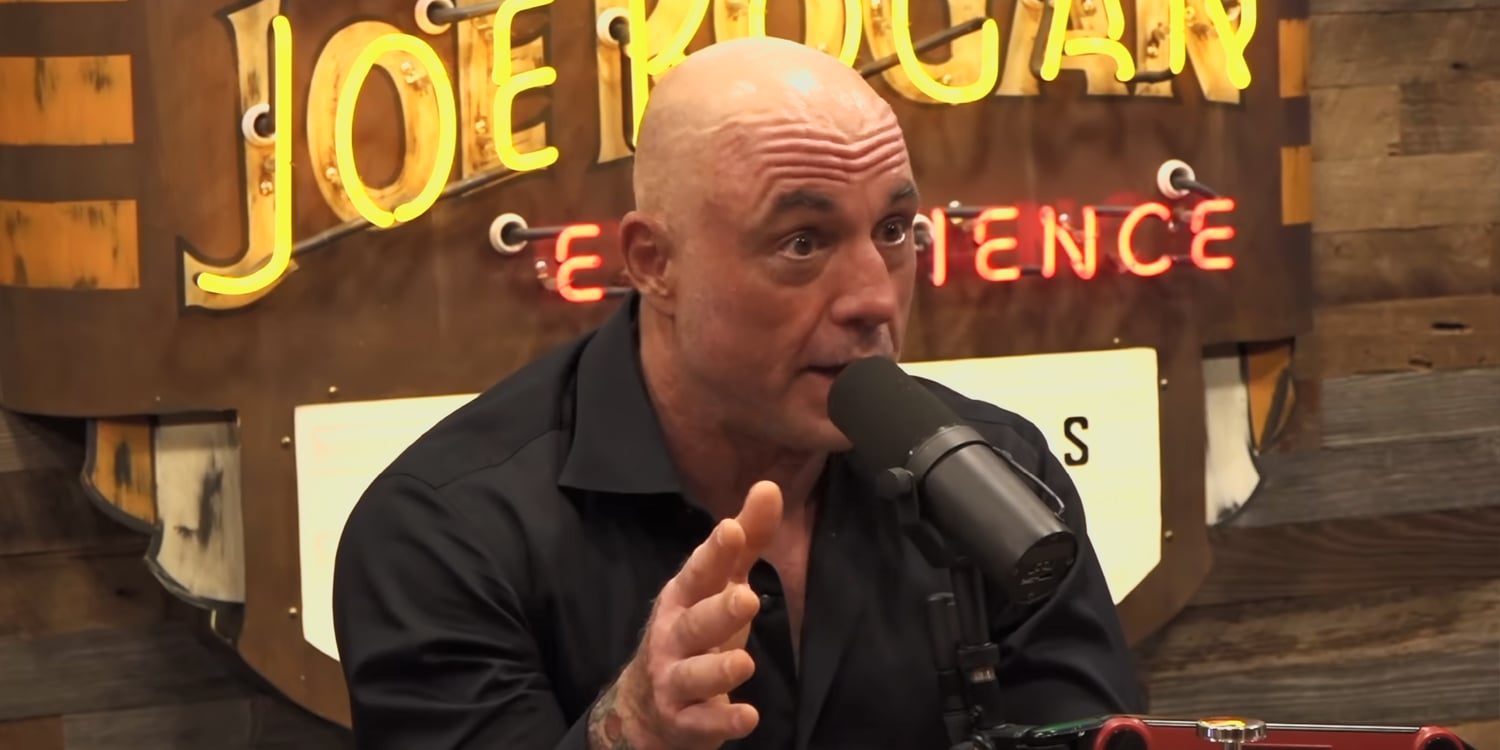
New experimental research published in Public Opinion Quarterly has found that Donald Trump’s influence over Republican voters has limits. The study shows that while his stance on the release of government records linked to Jeffrey Epstein did not erode his sway when he spoke unopposed, counterarguments from conservative media figures Tucker Carlson and Joe Rogan reduced his impact on policy attitudes and lowered his approval ratings.
The work challenges the often-cited notion of an unshakeable “cult of personality” around Trump by suggesting that loyalty within the party may partly reflect a lack of trusted opposition within the same ideological camp.
Political science research has long debated whether partisans simply follow their leader or hold them to account. The authors note that genuine empirical demonstrations of voters punishing leaders for unpopular positions are rare, because few politicians take positions that sharply contradict their supporters on major issues.
Trump has been a defining figure in this debate. Past experiments have shown that Republican voters sometimes align their views with statements attributed to him, regardless of whether they are conservative or liberal. Earlier longitudinal work indicated that Trump’s supporters may even revise their personal moral beliefs to match their perceptions of him.
Scholars contend that, while some observers view Trump’s base as a largely unquestioning audience, criticism from opposing-party politicians often has limited effect. In contrast, dissent from within the conservative movement—particularly from influential media voices—appears to carry more weight in shifting Republicans’ views or their level of support for the president.
To test whether Republican voters would respond to accountability pressures on a high-profile issue, Love Christensen, senior associate lecturer in the Department of Political Science at the University of Gothenburg and an assistant professor at Aarhus University, and Mattias Agerberg, senior lecturer in the same department at Gothenburg, studied the Epstein files controversy.
“There is a widespread belief in both scholarship and the media that most partisans don’t care about policy and blindly follow their party’s lead regardless of what they do or what policies they adopt,” Christensen and Agerberg told PsyPost. “However, this is tricky to establish empirically, because very rarely does a party or politician take a position that is at odds with their own supporters on an important issue.”
The Epstein affair concerns government documents tied to the late financier’s sex-trafficking network, including court filings, flight logs, and lists of associates. After expressing sympathy for releasing the records during the 2024 campaign, Trump reversed course in 2025 and dismissed demands for transparency as a “hoax started by the Democrats.” The reversal clashed with his populist pledge to expose elite corruption and with polling indicating broad Republican support for disclosure in October 2025. It also drew vocal criticism from conservative commentators Rogan and Carlson, who had previously backed Trump publicly yet urged release of the records.
“On the Epstein issue Trump did exactly that,” the researchers explained. “This gave us the opportunity to examine whether Republican partisans, who are often portrayed as having a cult-like devotion to Donald Trump, would follow his lead on an issue which had been intensely discussed in the media and where many Republicans clearly wanted the Epstein files released. This case is important to study because if we found that Republican partisans supported Donald Trump regardless of what position he took on the Epstein files, this would be strong evidence that partisan loyalty limits voters’ ability to hold their leaders accountable.”
The researchers conducted two preregistered survey experiments in September and October 2025, prior to Trump’s late November 2025 decision to release the files, and posted their replication data and documentation publicly. The first experiment was fielded in late October with 2,567 Republican respondents (2,522 in the Epstein analysis) and tested Trump statements either dismissing the disclosure effort as a Democratic “hoax,” endorsing disclosure, or none at all. A parallel experiment tested Trump’s real position on sending military aid to Ukraine.
When Trump’s argument against disclosure appeared unopposed, Republican opinion shifted in the direction of his stance. Relative to a control group, his anti-disclosure argument lowered support for releasing the records by 0.44 on a seven-point scale, while a pro-disclosure argument raised support by 0.16 points. The effect extended beyond policy views: the share opposing disclosure rose from roughly 10 percent under Trump’s pro-disclosure position to 22 percent when he opposed it.
The Ukraine comparison yielded a similar pattern, with Trump’s statements moving policy support by about 0.37 points, indicating that uncontested cue-following was as pronounced on the Epstein issue as on foreign aid.
The second, preregistered experiment conducted in late September 2025 with 5,488 Republicans assigned participants to six conditions: no statement, Trump’s anti-disclosure statement alone, or the anti-disclosure statement paired with one of four pro-disclosure rebuttals attributed to congressional Democrats Hakeem Jeffries and Ro Khanna, congressional Republicans Thomas Massie and James Comer, conservative media hosts Joe Rogan and Tucker Carlson, or an unnamed pro-disclosure voice. The rebuttals framed disclosure as serving the public interest and restoring trust, with the party labels varied accordingly. The Carlson and Rogan rebuttals used direct quotes and sharper language to mimic their on-air personas.
Two outcome measures accompanied the policy question: approval of Trump’s handling of the Epstein issue and overall approval of Trump.
When Trump’s anti-disclosure stance went unchallenged, policy support fell in line with the first experiment, while neither issue-specific nor overall approval moved significantly from the control. Adding a rebuttal from Carlson and Rogan cut Trump’s sway about in half, increasing support for releasing the files by 0.20 points above the unopposed Trump condition. Yet, compared with the control, attitudes still moved toward Trump’s position.
Approval trends followed a similar pattern: Carlson and Rogan’s counterargument reduced approval of Trump’s handling by 0.29 points and trimmed overall approval by 0.15 points, relative to the unopposed statement; against the control group, issue-specific approval fell by 0.35 points and overall approval by 0.22 points. Overall, the Carlson/Rogan pairing reduced Trump’s influence on policy opinion and lowered his standing among Republicans.
Massie and Comer’s rebuttals produced only muted effects: they reduced approval of Trump’s handling by 0.16 points versus the Trump-only condition, but did not produce statistically significant shifts in policy views or overall approval when compared with Trump’s unopposed statement. An unnamed, exploratory rebuttal had mixed results, not curbing Trump’s influence on policy or approval in a statistically significant way, though it did reduce overall approval relative to the control group by about seven percentage points.
The researchers also explored whether opposition to Trump was stronger among less loyal party members. Analysing roughly half the sample who identified as MAGA Republicans separately, they found deeper loyalty on other issues—72 percent accepted the claim that the 2020 election was stolen, compared with 42 percent of other Republicans, and nearly twice as many said Trump should run again. Yet both groups supported releasing the Epstein files at similar rates (82 percent and 85 percent, respectively).
Among MAGA identifiers, Trump followed cues slightly more strongly in both directions when he spoke unopposed, but they punished him more than other Republicans for opposing disclosure. The pairing of Trump’s stance with Carlson and Rogan’s rebuttal produced the steepest declines in both cue-following and approval. The authors suggest MAGA respondents behaved closer to traditional issue voters on the Epstein files, though a smaller subset of unconditional loyalists may persist within the movement.
“One surprising finding was that self-identified MAGA Republicans were, if anything, more willing to hold Trump accountable on the Epstein issue than Republicans overall,” the authors said. “This suggests that even strong identification with the MAGA movement does not necessarily translate into unquestioning loyalty to Trump.”
The researchers also examined more than 5,300 open-ended explanations from participants describing why they believed Trump acted as he did. They classified the responses with an AI language model achieving 98 percent accuracy against a hand-coded subset, applying a statistical adjustment for residual error.
Reading Trump’s uncontested statement increased the share of respondents who dismissed the Epstein controversy as unimportant by 8.4 percentage points over the control group, and the Democratic rebuttal failed to curb that uptake. Pairing Trump’s remarks with the Carlson and Rogan rebuttal produced a statistically reliable reduction in that rise, shrinking it to just 1.3 percentage points above the control group. From the researchers’ perspective, the difference from the control condition was no longer statistically significant at that point.
Why did conservative media commentators succeed where elected lawmakers did not? The authors invoke persuasion theory, arguing that counterarguments carry more weight when voters recognise the messenger and believe the person shares their underlying concerns. In a separate exploratory survey of 537 Republicans conducted in mid-October 2025, name recognition emerged as a key factor: roughly 70 percent of respondents were familiar with Rogan and Carlson, compared with about a third who knew Comer or Massie.
Respondents also rated Rogan and Carlson as sharing voters’ concerns about the Epstein files more than Democratic lawmakers, and somewhat more than Comer and Massie, though not higher than Trump or Republicans overall as a group.
In late November 2025, weeks after the experiments concluded, Trump reversed course again and agreed to release the Epstein records rather than veto disclosure. The authors interpret this as indicating he judged the political cost of blocking release to be too high, a conclusion aligned with their experimental findings about the price of dissent within one’s own camp.
Meanwhile, the study notes that Democratic lawmakers’ failure to dent Trump’s standing aligns with earlier work on reactions to Trump’s federal criminal prosecution, where elite attacks on the prosecution had no statistically significant effect on public attitudes, while defending the prosecution lowered support among non-supporters but heightened hostility toward the prosecutor among Trump’s backers. The researchers view these results as illustrating why dissent from within the conservative ranks can be more impactful than criticism from outside it.
“Even powerful and charismatic politicians can be held accountable by their own supporters, but to do so the partisans need help from a trusted opposition,” Christensen and Agerberg concluded. “In a polarised system such as the US, effective opposition may need to come from within the politician’s own ideological camp.”
“The takeaway is that seemingly unwavering loyalty does not necessarily mean voters are blindly devoted to a leader,” they added. “It may also reflect a lack of credible opposition. When people they trust challenge that leader, even loyal supporters can be willing to hold him accountable.”
The researchers caution that the Carlson and Rogan rebuttal relied on direct quotes and a style meant to resemble their broadcasting personas, while the congressional rebuttals used identical, more formal wording, complicating efforts to isolate the precise influence of the messengers versus the rhetoric. They also note that Epstein offered unusually favourable conditions for accountability, given heavy media coverage, broad Republican support for disclosure, and visible right-wing critics; results may differ on less visible issues where conservative figures remain silent or echo Trump.
Three samples were drawn from opt-in online panels rather than random probability samples, though their demographic makeup aligned with unweighted Republican respondents in the 2024 American National Election Studies. The authors emphasise the need for further research to assess why political opposition can be credible across a wider range of issues and leaders in polarised democracies.
The study, “Cult of Personality or Lack of Competition? Determining Trump’s Sway Over Republican Partisans on a Critical Case,” was authored by Love Christensen and Mattias Agerberg.
