


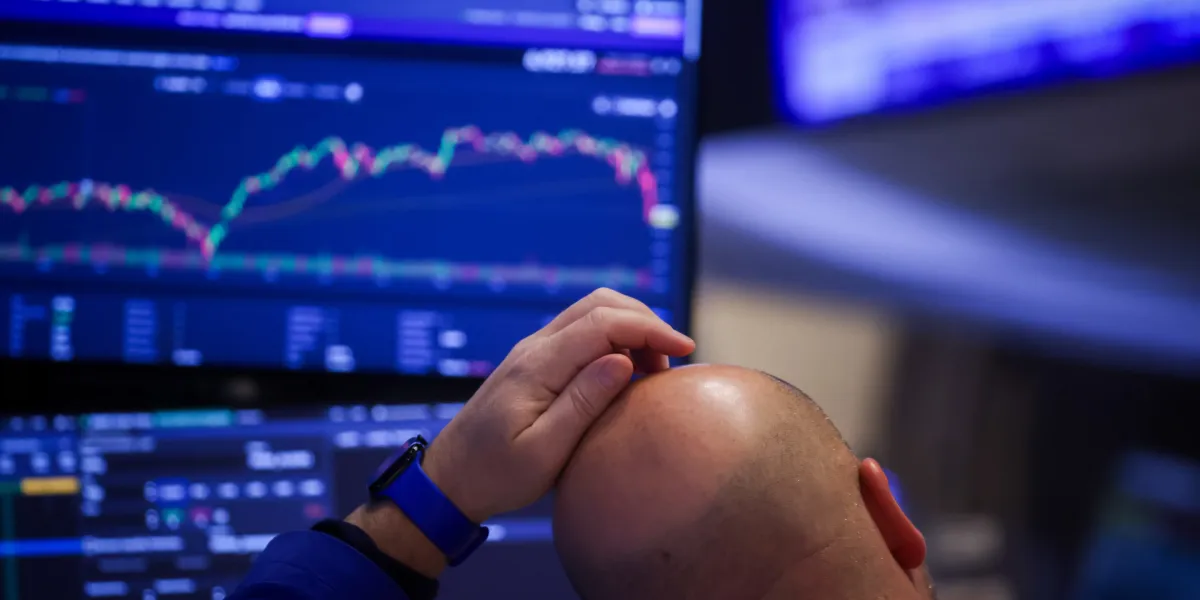
The S&P 500 has entered a correction after falling 3.59% on Friday, extending its losing run to seven sessions and prompting Goldman Sachs strategists to identify three conditions that could signal a market bottom.
The index closed at 6,918.45, down 12% from its record high on October 6. The Nasdaq Composite fell 5.28% and is now more than 2% lower for the year.
Goldman said a recovery could be supported by stronger confidence in artificial intelligence earnings, a more dovish signal from the Federal Reserve or a substantial reduction in investor positioning.
Goldman’s three conditions for an S&P 500 recovery
The sell-off initially centred on technology companies and the AI trade, but has since spread more widely across growth stocks. Goldman said the S&P 500 excluding AI had held up until this week and is now 6% below its high, while its basket of AI stocks has fallen 32% since October 6.
Cyclical stocks have underperformed defensive shares by five percentage points over the past 10 days, suggesting that investor concerns have widened beyond a reassessment of AI valuations.
The first test is whether companies can deliver the earnings growth implied by current valuations. Investor Dan Niles said a price war between Anthropic and OpenAI was weighing on both businesses, with their combined sequential revenue growth falling from 75% in the second quarter to 48% in the third, while combined losses increased from $7.9 billion to about $8.4 billion.
Anthropic was valued at about 40 times trailing sales, according to Reuters, a level one US Bank Asset Management executive said “assumes years of rapid growth”. Goldman has described the AI outlook for 2028 and beyond as “highly uncertain”.
Anthropic’s IPO had briefly appeared to offer support for the wider technology trade. The company raised $93.5 billion after underwriters exercised an option, surpassing SpaceX’s $85.7 billion as the biggest IPO on record.
Its shares rose 17% on Thursday before surrendering most of that gain on Friday to close at $88.91, only modestly above the $83 IPO price. Robert Pavlik of Dakota Wealth said: “Anthropic faded relatively quickly. I don’t think investors believe there’s something inherently wrong with the company… I think they’re just sceptical of this market.”
UBS said the debate had moved from whether AI investment would continue to whether it could generate sufficient revenue and returns for shareholders. Chipmakers Nvidia, Broadcom, Micron and AMD fell by roughly 12% to 14%.
Nvidia suffered its worst day in almost two years, falling 14% on Friday and 22.9% over the week. Its shares are down 47.5% since October 6, representing a loss of $2.7 trillion in market value. The source material also says the US Securities and Exchange Commission is examining the company’s accounting practices.
The second potential catalyst is a change in Federal Reserve policy. Futures markets put the chance of a December rate rise at about 95%, while Goldman economists expect further increases in December and March, taking the federal funds rate to between 4.25% and 4.5%.
A sharp rally in US government bonds on Friday reflected a flight to safety rather than evidence of a central-bank pivot. The 10-year Treasury yield remained near 5%, while Philadelphia Fed president Anna Paulson said the previous day that rates would need to rise again because inflation remained too high.
The final condition is a more decisive reduction in investor exposure to equities. Goldman said hedge funds had already cut their net leverage to its lowest level since April 2025, while the most popular hedge fund holdings, concentrated in AI, had lagged the S&P 500 by 14 percentage points over six months.
However, the bank’s broader sentiment measure remains above average. US equity mutual funds and exchange-traded funds have attracted nearly $170 billion in the fourth quarter so far, and asset managers’ net equity futures positions are in the 82nd percentile of the past decade.
Goldman estimates that the AI boom has lifted S&P 500 earnings 25% above trend, with AI capital spending accounting for “about half” of this year’s earnings growth. The bank’s strategists therefore suggest that positioning may not yet have been reduced enough to mark the end of the decline.
The latest Goldman analysis was prepared before Friday’s fall was fully reflected in its data, with exhibits priced to November 19 and hedge fund figures running to that date. That leaves open the possibility that market conditions have deteriorated further than the assessment indicated.
Wall Street remains divided over whether the correction has further to run. Capital Economics expects additional falls, while Goldman’s projections range from about 5,800 to 8,100 depending on whether confidence in corporate earnings returns.
Historically, the S&P 500 has delivered an average four-month? Wait, source says next three months. Need correct.
