


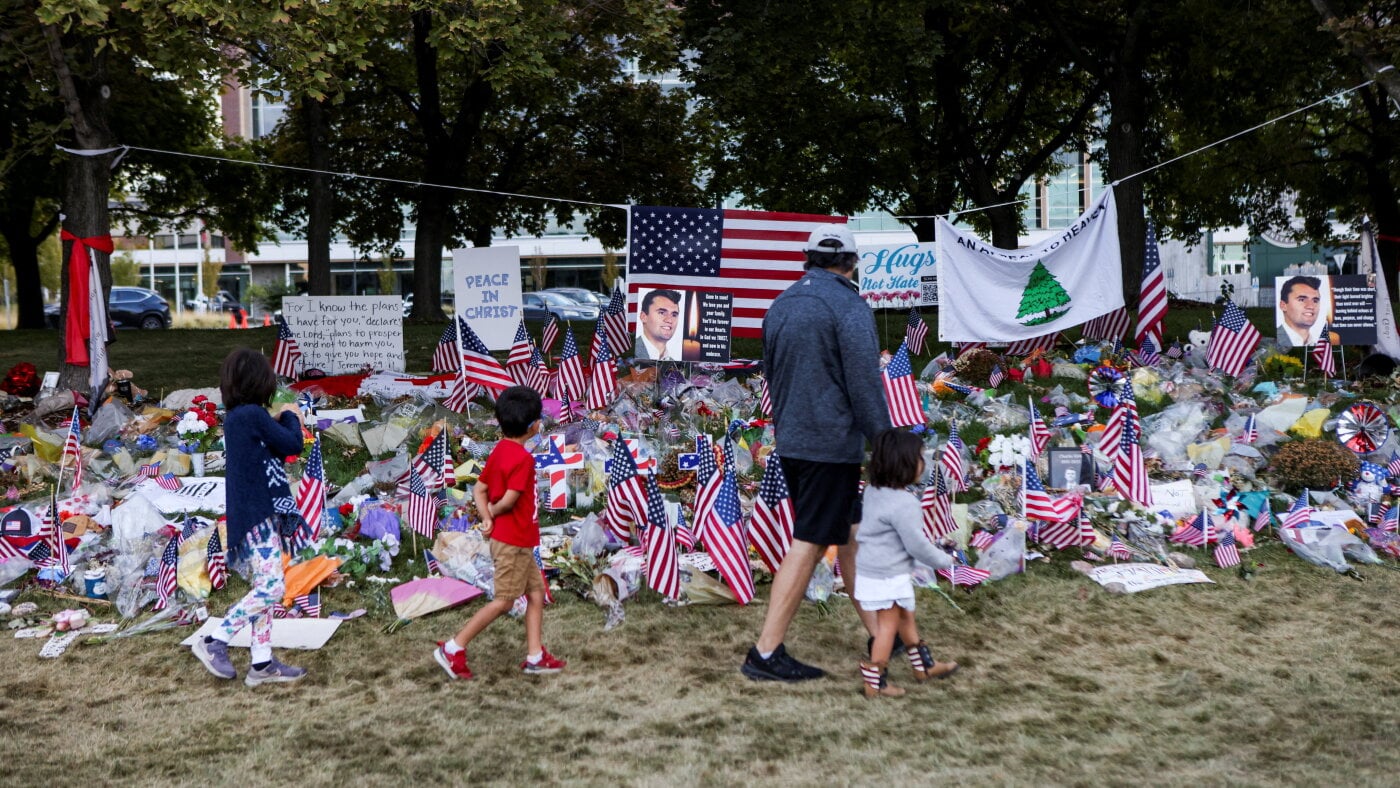
The assassination of Charlie Kirk at Utah Valley University last year triggered an unprecedented wave of online intimidation and doxing, security experts have said, extending political harassment into workplaces, neighbourhoods and private social circles across the United States.
Kirk, the co-founder and then leader of Turning Point USA, was killed while debating a student with progressive political views before an audience of thousands. His death was followed by efforts to identify and punish people whose online comments were seen as unsympathetic to him or his killing.
At the Orem campus, the physical site of the shooting remains unusually quiet. Collin Grannis, who graduated over the summer, said a previously busy courtyard had largely been avoided since the attack.
“It used to be very lively. People doing homework, people taking their food to eat outside, people to hang out,” he said. “And it’s been fully cleared out because people have that association with it.”
Experts who work to prevent online abuse said the response to Kirk’s death marked a significant change in the way personal information could be weaponised. Shauna Dillavou, chief executive of the doxing prevention service Brightlines, said people no longer needed to be targeted by a major social media account to become vulnerable.
“Your neighbour found you or your friends found you,” she said. “A comment in a closed group chat that would get screenshotted and passed up the chain. And that was the big shift: the neighbour-on-neighbour, trusted circle, inner sanctum violence.”
Doxing involves publishing someone’s identifying information without their consent. Dillavou said the tactic had moved from gaming communities and violent extremist groups to high-profile social media campaigns, but that Kirk’s death appeared to remove what remained of the barriers to its widespread use.
She said the consequences could include losing employment or a career, being forced to move home, receiving death threats and facing lawsuits.
Doxing campaign after Charlie Kirk killing
Within hours of Kirk being shot, a website calling itself “Expose Charlie’s Murderers” invited people to submit information about anyone celebrating his death. It described itself as “the largest firing operation in history” and claimed that people posting unsympathetic views were supporting political violence.
Kat Green, founder of the doxing-mitigation organisation Endora, said several websites sought to identify Kirk’s critics. She said they published names, photographs, employers, social media accounts and other details about scores of people.
“It’s a limited pool of people who help with that right now, and everybody was slammed,” Green said. “So we all started working together to see what we could learn about the sites and who was behind them.”
The campaign gained further attention after Vice President Vance hosted Kirk’s podcast in the days after the killing and urged listeners to take action against people celebrating it.
“So when you see someone celebrating Charlie’s murder, call them out – and, hell, call their employer,” Vance said. “We don’t believe in political violence, but we do believe in civility. And there is no civility in the celebration of political assassination.”
Shannon Hiller, executive director of Princeton University’s Bridging Divides Initiative, said the episode demonstrated the unusual speed and reach of the response, with a senior political figure appearing to endorse part of the campaign against Kirk’s critics.
For Dillavou, however, the episode resembled incitement rather than a call for civil debate. She described doxing as “stochastic terrorism”, arguing that the danger lay not simply in personal information being available online but in the possibility that someone would use it to target the individual concerned.
The “Expose Charlie’s Murderers” website was later taken down, although copies remained online. Hiller said the wider use of doxing to suppress opposing political views could become a lasting feature of America’s increasingly hostile political debate.
Green said the wave of harassment continued for months and subsided only after legal challenges and online resistance. Younger internet users, she said, overwhelmed attempts to track targets by turning Charlie Kirk-related material into memes and surreal jokes.
The debate over when, if ever, publishing personal information can be justified remains unresolved. Dillavou and Green distinguished between doxing and identifying people whose conduct might pose a danger to others, but Dillavou warned that tolerating the practice in any setting left everyone exposed.
“Any doxing anywhere is harmful to all of us everywhere,” she said. “We are all vulnerable to it.”
On the Utah Valley University campus, students said the anniversary of Kirk’s killing had remained difficult to discuss. Kevin Haslem, a sophomore, said professors appeared uneasy about addressing the event because even mentioning Kirk could provoke intense reactions.
