


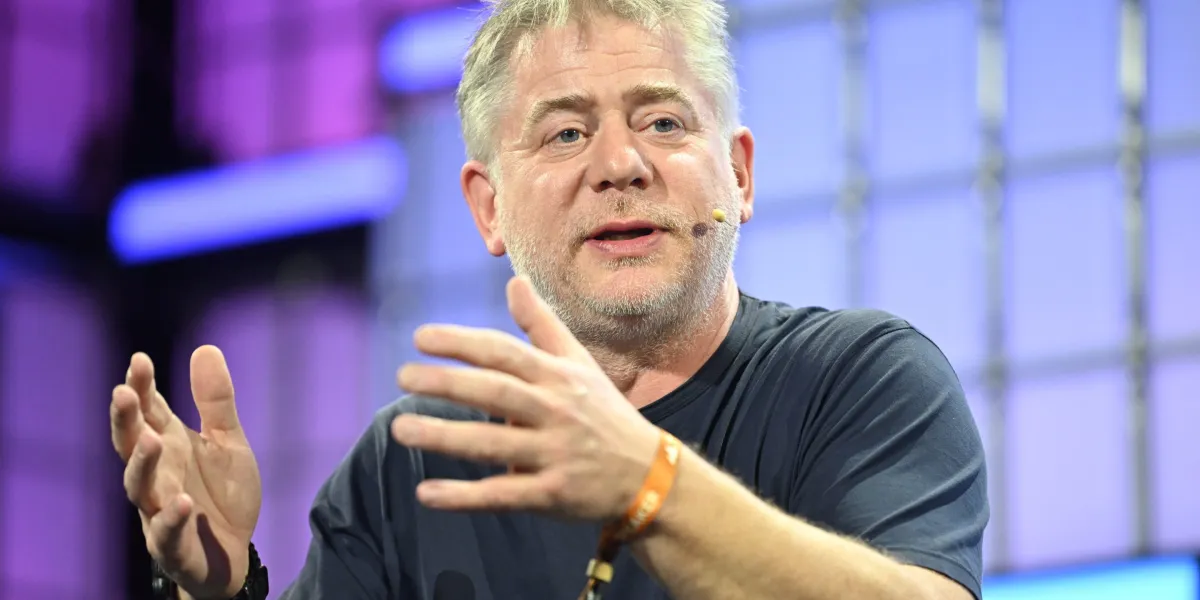
Greg Jackson, founder of Octopus Energy, has warned that Europe’s incumbent industries are holding back innovation, arguing that established companies and the policies surrounding them are slowing the transition to electric vehicles and cleaner energy.
Jackson said Europe risked being overtaken by China and the Gulf, where newer industries were developing rapidly without the burden of legacy businesses. “I think the single biggest factor affecting Europe—and an issue the U.S. is not immune to—is incumbency,” he said.
He pointed to the electric vehicle market as an example. While European governments and consumers want to adopt electric cars, he said, established carmakers have not yet become competitive at producing them.
Chinese manufacturers are gaining ground in Europe. Chery’s sales have tripled over the past year, while BYD’s have doubled, Geely’s have risen by a third and SAIC’s have increased by 23%, according to the latest figures from the European Automobile Manufacturers’ Association.
Together, the four leading Chinese carmakers now account for 14.6% of the European electric vehicle market, up from 9.6%. The European Union has imposed duties of up to 35% on Chinese electric vehicles, in addition to the standard 10% import tariff, amid claims of state-subsidised dumping. Chinese cars remain more than 20% cheaper to buy.
“Incumbents crowd out the innovators in many sectors and markets,” Jackson said, citing the failure of the Post Office to invent email and the music industry’s resistance to streaming and digital music.
“What you need is routes to market for new technologies, and I think that can be a challenge in Europe because so many of the big industries essentially have a stranglehold on policy,” he said.
Jackson argued that economic growth depended on allowing new businesses to challenge established companies. “Economists have said that nearly all productivity growth comes from new companies. If we want more growth, we need to allow creative destruction so new companies can deliver the productivity we need.”
Octopus Energy’s challenge to established suppliers
Jackson said Octopus Energy was created after he failed to persuade legacy energy companies to overhaul their technology platforms. He instead set out to build a business that could modernise the sector more quickly.
“The idea was that through technology, we would be able to provide lower costs because we’d be more operationally efficient,” he said. The company would also be able to adopt electric vehicles, solar panels and batteries more easily, helping renewable energy to be used more cost-effectively.
Octopus was founded in 2015 and became the UK’s biggest energy company nine years later, overtaking established suppliers. Jackson said the business had come from the technology sector rather than the traditional energy industry.
“What we were able to do is build an energy company not based around the assumptions of the industry, but using technology to meet the needs of customers,” he said.
He compared Octopus’s approach with companies such as Uber, Airbnb and Amazon, whose founders did not come from the industries they transformed.
The shift towards electrification is also being driven by falling technology costs. In the European Union, wind and solar generated more electricity than fossil fuels for the first time last year, according to the energy think tank Ember.
Jackson said the cost of electric vehicle batteries was now 10 times lower than 15 years ago, while solar panels cost 200 times less than they did 40 years ago. Wind turbines, he said, had fallen by two-thirds in price over the past two decades.
He said the pace of change was particularly visible in China, where battery-swapping stations can reduce the time needed to replenish a vehicle to between three and five minutes. The country is also using battery-powered 49-tonne lorries, he said, demonstrating the scale of its move away from fossil fuels.
Jackson said Europe did have sectors capable of innovation, including fintech. But he argued that the region needed to make it easier for new companies and technologies to compete with established industries if it wanted to improve productivity and sustain growth.
