


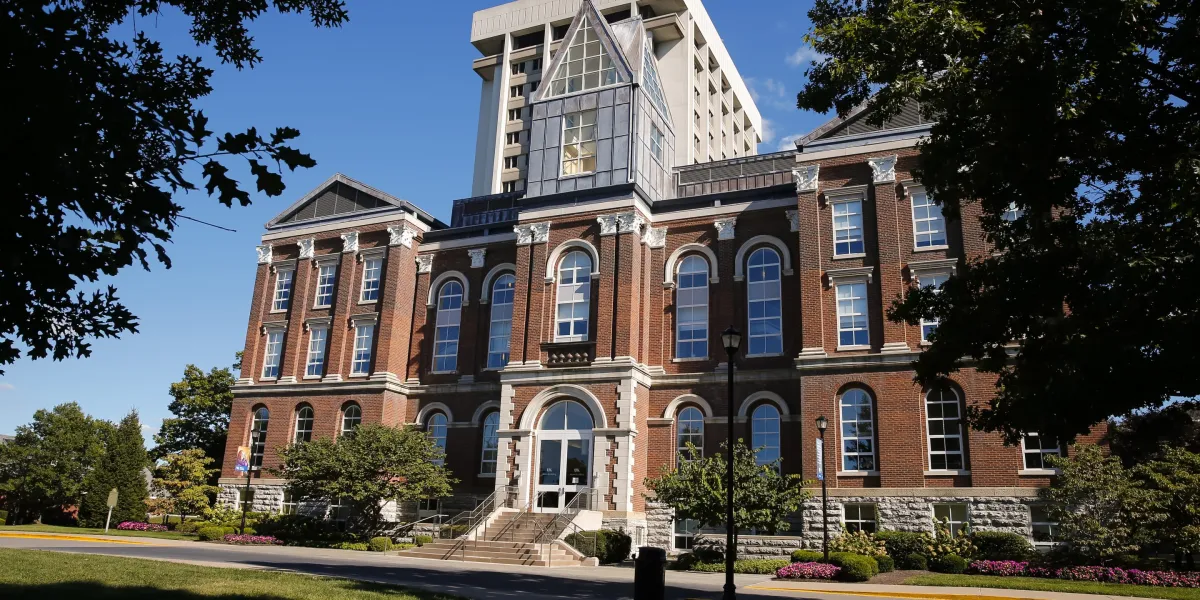
A University of Kentucky administrator has been granted a religious exemption from using artificial intelligence at work after arguing that the technology conflicts with his Humanist beliefs.
David Durman, 45, sought the accommodation under Title VII of the Civil Rights Act, which protects religious and nontheistic beliefs. The university approved his request on September 25 after meeting with him and his lawyer, Alexandria Huiskens.
Durman has followed Humanism for about 30 years, having been influenced as a teenager by the works of Enlightenment philosopher David Hume and the Stoics. He describes it as a nontheistic faith centred on human wellbeing and flourishing.
He said the increasing promotion of AI tools by colleagues and university leaders had made him concerned that their use could eventually become compulsory, although the University of Kentucky does not currently have an AI directive.
“To me, the offloading of any decision-making capacity or ability to interpret the world around you—including what’s true, what’s not true, what’s going on with the world—reduces your ability to act towards those goals,” Durman said.
Durman has disabled Gemini in his Google searches and said he generally turns off as many AI features as possible. He told Huiskens that surrendering tasks to the technology was inconsistent with the moral responsibility he associates with Humanism.
Huiskens, who works with the American Humanist Association, said the case reflected concerns that AI could displace human judgement, reason and responsibility. She added that many Humanists might not realise they could seek a workplace accommodation.
The university concluded that granting Durman’s request would not create an “undue hardship” for the institution. Under a 2023 Supreme Court ruling, employers must show that accommodating an employee’s religious observance would impose substantial costs, rather than merely a minor inconvenience.
Durman stressed that his exemption applies only to him. “My exemption doesn’t apply to other employees, and I’m not trying to affect other people’s work,” he said.
Growing pressure to use AI at work
The decision comes as employers encourage staff to adopt AI tools. Shopify chief executive Tobi Lütke has described AI use as a baseline expectation, while Amazon has urged software engineers to use it when appropriate.
A Gallup poll found that 52% of US employees were using AI at work at least a few times a year by May 2026, up from 21% in 2023. An American Psychological Association survey found that 37% of workers feared falling behind colleagues if they did not use AI, while 48% worried it could make some or all of their duties obsolete.
Durman said he was also aware of Pope Leo XIV’s warning that reliance on AI could weaken human creativity and judgement. However, he said he was more directly inspired by Erin Maus, a software engineer and practising Unitarian Universalist who received a religious exemption from using AI at her technology company in May.
Huiskens said Durman’s long adherence to Humanism, together with his efforts to avoid AI in his personal life, had helped establish the sincerity of his beliefs. She stressed that an objection based solely on personal preference, politics or economic concerns would not necessarily meet the legal standard.
Whether another worker could secure a similar accommodation would depend on the nature of their beliefs and the effect of the arrangement on their employer, she said.
