


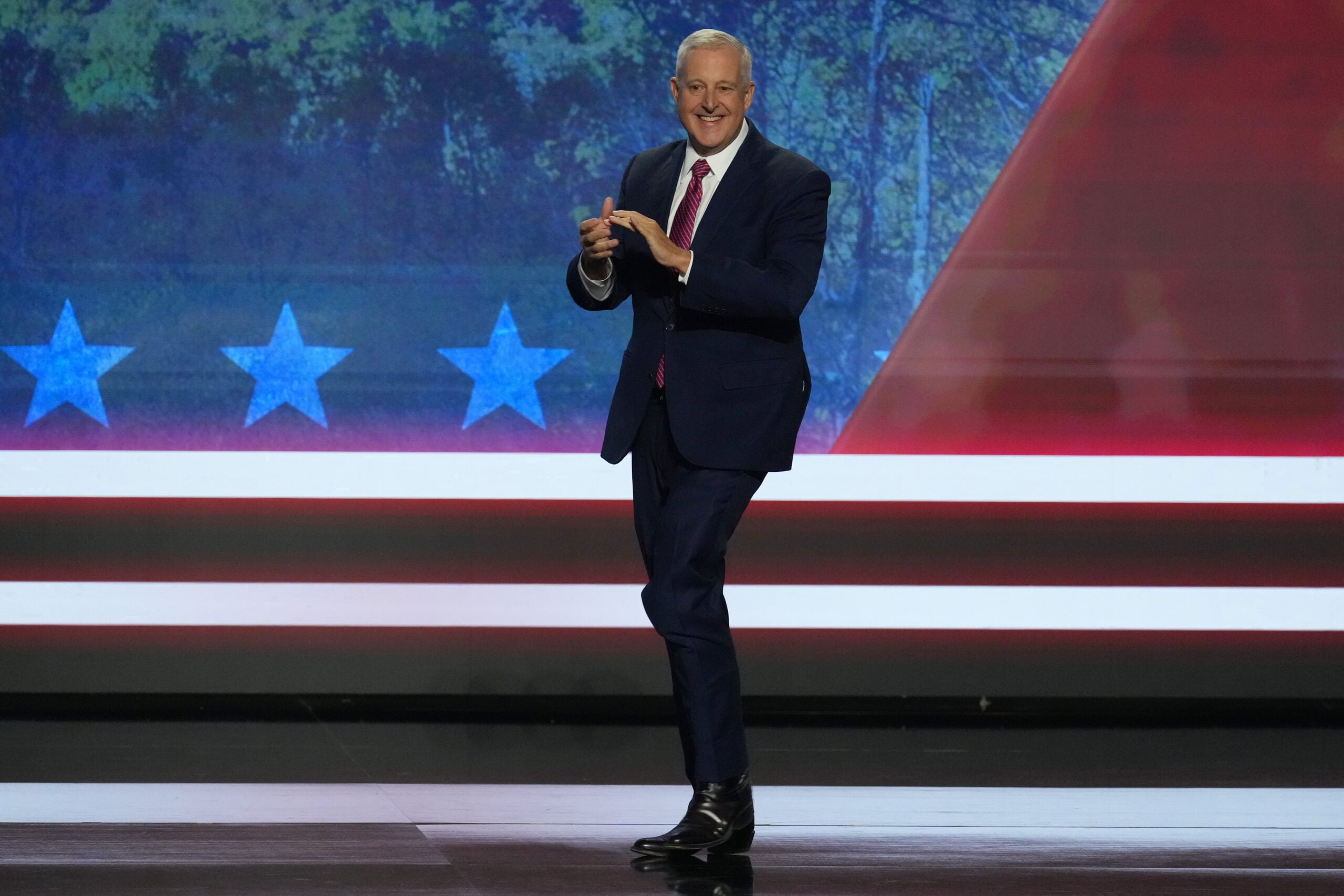
Republican concern is growing that North Carolina’s Senate race is slipping away, as nominee Michael Whatley struggles to close the gap on Democrat Roy Cooper despite expectations of a late surge in spending.
The contest was once viewed by Republicans as one that could be revived after the summer, but public polling has consistently placed Mr Cooper ahead. A survey released on Thursday gave the former governor an 11-point lead among likely voters.
The unease was evident at the Republicans’ midterm convention in Dallas, where private discussions and public speeches focused on the difficulty of winning the state and the need to prioritise other battlegrounds.
Rick Scott, the Florida senator and former chairman of the National Republican Senatorial Committee, described North Carolina as “probably one of the hardest” states on the map.
“You’re running against an existing governor,” Mr Scott said of Mr Cooper. “So that makes it harder in an open seat.”
One Republican pollster who attended the convention said North Carolina and Georgia were regarded by many in the party as effectively off the main battleground map, particularly as Michigan and New Hampshire appeared to offer stronger opportunities to gain seats.
Senate Majority Leader John Thune also focused on Alaska, Maine and Michigan during a private lunch about the party’s Senate strategy. The discussion raised questions about whether Republicans could justify directing significant further resources towards North Carolina.
The Senate Leadership Fund, the leading Republican-aligned Senate super PAC, has pledged an initial 71 million dollars (£53.5 million) for North Carolina through election day, including 17 million dollars (£12.1 million) in summer advertising supporting Mr Whatley. No Going Back PAC, affiliated with the president’s MAGA Inc super PAC, has also committed about five million dollars (£3.8 million).
Republicans may ultimately need to spend substantially more in both North Carolina and other expensive media markets. But some party figures doubt that additional money alone can alter the direction of the race.
“There is still time, but even with at least $100 million, [Whatley] would need a campaign team capable of turning that money into actual points,” one North Carolina-based Republican operative said.
Mr Whatley, who attended the Dallas convention and addressed an event hosted by the Senate Leadership Fund and the NRSC, said he was confident his campaign would have the resources needed to reach voters. Asked about possible backing from MAGA Inc, he said he would “wait and see how that entire universe is going to come.”
Donald Trump appeared to acknowledge the difficulty of the contest during his convention speech, while repeating his support for Mr Whatley, his former choice to lead the Republican National Committee.
“Now in North Carolina, you have a little more difficult case, because people don’t quite get it, but they’re going to find out,” Mr Trump said.
The White House has since announced that Mr Trump will travel to Gastonia next week for a campaign rally with Mr Whatley. A person close to the Whatley campaign said the visit would help motivate Republican voters who tend to engage late in the election.
“Roy Cooper has maxed out his support and can’t grow anymore,” the person said. “But voters in NC, especially on the right, tune in late and break late. The Trump visit will be a good motivator for our voters.”
North Carolina Senate race tests Republican strategy
The race has been relatively subdued despite the state’s importance to the battle for control of the Senate. Republicans are also being forced to defend seats in states such as Texas that have not traditionally required major investment, limiting the resources available for North Carolina.
The NRSC has rejected claims that Mr Whatley’s position is cause for alarm. Bernadette Breslin, its national press secretary, said summer polling had previously favoured Democratic Senate candidates in the state before Republicans went on to win in November.
In 2020, surveys at a similar stage showed Republican senator Thom Tillis behind Democrat Cal Cunningham, who was later caught up in a scandal. Mr Tillis ultimately won by about two percentage points.
Democrats have not won a Senate race or carried North Carolina in a presidential election since 2008. However, Republicans are facing concerns over the cost of living, which is voters’ leading issue ahead of November, as well as Mr Trump’s declining approval ratings.
Mr Cooper’s campaign said it was not taking its polling lead for granted and noted that it had already begun to narrow. Jeff Allen, the campaign manager, said Republicans would spend heavily because of Mr Whatley’s Washington connections.
“A Democrat has not won statewide federal office here in nearly two decades — and Whatley’s elite D.C. connections mean Republicans are going to spend whatever it takes to keep this seat,” Mr Allen said.
He added: “North Carolina is a 50-50 state and this will be a margin-of-error race, which is why we’re building a campaign to earn every vote.”
Republicans’ central challenge is not only financial. The party must also persuade less frequent Republican voters, many of whom remain loyal to Mr Trump but may not otherwise turn out for a midterm election.
Paul Shumaker, a North Carolina Republican strategist who advised Mr Tillis, said Mr Whatley faced low enthusiasm among Republican voters and falling support for Mr Trump among unaffiliated voters.
“The President is underwater with unaffiliated voters, and Michael Whatley has to win a majority of those unaffiliated who turn out this election year,” Mr Shumaker said. “Given North Carolina’s registration number and the fact that there is little to no crossover voting between the two major parties, fixing both problems is the only path to victory.”
