


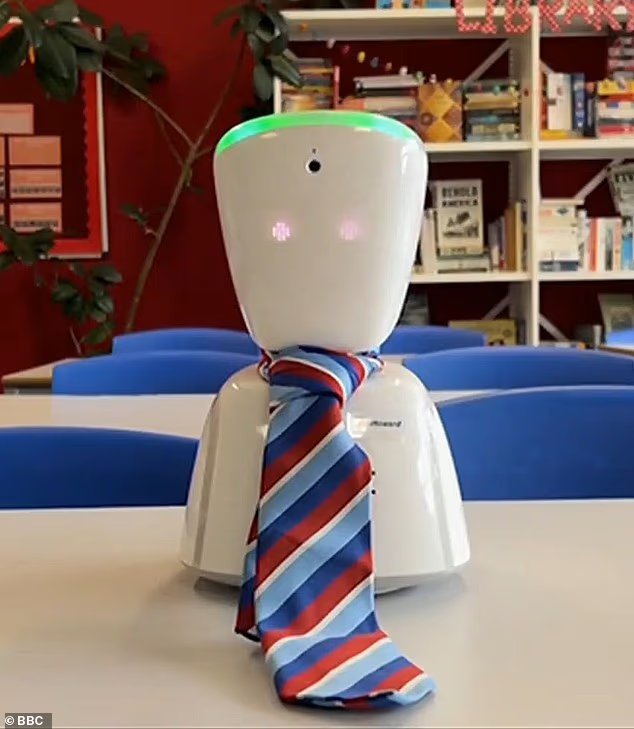
More than 2,000 robots costing £3,500 each are being used in schools to represent children who are too anxious to attend lessons in person.
The AV1 devices allow pupils with emotionally based school avoidance (EBSA) to join classes remotely from home, using a camera, microphone and speaker controlled through an app.
Placed on the child’s usual desk, the robot can be turned through 360 degrees so the pupil can look around the classroom. Teachers can address them directly, while the child can answer questions and take part in lessons.
A one-way camera allows the pupil to see and hear what is happening without being seen themselves. A “whisper mode” also enables them to speak quietly to a classmate sitting beside the robot.
The technology was developed by Norwegian company No Isolation, initially to help children in hospital remain connected with their schools. It was commissioned by the Department for Education in 2019.
Robots helping anxious pupils return to school
Devon County Council bought 16 AV1 robots last year for pupils struggling to attend because of “worry, anxiety and overwhelm”. At least 80 local authorities have acquired the devices, with EBSA pupils also using them in Somerset, Dorset and the London boroughs of Haringey and Islington.
Moulsham High School in Chelmsford, Essex, has 20 robots. One Year 11 pupil said the device had helped after anxiety kept them away from school for several months.
“Without the AV1, I don’t think I’d be at the level I am at the moment,” the pupil said. “When first using it, I was quite nervous. But it helped me to realise that lessons weren’t actually that bad and it did help me to integrate back into class.”
They added: “I’m attending every day, due to the AV1.”
Deputy headteacher Mark Blenkin said: “It’s a tried and tested method now. It’s part and parcel of school.”
The use of the robots comes as severe absence among pupils with additional social, emotional and mental health needs has more than tripled in six years, rising from 8,453 to 27,442.
A record 151,000 pupils missed at least half of their schooling last year, compared with 60,247 before the pandemic. Attendance, which was regularly above 95 per cent before Covid, fell to 93 per cent in 2025-26 despite efforts to tackle truancy.
Every school in England is set to receive its own attendance target under changes announced by Labour, with schools also being encouraged to use initiatives such as “Friday clubs” to support attendance at the end of the week.
No Isolation chief executive Morten Jorgensen said: “School absence is one of the biggest challenges for the education system, with much of this stemming from the rise in emotionally based school non-attendance.”
He said the AV1 technology allowed schools to meet their statutory duties and added: “So far this year, 76 per cent of students using AV1 have returned to the classroom, providing significant benefits for the student, schools, local authorities and society at large.”
A Department for Education spokesperson said the Government was supporting schools to explore approaches that kept children engaged with learning, maintained links with classmates and helped build confidence in returning to the classroom.
They said measures to address the causes of absence included free breakfast clubs in every primary school, an attendance mentoring programme and earlier intervention in mainstream schools for pupils with special educational needs.
