


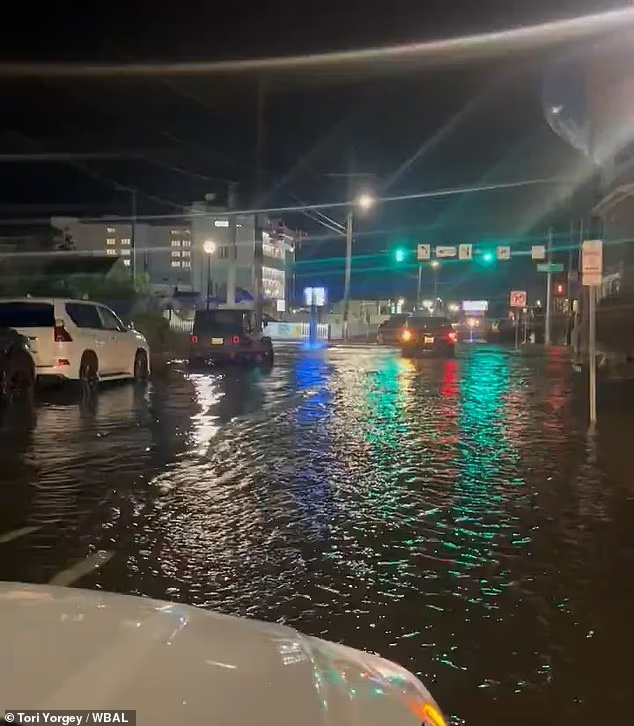
A powerful nor’easter has hit the US East Coast, bringing coastal flooding, dangerous winds and widespread travel disruption across a region with about 40 million people in its path.
Seawater surged over seawalls and into streets from Rhode Island to Maryland on Friday night, while thousands of homes and businesses were left without power and more than 200 flights were cancelled.
Forecasters warned that the most severe conditions were still to come as the storm tracked offshore, close enough to generate huge waves, damaging gusts and further flooding along the coast.
A state of emergency was in force in New York City, coastal New Jersey, Long Island and Westchester County ahead of the storm’s intensification.
In Narragansett, Rhode Island, water spilled across the seawall at Narragansett Pier and ran along Ocean Drive. Surf also inundated the car park at Narragansett Town Beach.
On New Jersey’s Long Beach Island, floodwater covered residential roads and surrounded properties, with only mailboxes visible above the rising waterline. Winds drove seawater inland at Surf City Bay Beach before the storm reached its strongest phase.
Ocean City in Maryland was also hit, with seawater covering sections of roadway late on Friday. The conditions led to the cancellation of the three-day Oceans Calling music festival.
The National Weather Service warned of particularly dangerous flooding along parts of the Mid-Atlantic coast, identifying New Jersey and Delaware among the areas facing the greatest threat.
In Manasquan, New Jersey, water was already pouring on to roads as darkness fell. Officials issued a voluntary evacuation request for some low-lying neighbourhoods.
Mayor Mike Mangan told residents to expect “a lot of water in the streets for a long time”.
In nearby Sea Bright, officials prepared for flooding that could leave some roads under as much as six feet of water. Mayor Brian Kelly urged people in vulnerable areas to leave while it was still possible.
“It’s going to be worse than average,” Mr Kelly said. “We do have probably one or two flooding events a year, sometimes more, sometimes less, but I think this one will be closer to an Irene-scale flooding event.”
He was referring to Hurricane Irene, which caused severe flooding across the north-eastern US in 2011. Sea Bright planned to open its recreation centre to residents forced from their homes.
Powerful winds and travel disruption
The strongest winds were expected in New England, with gusts of between 60mph and 65mph forecast across Cape Cod, Martha’s Vineyard and Nantucket from Friday night into Saturday.
Boston could see gusts of 50mph to 55mph, while inland communities, south-eastern Connecticut and eastern Long Island faced winds of up to about 40mph.
National Weather Service meteorologist Matthew Belk said: “It’s definitely going to be a case of the closer to the coast you are, the more impacts from the storm you’re likely to see.”
Forecasters also warned that trees still carrying leaves could be more vulnerable to the strong winds, increasing the risk of falling branches, blocked roads and power cuts.
Air travel was already being disrupted, with cancellations affecting airports in Boston, Nantucket, Martha’s Vineyard and New York. Further cancellations were scheduled for Saturday, while some airlines offered passengers the chance to change or cancel eligible flights without fees.
Ferry services were also suspended. Boats linking Cape Cod with Nantucket and Martha’s Vineyard were cancelled, as were Rhode Island services to Block Island, with disruption expected to continue.
The storm disrupted entertainment and sport as well. Ed Sheeran cancelled Friday and Saturday concerts at Gillette Stadium in Foxborough, Massachusetts, while the Boston Red Sox rearranged their series against the Chicago Cubs.
Residents along the coast prepared for a weekend indoors. In Gloucester, Massachusetts, one family secured a boat, moved outdoor furniture and prepared a generator in case of power loss as large waves battered the shoreline.
