


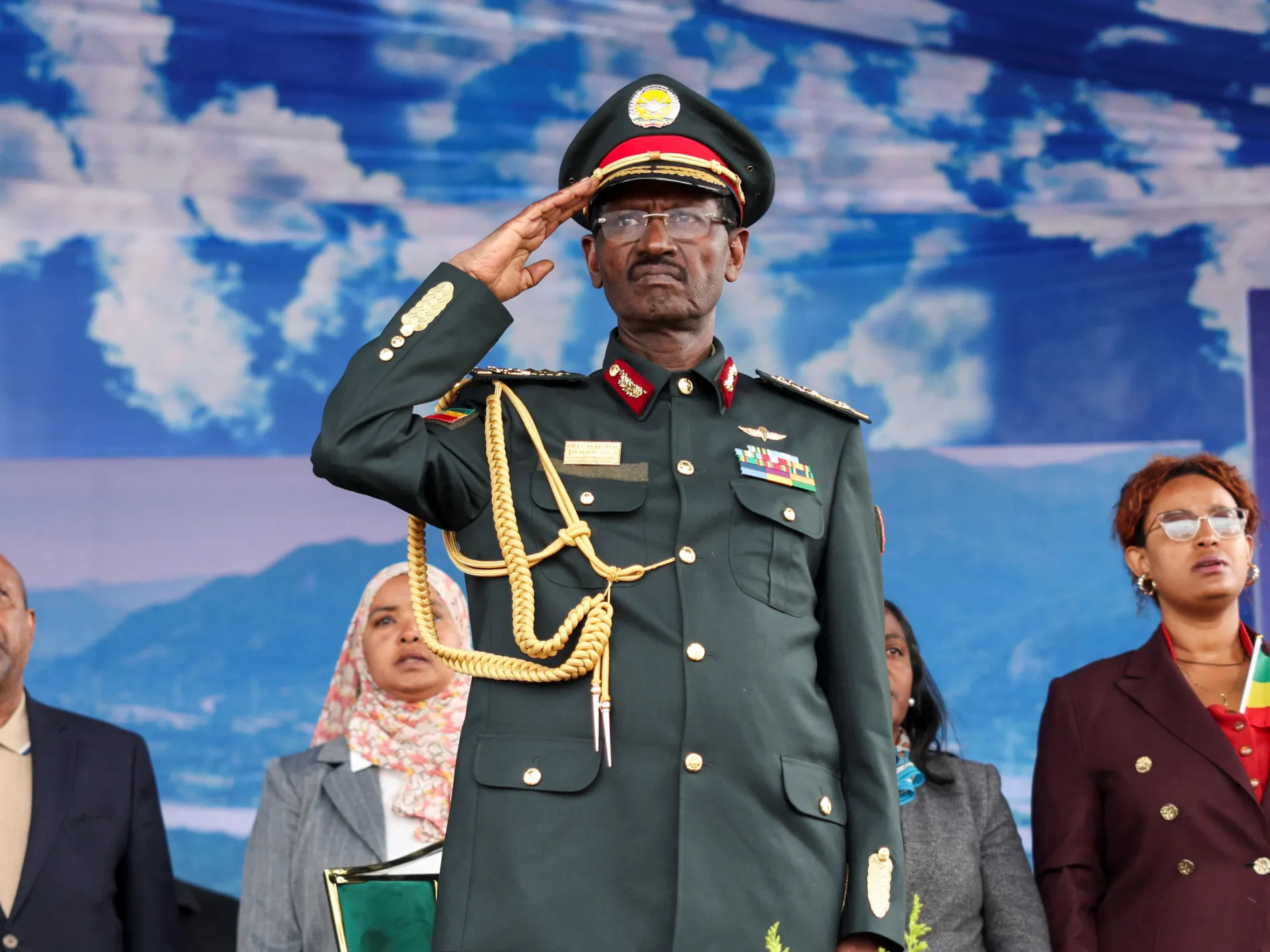
Ethiopia has accused Eritrea, Sudan and Egypt of supporting armed opposition groups as renewed fighting in the north raises fears that the country’s conflict could spill across its borders and draw in regional powers.
Army chief Birhanu Jula said over the weekend that Ethiopia’s unrest was being fuelled by what he described as its “historical and contemporary adversaries”. He identified Eritrea as the intermediary linking the three countries with armed groups inside Ethiopia.
All three governments have rejected the allegations. Egypt’s Foreign Ministry spokesman Nader Zaki said Cairo’s policy was based on “full respect for the sovereignty, unity and territorial integrity of states, and noninterference in the internal affairs of other countries”.
Mr Zaki said Egypt was “fully committed to the rules of international law and the Charter of the United Nations” and rejected actions that could undermine regional security and stability.
Major-General Samir Farag, a former head of the Egyptian Armed Forces’ Morale Affairs Department, also dismissed the claim. “It has not been Egypt’s policy to interfere in the internal affairs of any state in the region,” he said.
Sudan’s military described Ethiopia’s accusations as “baseless”. It has, in turn, accused Addis Ababa of supporting the paramilitary Rapid Support Forces, which has been fighting Sudan’s armed forces since 2023. Ethiopia denies that allegation.
Strained ties across the Horn of Africa
The accusations come amid longstanding disputes between Ethiopia and each of the countries it named. Relations between Addis Ababa and Cairo remain tense over the Grand Ethiopian Renaissance Dam, while their rivalry has increasingly extended into questions of regional security, the Red Sea and the Horn of Africa.
Sudan has also accused Ethiopia of providing training, supplies and access to its territory for the Rapid Support Forces since Sudan’s civil war began.
Eritrea fought alongside Ethiopia against rebel groups in the Tigray region during the 2020-2022 war. Relations have since deteriorated, with Eritrea alarmed by Ethiopia’s efforts to secure access to the Red Sea.
Renewed fighting has spread through Tigray and into the neighbouring regions of Amhara and Afar. Mohammed Hussein, chairman of the ruling Prosperity Party’s Afar regional branch, said the three regions had an estimated combined population of more than 38 million and included areas close to Djibouti and Eritrea.
The geographical spread of the violence has intensified concerns that the crisis could develop into a wider regional war.
Some analysts and Ethiopian opposition figures believe the government is highlighting foreign involvement to build support for the national army and unite the country behind the federal authorities.
Mohamed Selim, deputy chairman of the Egyptian parliament’s African Affairs Committee, said the accusations appeared intended to divert attention from Ethiopia’s domestic difficulties by creating an external enemy.
Amani al-Tawil, director of the Africa Programme at the Al-Ahram Centre for Political and Strategic Studies, called the claims “an understandable attempt to escape from internal crises”. She questioned why Egypt would intervene militarily in Ethiopia while the two countries remained locked in their dispute over the dam.
Ms al-Tawil said a new Ethiopian opposition coalition, comprising seven groups from different ethnic groups and regions, posed a significant challenge to the government.
Ammar Arki, a writer specialising in Horn of Africa affairs, said Ethiopia had repeatedly blamed Sudan, Egypt and Eritrea for instability inside the country. He warned that continued claims of an “external conspiracy”, particularly if neighbouring states responded with similar accusations, could increase the risk that Ethiopia’s conflict would become regional.
