


Canadian veterans have alleged that they were offered medical assistance in dying (MAID) when they sought help for post-traumatic stress disorder, serious injuries and basic disability support.
The claims have been made by former service personnel including David Baltzer, Tony Jenkins, Corben McGown and Christine Gauthier. Their lawyer, Catherine Christensen, is representing several veterans in legal action against the Canadian government.
Veterans Affairs Canada (VAC) says MAID is not a service it provides and that its staff have no role in recommending or raising it. The department says an investigation found four inappropriate discussions, all involving one employee, and concluded they were isolated incidents rather than evidence of a systemic problem.
Veterans describe offers of assisted dying
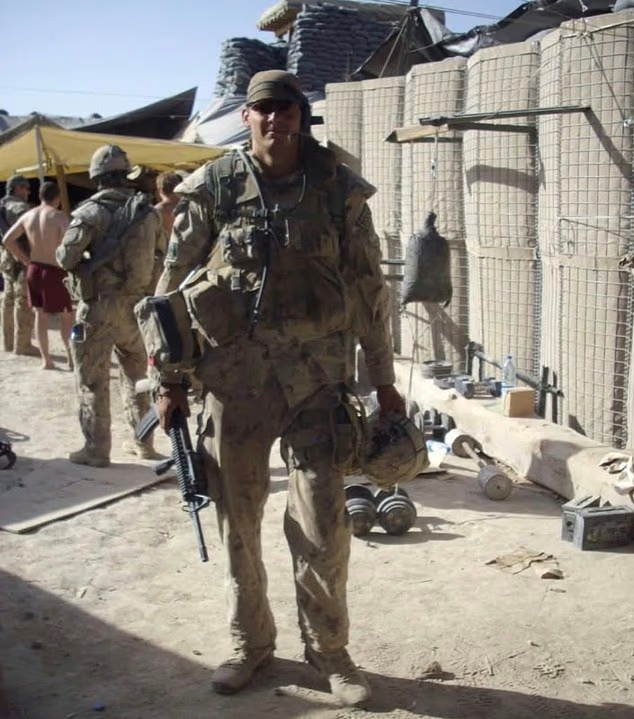
Baltzer, a former soldier who served two tours in Afghanistan, says he was offered MAID during a telephone conversation in 2019. He was in his 30s, physically healthy and receiving psychological treatment for PTSD and suicidal thoughts.
He had contacted VAC after receiving notice that his benefits had been cut. Instead of receiving an explanation, he says a caseworker reviewed his file and told him to “keep an open mind” before asking whether he had considered medical assistance in dying.
Baltzer said the suggestion came while he was struggling to adjust to civilian life, experiencing difficulties in his relationship and moving between several therapists.
“To me, [the suggestion of MAID] was a confirmation of, ‘Oh, my life is worthless’,” he said.
He claims the conversation marked the beginning of a serious decline in his mental health. He says he began abusing alcohol and other substances, engaged in antisocial behaviour and damaged relationships in his life.
“The last six years have been a gong show,” Baltzer said. “I went off the rails pretty hard. I ruined a lot of stuff in my life. I just burned it all to the ground.”
He later raised the alleged offer during an appeal over his benefits, but says the matter was ignored. The experience left him feeling betrayed by the country he had served.
“After everything that’s been done, if I could go back in time, I wouldn’t have served Canada,” he said.
Jenkins, a former weapons technician from Nova Scotia who served in the military on and off for almost 25 years, says he was offered MAID twice.
In 2015, he suffered a brain injury after being struck by an antenna attached to an armoured vehicle. He later developed chronic migraines, slurred speech and severe nerve damage, and says his condition was repeatedly dismissed by military personnel.
Jenkins says that, after losing feeling in his arms, he visited a military doctor who repeatedly asked whether he was suicidal. He understood her offer to help as a reference to assisted dying, although he says he had never been suicidal.
After leaving the Armed Forces in January 2022, Jenkins was unable to obtain his migraine medication and endured a nine-day attack. In desperation, he contacted Nova Scotia’s health advice line and asked about MAID.
He claims he was quickly transferred to another nurse, who discussed arranging an appointment and told him to call back when he was ready. Jenkins said the process appeared to be “as easy as ordering a pizza”.
He decided against MAID after speaking to his wife. The following day, a pharmacist refilled his prescription after he presented the empty medication box.
“If they just would have told me, ‘Take your empty box of medication and go to the pharmacy and get a refill,’” he said. “That’s all they had to say. But nobody offered that to me.”
Claims involving PTSD and disability support
McGown, who is now 26, says he was offered MAID at the age of 22 while receiving treatment for PTSD, depression and anxiety. He had attempted to take his own life several times and had contacted VAC because he needed support.
He says that, during a conversation about his mental health, a caseworker presented euthanasia as though he qualified for it. McGown, who was with his wife, said he was stunned because he had been seeking help rather than death.
His amended statement of claim alleges that the offer caused severe emotional distress and worsened his mental health. The Canadian government denies that MAID was discussed, saying the call concerned benefits and possible mental health treatment, and that it has no record of a call matching his account.
McGown is now receiving therapy from a psychologist of his choosing and says his condition has improved. “It does get better,” he said. “There are a lot of better options than MAID.”
Gauthier, a former artilleryman and Paralympian from Quebec, says she was offered assisted dying while trying to obtain a wheelchair lift for her home.
She became disabled after an injury during military training in 1998 and served for more than a decade, including deployments to Israel and Cyprus. As her condition deteriorated, she became reliant on a wheelchair and government benefits.
Gauthier says she spent five years pressing for a lift while having to crawl up and down eight steps, dragging her wheelchair behind her. During one telephone call, she told a caseworker that she could not continue living in those conditions.
She alleges that the caseworker replied that she had “the right to die”. Gauthier said she was shocked that she was being told about assisted dying while still being denied equipment that would help her live independently.
“I can’t believe you’re telling me I have the right to die, but you’re not going to give me the equipment I need to live,” she said.
VAC later reviewed Gauthier’s case but said it found no evidence to support her account and no reference to MAID in her file.
Veterans Affairs Canada response
Christensen said veterans were particularly vulnerable because their military training could lead them to believe that sacrificing themselves would benefit their families.
“You’ve got physically healthy young men asking for help, and the help offered is death,” she said.
She said some veterans were afraid to complain because they feared their benefits could be reduced or withdrawn. Christensen is representing several men who are suing the Canadian government over alleged offers of MAID.
In 2023, VAC confirmed four incidents involving a single caseworker after investigating allegations that employees had inappropriately raised assisted dying with veterans. The employee was discharged and new guidance was issued stating that frontline staff must not advise or suggest MAID.
VAC said the investigation examined more than 402,000 client files dating back to 2016. It said mandatory training and additional safeguards had been introduced, and that there had been no further reports of inappropriate discussions.
Both Baltzer and Jenkins say they now want to leave Canada. Jenkins said veterans were treated as though they belonged to a family only until they became injured or needed help.
