


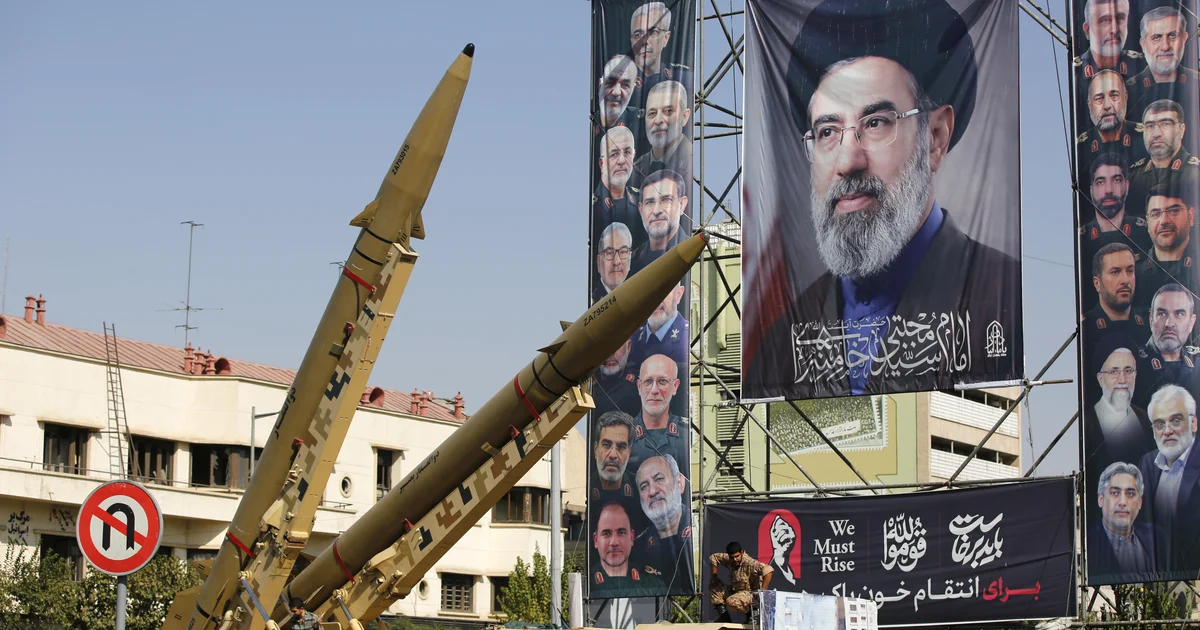
Iran has received US feedback on a proposed seven-day ceasefire, with Foreign Minister Abbas Araghchi expected to discuss the response in Tehran on Wednesday.
The plan, put forward by Iran last week, would also involve the phased reopening of the Strait of Hormuz and is intended to build trust between the two sides. Officials said the main disagreement currently concerns the order in which the measures would be implemented.
Iran’s proposal was made conditional on the US meeting terms set out in a memorandum of understanding agreed in mid-June, which later broke down after several weeks. Donald Trump has publicly rejected the plan, although Iranian officials have said they were awaiting a formal response through Qatar, which acted as an intermediary.
Araghchi said on Monday that Iran’s “seven-point plan” had been conveyed to the Americans through the Qatari intermediary. “Despite the things that the American president and others said, I said that we are waiting for an official response from America through the intermediary,” he told reporters in New York.
Iran-US ceasefire plan faces fresh pressure
Maj Gen Mohsen Rezaei, head of Iran’s Supreme National Security Council, said on Tuesday that Mr Trump was caught between continuing the war and negotiating.
“We stated our conditions, but Trump is incapable of decision-making,” Rezaei said during a meeting with Azerbaijan’s deputy prime minister, Shahin Mustafayev. “Trump is trapped in a quagmire where he can neither negotiate nor fight.”
His remarks came as the US Treasury announced sanctions against 10 individuals and companies accused of helping an Iranian military logistics agency obtain weapons and electronic equipment. The targets include people based in Iran, Beijing, Hong Kong and Pakistan.
The measures form part of the Trump administration’s “Operation Economic Outcast”, which is aimed at isolating Iran’s government and economy. Treasury Secretary Scott Bessent said: “Treasury will not tolerate any support to the regime and will continue to identify, expose, and isolate Iran’s enablers.”
Iran’s Revolutionary Guard has separately said the conflict can end only if Washington admits defeat and leaves. Its spokesman, Gen Hossein Mohebbi, urged Americans to protest against what he called the US government’s “warmongering policies”, and accused Washington of using Iran’s nuclear programme as a pretext to “plunder Iran’s wealth” and turn the country “back into a colony”.
