


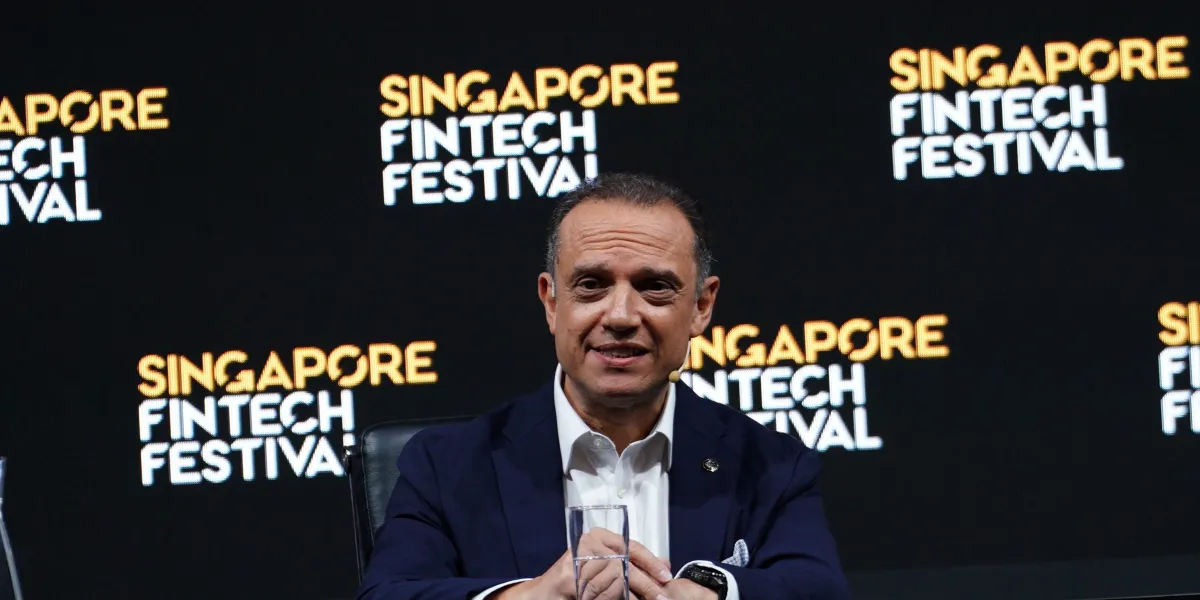
Maybank is taking a gradual approach to its agentic AI rollout, refusing to place autonomous systems in front of customers until they can be audited and produce predictable results.
Giorgio Migliarina, the Malaysian bank’s chief technology officer, said Maybank was using AI extensively behind the scenes, including as assistants and recommendation engines for employees. But he said the bank did not want to compromise customer trust for a short-term gain in productivity.
“Everybody overestimates the impact of new technologies at the beginning and underestimates their impact after a few years. I think AI is the same,” Mr Migliarina said on the sidelines of the Singapore FinTech Festival.
“Banking is based on trust, and you don’t want to put trust in jeopardy just to have a one-month acceleration” in productivity, he added.
Maybank, Malaysia’s largest bank, is investing 10 billion Malaysian ringgit (£2.5 billion) over five years in technology, data and AI under its ROAR30 plan. It has developed proof-of-concept projects involving autonomous agents but is not rushing to make them customer-facing.
“It can’t be that if I ask agents the same question twice, I get two different answers—that still needs to be fine-tuned, and we will fine-tune it,” Mr Migliarina said.
Maybank applies AI to systems resilience
The bank is nevertheless deploying AI in operational areas. Maybank announced in October that its Resilience Operations Centre, which helps keep its systems running, would use tools from ServiceNow across Malaysia, Singapore and Indonesia.
The upgraded centre is intended to identify early signs of deterioration in the bank’s technology and prompt staff to intervene before systems fail. Mr Migliarina compared the process with recognising the flickering of a lightbulb before it goes out.
“With AI, we can filter through what constitutes normal activity and what really is the flickering of a lightbulb, i.e. small degradations which need to be considered,” he said.
Mr Migliarina, who previously spent almost three decades at telecommunications companies including Vodafone and Telkom Malaysia, said executives should approach AI investment with the mindset of venture capitalists.
“AI pilots today are a little bit like that: You let a thousand flowers bloom, and when some flowers bloom bigger than others, you adjust your focus,” he said.
Cyber security is another concern. Mr Migliarina said financial institutions in Asia, including Japan’s SMBC Consumer Finance and South Korea’s Shinhan Bank, KB Kookmin Bank and Hana Bank, had faced a series of hacks in recent months suspected of being powered by AI.
He said cyber attacks were “changing in nature, and they are becoming very dynamic”, while each new fintech or payments partner increased the area potentially accessible to hackers.
Despite those risks, Mr Migliarina said technology could help banks support the growth of the Association of Southeast Asian Nations as an economic power. His approach, he said, was to pursue meaningful change without rushing into decisions that could cause problems.
“It’s not a wait-and-see approach,” he said. “But it’s again not rushing and breaking things in the process.”
