


A major study of Australian women has found no difference in work ability or days off between premenopausal and perimenopausal women, challenging the evidence behind the UK Government’s plans for compulsory workplace menopause policies.
Professor Susan Davis, a leading menopause researcher at Monash University in Melbourne, said policy should be based on “strong data” and warned that the Government’s approach was not.
Under the 2025 Employment Rights Act, UK businesses with more than 250 employees will have to create and publish a Menopause Action Plan by next spring. Companies will be required to select at least two measures from an official list, including a menopause risk assessment or support groups.
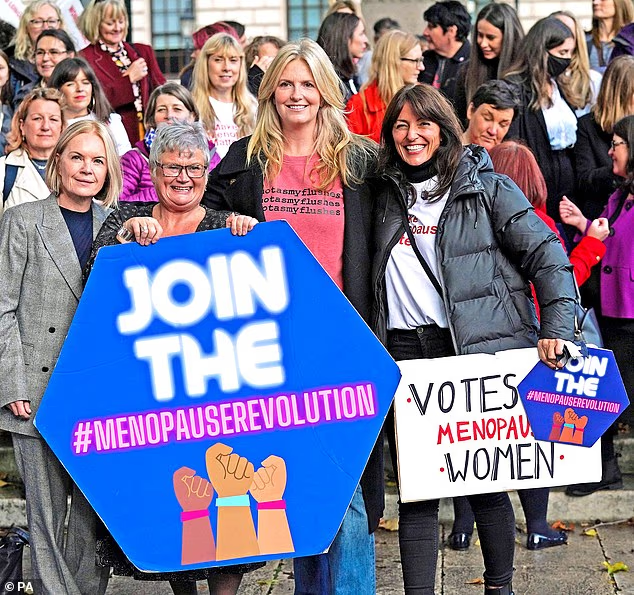
The plans have been welcomed by campaigners as part of a wider effort to make menopause less taboo. But Professor Davis said the policy risked reinforcing assumptions that middle-aged women were less reliable or capable at work.
Study challenges assumptions behind menopause workplace plans
Her comments follow the Australian Women’s Midlife Years survey, which examined 8,000 women aged between 40 and 69. Researchers considered their menopausal status alongside factors including employment, family circumstances and alcohol consumption, with particular attention paid to perimenopause, when symptoms can be most pronounced.
The study, presented at the International Menopause Society Congress in Brazil earlier this month, found that work ability and the number of days taken off work were the same for premenopausal and perimenopausal women.
Professor Davis criticised claims made in a 2022 report by the Women and Equalities Committee that almost 900,000 women in the UK had left their jobs because of menopausal symptoms.
She said the figure came from a marketing survey of just 1,000 women of all ages. The survey had also included people who had left work because of issues such as pregnancy and infertility, she said.
“Where on earth did that data come from, that 900,000 women had left the workforce?” Professor Davis asked.
She said of the Government’s decision to require Menopause Action Plans: “Policy should be based on strong data. This isn’t.”
Menopause has received considerably greater public attention in recent years, helped by documentaries presented by Davina McCall and personal accounts from high-profile women including Lorraine Kelly, Gabby Logan, Carol Vorderman, Gillian Anderson, Julie Walters and Zoe Ball.
Supporters of greater awareness argue that women should be encouraged to seek medical help for symptoms including hot flushes, fatigue, mood changes and heart palpitations. The growing profile of treatments such as hormone replacement therapy has also drawn large audiences to talks by menopause specialists.
However, critics of the current approach say that focusing heavily on menopause may create a misleading impression that most women in their 40s and 50s will experience debilitating problems at work.
Professor Davis warned: “There’s the potential that this will backfire, with employers seeing a woman aged between 45 and 55 and automatically assuming they will have issues because the woman is perimenopausal.”
That concern comes amid wider anxiety about the employment prospects of highly experienced women in their late 40s and 50s. The argument is that a workplace culture built around menopause-specific adjustments could unintentionally encourage employers to view women of that age as a risk.
Professor Davis said employers should be sympathetic to staff facing difficulties, but argued that menopause should not be singled out for disproportionate attention.
“Employers should be sympathetic to all employees,” she said. “But singling out middle-aged women with this hyper-focus on menopause just isn’t helpful. Rather than Menopause Action Plans or giving every woman a fan, we just need to ensure our health systems are geared up so that every woman who is struggling with menopause gets proper help.”
The study’s findings do not suggest that no women experience serious menopausal symptoms. Rather, they challenge the assumption that perimenopause necessarily reduces women’s ability to work or leads to increased absence across the board.
The introduction of compulsory action plans is expected to bring renewed attention to workplace menopause policies when the legal requirement takes effect next spring.
