


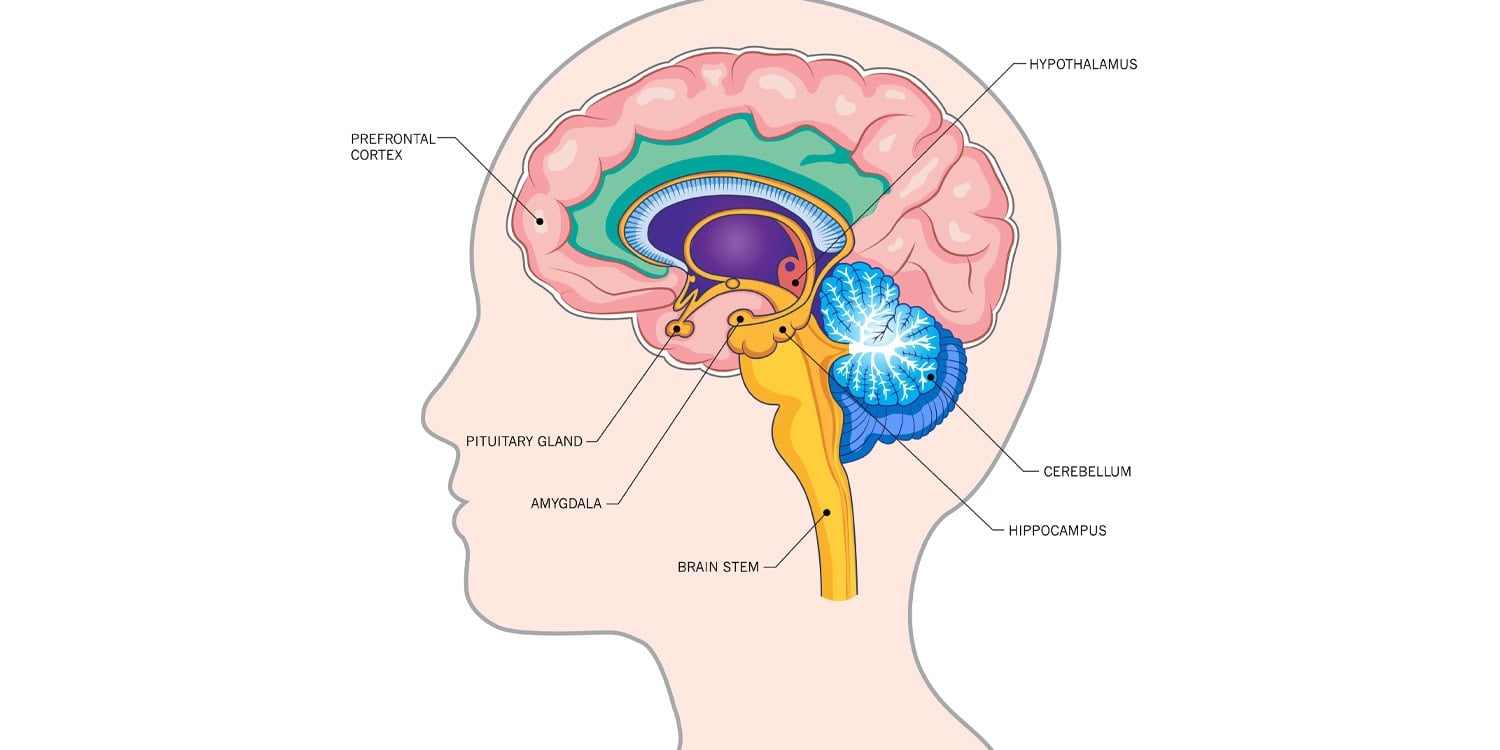
When the brain rests after learning something new, it actively replays the recent experience to lock it into memory. In a small study published in the Journal of Cognitive Neuroscience, researchers report that this mental replay involves a trade-off: the brain prioritises the general meaning of an event while weakening the memory of specific details. Led by Nicholas C. Hindy, Ryan Coleman and Surya Rajan Meenakshi Selvam, the team zeroed in on the hippocampus, with a focus on the CA1 region, and proposed that false memories can emerge as a natural by-product of how the mind extracts useful themes from experience.
Memory, the researchers argue, must balance two tasks: preserving exact details of a single episode and extracting patterns across experiences to guide future behaviour. Traditional models describe the hippocampus as a fast encoder that hands memories to the neocortex, where broader rules and concepts are learned. Newer computational ideas, however, suggest this division of labour could arise within the hippocampus itself, necessitating a mechanism to edit memories soon after they form.
Competitive plasticity—where neural pathways sharing features strengthen together while unique details that do not reappear are weakened—offers one possible mechanism. The team explored how this plays out in sub-regions of the hippocampus after people encounter something new. They asked whether spontaneous replay during rest reshapes memories rather than simply recalling them verbatim.
The study recruited 24 adult participants who were given a classic false-memory paradigm designed to evoke lure words that fit a missing central concept. For example, a list might contain bed, rest and awake but omit the central word sleep. The stimuli were read aloud by synthetic voices, creating distinct semantic and episodic channels: the meaning of the words and the voice-dependent sensory experience of hearing them.
Using high-resolution functional magnetic resonance imaging, researchers could isolate the CA1 area, as well as adjacent regions CA3 and the dentate gyrus, which are usually blurred in standard scans. After hearing the lists, participants sat for 90 seconds while performing a simple maths task to distract from active memorisation. The scan captured spontaneous hippocampal replay during this brief rest.
With memory testing conducted inside the scanner, participants indicated whether they recognised items from the lists and whether lure words had been falsely recognised as familiar. They also reported which voice spoke each recognised word. The team found a striking bidirectional effect: more frequent reactivation in CA1 was associated with increased confidence in recognising lure words, yet worse accuracy in identifying the speaker’s voice for those recognised words.
In other words, the mental replay during rest strengthened the overarching concept of the word lists while diminishing memory for the exact sensory details of who spoke them. The memory for the actual words themselves did not appear to be altered by this reactivation.
Beyond CA1, the study showed nuanced roles for the other hippocampal sub-regions. Reactivation in CA3 correlated with a higher rate of false memories for the general themes, in line with its suspected role in pattern completion. By contrast, activity in the dentate gyrus linked to poorer memory for the specific voices, consistent with its involvement in pattern separation when keeping similar experiences distinct.
The team also noted a spatial pattern along the length of the hippocampus: the anterior and middle portions were primarily tied to extracting general themes and to false recognitions of related lure words, while the posterior region was linked to the loss of specific source details such as the speaker’s voice.
The researchers emphasise that their findings are correlational: while brain activity and memory performance move together, they cannot prove causation. It remains possible that differences in how participants processed the words during listening influenced both replay and later memory errors. The rest period studied was brief, capturing only the earliest stages of memory consolidation.
Additionally, the scans tracked activity across whole word lists rather than individual items, preventing separation of a single word’s replay from the broader list activity. The researchers acknowledge that future work should aim to disentangle replay of individual events and track memory trajectories over longer periods to see how these trade-offs evolve.
The study is titled “Hippocampal Reactivation Trades Episodic Detail for Semantic Gist in Human Memory” and is credited to Nicholas C. Hindy, Ryan Coleman and Surya Rajan Meenakshi Selvam.
