


A month-long Houthi siege of Taiz has left hundreds of thousands of people cut off from food, fuel, medical supplies and water, while residents face rising travel costs, blocked roads and dwindling access to hospitals.
The blockade has affected the 1.5 million people living in Taiz city and communities across the surrounding governorate, including about 180,000 displaced people caught by fighting along the main road linking Lahj and Taiz.
The United Nations has repeatedly warned of a catastrophe inside the city, where rubbish is accumulating because it cannot be taken to landfill outside the area.
Families trapped by the siege
Ahmed al-Mikhlafi and his wife, known as Umm Adam, were among those stranded by the fighting. The family had travelled to Mecca for Umrah with their three children, but found they could not return home after clashes broke out around Taiz.
They delayed their journey for more than two weeks, hoping the violence would end and the roads would reopen. When that did not happen, they returned to Yemen and attempted to reach Taiz from Aden.
“While we were in Mecca, fighting broke out and our city was once again placed under a complete siege by the Houthis,” Ahmed said. “We had no choice but to stay away and delay our return for more than two weeks, hoping the fighting would end and the siege would be lifted.”
The family travelled by shared vehicle after the main Hayjat al-Abd–al-Turbah route was closed. Passengers were forced on to a rough secondary road, passing almost 20 new checkpoints established after the Houthis took control of the western countryside of Taiz.
About 15 kilometres from the city, a Houthi checkpoint stopped the vehicle and ordered the passengers to turn back, saying clashes were taking place along the road. Ahmed said they were told to try again the following day if the fighting had stopped.
“When we decided to return in the middle of the fighting, we knew perfectly well that it was a risky decision, especially with our children, the youngest of whom is not yet five years old,” Umm Adam said. “But we had no choice. There were no other options.”
The family spent two further days in a small rural hotel before being able to continue. Umm Adam said nine women and the children were packed into one room, while the men slept in another.
“There were nine women crammed into a single room with our [three] children, while the men were placed in another room,” she said.
Ahmed said the family was charged 100 Saudi riyals, or 26.66 US dollars, for each night at the hotel. The journey itself had also become far more expensive: the fare from Aden had risen from 35 Saudi riyals before the latest fighting to 100 on their return.
Hospitals face shortages
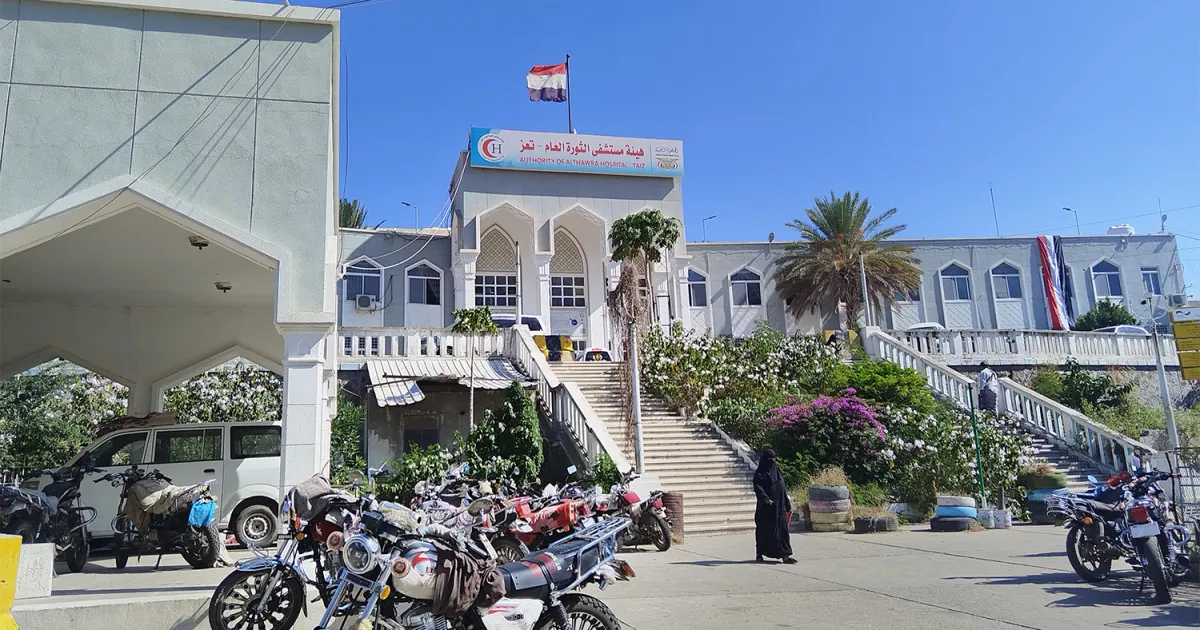
The closure of roads has prevented people living in the rural belt around Taiz from reaching medical centres in the city. Taysir al-Samei, an information officer at the governorate’s health office, said access to hospitals had fallen by between 60 and 70 per cent by the end of the second week of the siege.
Hospitals are struggling to obtain medical supplies and the fuel required to keep essential services operating. Residents inside Taiz have also been unable to leave the city for treatment elsewhere in Yemen or abroad.
A young journalist, identified only as T F, said the siege had prevented him from travelling to Cairo to see a specialist treating his chronic immune-related inflammation, which affects his liver enzymes.
His condition worsened as the Houthi offensive intensified around Taiz and the western coast. Tests showed his liver enzyme levels had risen to 32 times the normal range, prompting his doctor to advise him to seek urgent treatment abroad.
But the journalist said his previous reporting opposing the Houthis meant leaving the city would be “almost impossible”.
“The only exit is now in the hands of the enemy,” he said.
Access roads cut off
Salah Ahmed Ghaleb al-Majidi, acting director of Taiz’s Siege Affairs Department, described the situation as “the worst catastrophic siege imposed on a Yemeni city since the war began in 2014”.
He said the impact extended beyond shortages of food, medicine and fuel, with families struggling to reach relatives because the main and secondary roads between the countryside and Taiz city had been cut off.
“The impact has reached deep into local communities, threatening family cohesion,” al-Majidi said.
The siege began after the Houthis seized al-Turbah, a town in the far south-west of Taiz governorate, cutting the city’s principal route to Aden and the outside world.
Houthi forces first reached the outskirts of Taiz in 2015, after taking control of the capital, Sanaa, the previous year. Their takeover of the governorate’s western countryside has since left Taiz city encircled.
