


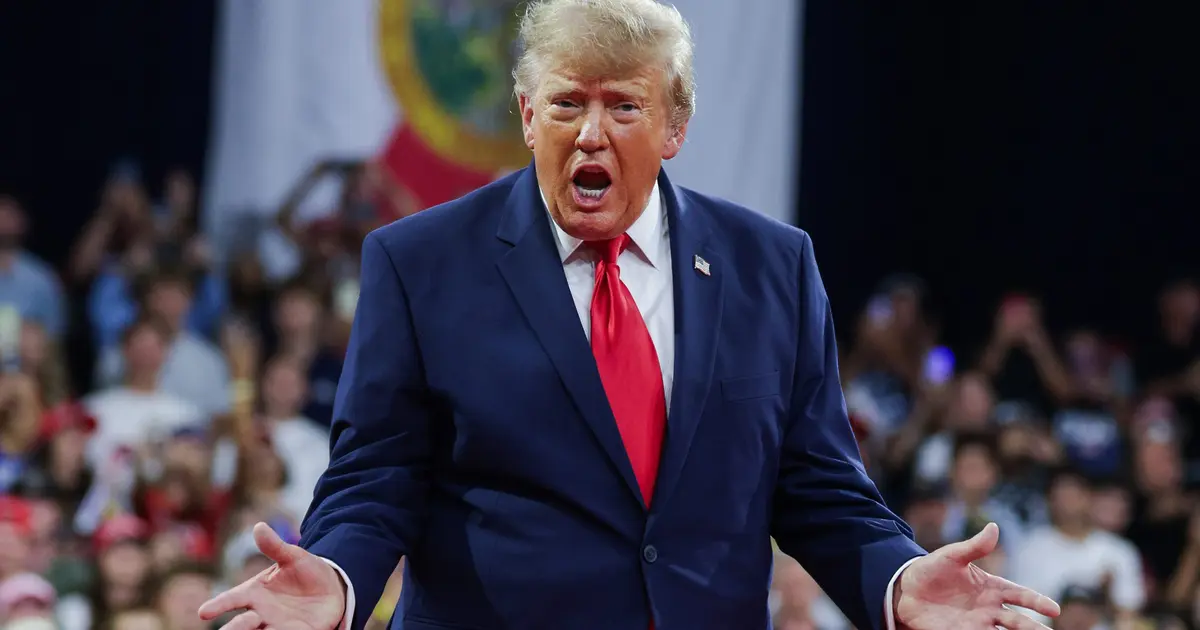
Donald Trump has warned that he could become “Mr. Veto” after Democrats won control of both chambers of Congress in the US midterm elections, setting up two years of divided government in Washington.
The Democratic victories will give the party control of federal spending and congressional oversight when the new Congress takes office in January 2027. But the president will retain wide executive powers, including authority over foreign policy, trade enforcement and the operation of the federal government.
Trump also retains the power to block legislation passed by Congress. In an interview with the New York Post’s Pod Force One podcast, he said he expected to issue vetoes for “a month or two” before eventually negotiating with Democratic leaders.
“I guess I’ll become Mr. Veto,” Trump said. “And then at some point, we’ll probably make deals.”
He later shared an image of a red cap bearing the word “VETO” as Republicans absorbed losses in both the House of Representatives and Senate.
How the presidential veto works
The veto is one of the president’s most important constitutional checks on Congress. Under Article I, Section 7 of the US Constitution, the president has 10 days, excluding Sundays, to sign or reject legislation once it has been presented by Congress.
If the president signs a bill, it becomes law. If he does nothing for the full period while Congress remains in session, it also becomes law without his signature. A bill can be rejected through a regular veto, in which the legislation is returned to the chamber where it began with a written explanation.
Congress can override a regular veto, but only with a two-thirds majority in both the House and Senate. That high threshold means Democrats would need substantial Republican support to pass major legislation over Trump’s objections. ([history.house.gov](https://history.house.gov/Institution/Presidential-Vetoes/Presidential-Vetoes/?utm_source=openai))
The other form is the pocket veto. This occurs when Congress adjourns during the 10-day period and the president does not sign the bill. The legislation then fails to become law and cannot be overridden by Congress.
The first regular presidential veto was issued by George Washington in 1792. Since the federal government was established, presidents have used the veto thousands of times, while Congress has overridden only a small proportion of those decisions. ([history.house.gov](https://history.house.gov/Institution/Presidential-Vetoes/Presidential-Vetoes/?utm_source=openai))
Trump’s record of vetoes
Trump has vetoed 12 measures across his two terms in office — 10 during his first term and two since returning to the White House. Only one of those vetoes has been overridden by Congress.
The new Democratic majorities will therefore face a familiar obstacle: control of Congress allows them to set the legislative agenda and investigate the administration, but turning campaign promises into law will often require either Trump’s approval or enough bipartisan support to overcome a veto.
The balance of power also means that major disputes over government funding, borrowing and the president’s wider agenda are likely to become central tests of the new Congress.
