


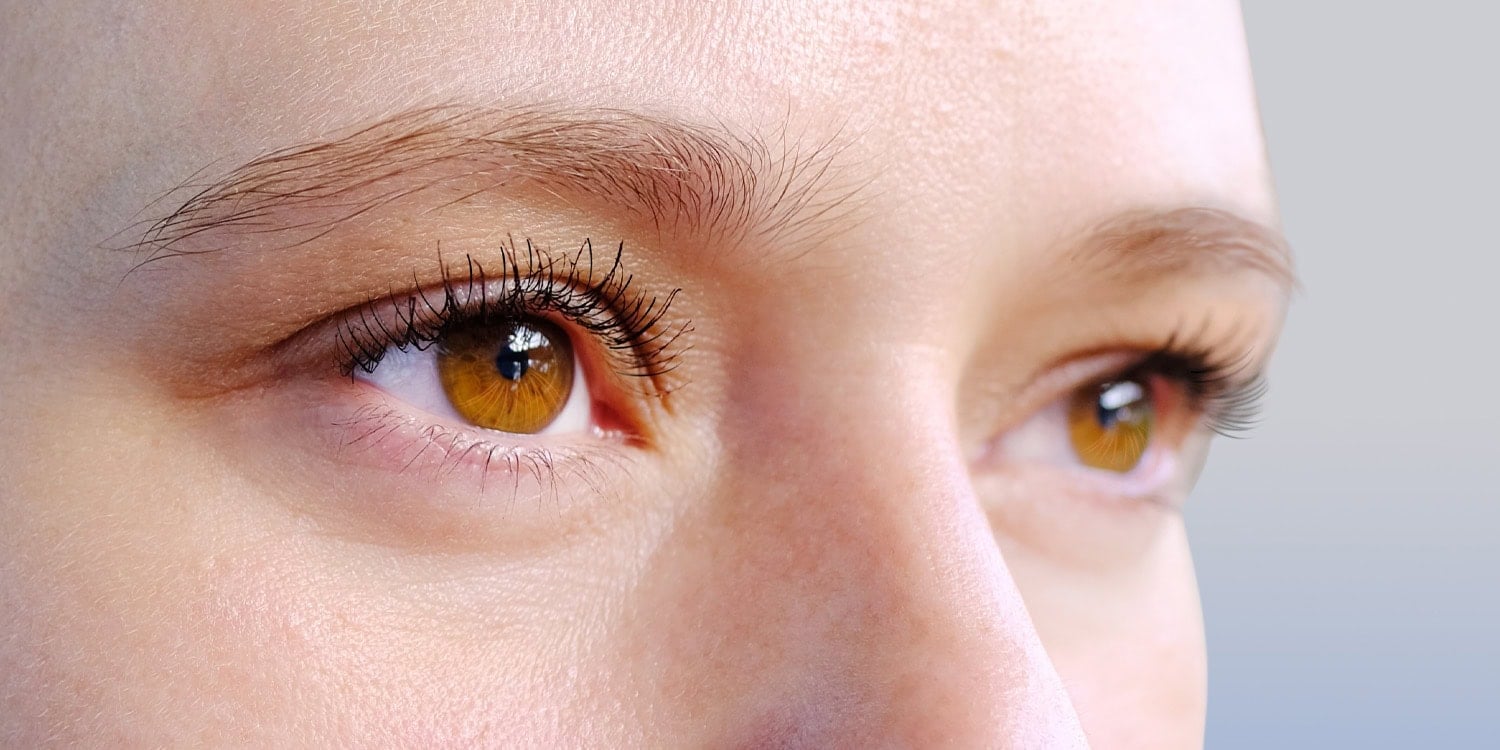
A new UK-led study published in the Journal of Affective Disorders casts doubt on the long‑standing assumption that people with social anxiety are more likely to perceive others as staring at them. The researchers reassessed previous claims and carried out three online experiments alongside a pair of meta-analyses, concluding that links between social anxiety and altered gaze perception are weak and difficult to replicate. The authors suggest the cone of gaze should not be relied upon as a standard biological marker for social anxiety.
In everyday interaction, humans constantly infer where others are directing their attention. Psychologists describe this with the cone of gaze—the specific range of angles at which a person feels someone is looking directly at them. The broader this imaginary cone, the more likely a person is to interpret off‑centre eye contact as direct.
For years some researchers proposed that the cone of gaze could serve as a biological and behavioural marker for social anxiety disorder. People with higher social anxiety often report feeling heavily watched or judged. Earlier work suggested that socially anxious individuals might have a wider cone of gaze, interpreting a wider range of angles as self‑directed eye contact.
The study’s lead author, Madeleine E. Moses-Payne of University College London, explained that the brain processes visual information through two streams: bottom‑up processing of raw visual data and top‑down processing shaped by expectations. When information is ambiguous, people’s expectations—such as the default belief that others are looking at them—can drive interpretation.
Previous theories also proposed that angry facial expressions might widen the cone for the general population, arguing an evolutionary impulse to detect threats quickly. In this framework, a threatening look would prompt quicker assumptions of direct gaze.
To assess the reliability of these ideas, the researchers conducted a two‑part investigation. They began with a meta‑analysis pooling data from ten prior studies comparing the cone of gaze in socially anxious individuals with controls, including 403 participants in total.
The meta‑analysis found only a modest association, with socially anxious individuals showing a slightly wider cone of gaze on average. However, the researchers highlighted that the existing evidence was highly inconsistent and the included studies were often small, making robust conclusions difficult.
A second meta‑analysis examined how emotional expressions influenced gaze perception, combining nine studies with 523 participants. The analysis suggested a small tendency for angry faces to be judged as looking at the observer across a broader range of angles, but again the findings varied considerably between studies, casting doubt on their reliability.
With the existing literature in mind, Moses-Payne and colleagues recruited 514 participants for three new online experiments. In each trial, participants viewed briefly flashed images of faces with eyes angled at different degrees, from direct gaze to eight degrees to the side, and pressed a key to indicate whether they perceived eye contact. All participants completed a standard questionnaire measuring current social‑anxiety symptoms.
The first experiment used strictly neutral expressions with 193 participants. The researchers compared participants’ gaze responses against their anxiety scores to see if higher anxiety correlated with a wider cone. The results were not statistically significant; groups with high and low anxiety judged eye contact at roughly the same angles.
The second experiment, involving 172 participants, used angry expressions. Here a slight effect emerged: as social anxiety scores rose, the cone widened marginally, by about 0.01 degrees for every one‑point increase on the anxiety scale.
The third experiment mixed angry and neutral faces and included 149 participants. Once again, the results did not achieve statistical significance; social anxiety did not widen the cone, and angry expressions did not alter perceptions relative to neutral expressions. Even when focusing solely on angry faces, the link to social anxiety disappeared.
When the researchers pooled data from all three new experiments, there was no overall relationship between social anxiety and the cone of gaze. Anger expressions did not widen the perceived range of eye contact, and the single positive finding from the second experiment did not hold up in the combined analysis.
The authors noted several limitations. Although participants completed a validated symptom questionnaire, none had formal clinical diagnoses of social anxiety disorder. It remains unclear whether a clinically diagnosed sample might yield different results.
The online nature of the trials may also be a factor. Psychologists point to social evaluative threat—the discomfort arising from the presence of an observer—as a potential amplifier of anxiety in in‑person testing. The absence of a researcher in the online setting could have dampened participants’ anxiety and, in turn, their perceptual responses.
Future work could explore whether introducing social pressure, for example by asking participants to prepare a public speech before the task, alters gaze perception. The authors also suggest employing eye‑tracking to determine whether socially anxious individuals avoid looking at eyes entirely, thereby limiting bottom‑up information and amplifying reliance on prior beliefs about being watched.
The study is titled Is everyone looking at me? The perception of direct gaze as a potential cognitive marker in social anxiety and its moderation by emotional expression and is authored by Madeleine E. Moses-Payne, Georgina Krebs, Raphaëlle Delpech, Antonina H. Przyborowska and Argyris Stringaris.
