


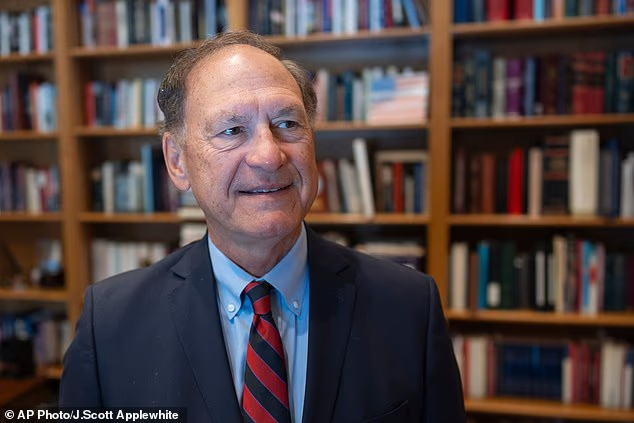
US Supreme Court Justice Samuel Alito has no plans to retire before Republicans lose their ability to confirm judges, despite Donald Trump’s interest in filling another vacancy on the court.
Alito, 76, is understood to have told close friends he will remain on the bench after it became clear Democrats would take control of the Senate in January. The change means they will be able to filibuster a Trump-backed nominee.
The current Republican majority could have given Mr Trump the opportunity to appoint replacements for Alito and fellow conservative justice Clarence Thomas, 78. However, that prospect is now threatened by the Democrats’ victory in the Senate.
Alito’s decision was reported after two sources said he had told associates he would not step down in time for Republicans to rush through a successor chosen by the president.
The justice, appointed by George W Bush, said in a rare interview with CBS News last month that he had considered retiring this year and expected to revisit the question in 2027.
“It’s something that I think that somebody at my age has to think about every term,” Alito said. “But I thought that I could still make a valuable contribution, which is why I became a justice and a judge in the first place.”
Mr Trump had appeared to raise the prospect of Alito’s retirement in an effort to encourage him to leave the court. In a short post on Truth Social, he wrote: “A great man!!! President DJT,” while sharing a report headlined, “Justice Alito confirms he is considering retirement.”
Trump’s plans for the Supreme Court
The president has repeatedly praised Alito and Thomas, while criticising the three justices he appointed during his first term: Neil Gorsuch, Brett Kavanaugh and Amy Coney Barrett.
Mr Trump has attacked the trio for ruling against him in major cases during his second term, including disputes over the use of emergency powers to impose global tariffs and his executive order seeking to end birthright citizenship.
He has also said he is prepared to appoint as many as three justices if vacancies arise. In an interview earlier this year, he said: “It’d be nice to say, now I have somebody for 40 years.”
Mr Trump moved quickly to secure his previous Supreme Court appointments. Barrett was nominated and confirmed within 30 days of Ruth Bader Ginsburg’s death, while the confirmations of Gorsuch and Kavanaugh took a little over two months and just under three months respectively.
Even had Alito retired, however, Mr Trump would not have been guaranteed a replacement. With the Senate currently divided 53-47 in favour of Republicans, several Republican moderates and senators who have clashed with the president would have needed to support the nomination, alongside at least some Democrats.
