


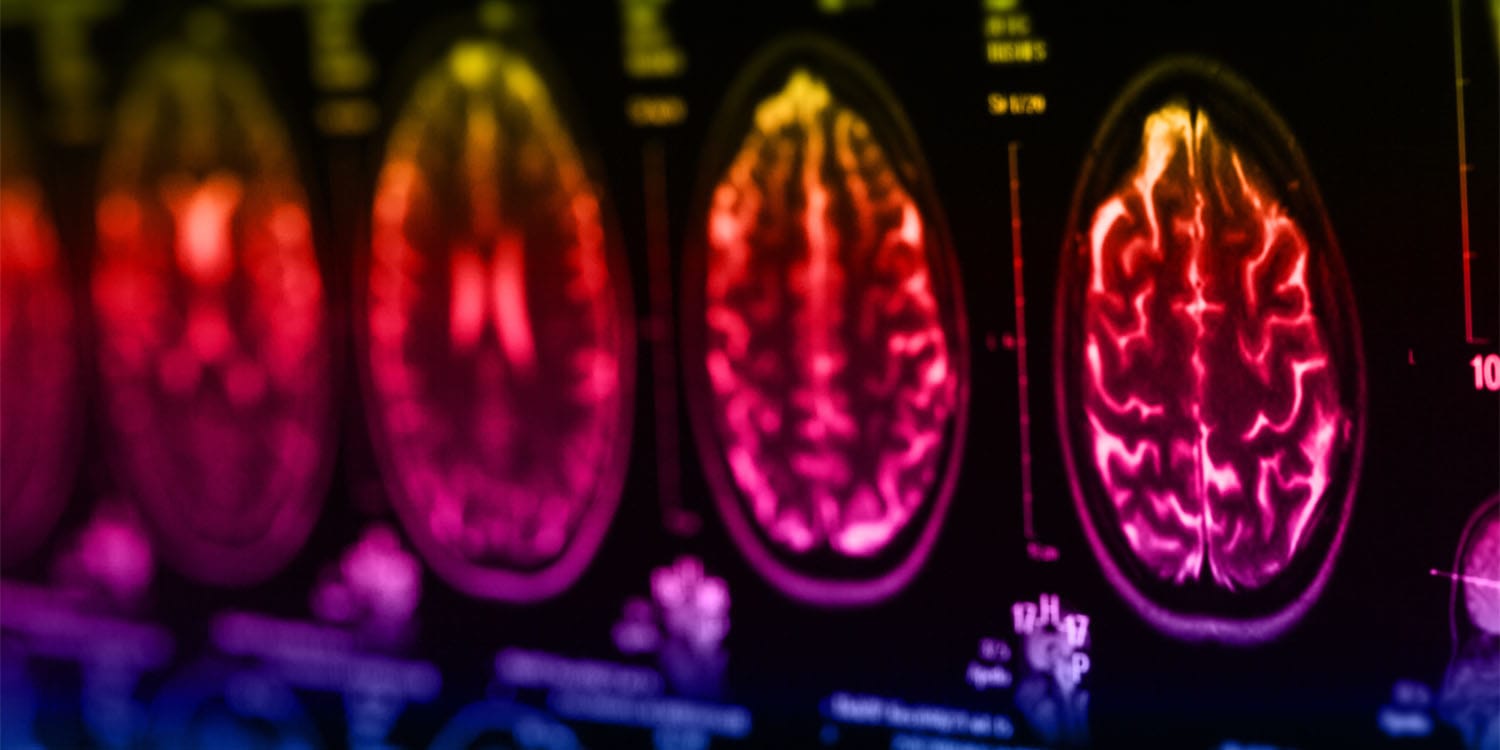
A proof-of-concept study using machine learning on structural brain scans has suggested that the volumes of specific brain regions can partly predict how strongly a person prioritises immediate rewards over larger future gains. In a cohort of 146 young adults, researchers found that models based on gray matter and white matter volumes could indicate individual levels of delay discounting. The work, published in JAMA Psychiatry, highlights the frontolimbic circuit as a potential structural marker and points to the right accumbens and right frontal pole as key regions.
Delay discounting describes the tendency to devalue rewards the longer one has to wait for them. People who prefer a smaller amount now over a larger amount later are displaying a steeper discounting curve, a behavioural measure of impulsivity and short-sighted decision-making. The concept spans everyday choices and clinical conditions, and sits within research approaches that treat mental health along continuous dimensions rather than strict diagnostic labels.
The study notes that discounting patterns vary widely and are observed across several conditions, including substance use disorders, ADHD, bulimia nervosa and borderline personality disorder. In contrast, lower discounting—an appetite for delayed rewards—is sometimes seen in anorexia nervosa and in older adults with heightened suicidal tendencies. These nuances align with research frameworks that stress dimensional analysis of behaviour and biology.
The researchers analysed behavioural data alongside structural MRI scans from July 2020 to July 2023, gathering information from 146 college-aged participants (mean age about 22.6 years; 75 female and 71 male) who underwent T1-weighted imaging. Each participant completed a delay discounting assessment and a standard structural scan to capture brain anatomy.
To ensure comparability across participants, regional brain volumes were normalised to total intracranial volume. The team used five random data splits, with 80% of participants for training and 20% held back for testing. Within each training set, generalized linear models identified regions whose volumes associated with delay discounting after accounting for age and sex at birth, before applying an exhaustive subset search to find the best predictive combinations. The final predictions came from multilayer perceptron models trained separately on white matter and on gray matter volumes.
Across the five testing splits, both the white matter and gray matter models demonstrated moderate predictive accuracy. The white matter model achieved an average R-squared of 0.22 (with a standard deviation of 0.11), while the gray matter model averaged 0.19 (SD 0.10). In other words, about 19% to 22% of the variation in delay discounting could be explained by the selected regional brain volumes.
“The predictive performance was moderate but meaningful for a study attempting to estimate a complex behavioural trait from brain structure alone,” said Wi Hoon Jung. “The models did indicate that regional brain volumes contain information relevant to individual differences in delay discounting.”
When identifying the specific brain regions contributing to the predictions, two structures in the right hemisphere featured in both models: the right accumbens, a core part of the ventral striatum involved in reward processing, and the right frontal pole, which supports future planning and weighing long-term consequences. The white matter model also leveraged four additional regions, primarily linked to sensory and visual processing, while the gray matter model added seven more, including frontal areas tied to self-control and parts of the visual cortex.
The authors note that the most informative features consistently mapped onto the frontolimbic circuit, a network connecting frontal planning hubs with deep reward centres, while also implicating sensory and temporal regions less commonly highlighted in impulse-control research. Because the white matter model outperformed the gray matter model, the researchers suggest that the macroscopic volume of white matter pathways may be as important as gray matter hubs in regulating impulsive choices.
“The main message is that differences in how people weigh immediate rewards against future benefits may be reflected, at least in part, in the structure of their brains,” Jung said. “These findings suggest that individual differences in impulsive decision-making may be associated with structural characteristics of brain regions involved in balancing immediate rewards with longer-term goals.”
Jung also described the unexpected result that white matter volumes provided stronger predictive power than gray matter. “Much of the neuroimaging literature on impulsivity has focused on gray matter regions involved in reward processing and cognitive control,” he told PsyPost. “Our results suggest that white matter volume may also provide valuable information about individual differences in delay discounting.”
However, the authors emphasise that this is an initial proof-of-concept study conducted with a modest, single-scanner sample of young adults. The models were tested on held-out data but have not yet been validated in an independent external cohort or across diverse age groups and clinical populations. The study notes that the average explanatory power was modest, accounting for around 19% to 22% of the variance, and that estimates varied across splits with about 29 participants per test set.
Because the research is cross-sectional, it cannot determine whether structural differences cause particular decision-making patterns or whether long-standing behaviours shape brain tissue volumes. The measures relied on structural T1-weighted MRI scans, which do not capture microscopic fibre integrity. Jung stressed that diffusion MRI measures would be needed to probe microstructural properties of white matter and that future work should combine multiple imaging modalities to deepen understanding.
“These measures do not directly assess the microstructural integrity of white matter fibres,” Jung noted, adding that future studies combining diffusion measures with resting-state connectivity could offer a more comprehensive view of how brain structure and connectivity relate to delay discounting. He cautioned that the findings should not be interpreted as predicting how a person will behave, but rather as identifying statistical patterns associated with impulsive decision-making.
The researchers outline plans to extend the work by validating the models in larger external cohorts across multiple sites and by integrating structural and diffusion scans with resting-state functional connectivity. They hope such approaches could help explain why white matter volumes showed stronger predictive performance and assess whether these structural markers have potential clinical utility in early diagnosis or personalised interventions for psychiatric conditions linked to impulse control.
“Combining structural T1-weighted MRI with diffusion MRI measures and resting-state functional connectivity could provide a more comprehensive picture of how brain anatomy and connectivity relate to delay discounting,” Jung said. “Such an approach may also help explain why white matter volumes showed stronger predictive performance than gray matter volumes in the present study.”
The team envisages applying their models to clinical populations, including individuals with substance use disorders, eating disorders and ADHD, to determine whether the identified structural patterns are relevant across diagnoses and could eventually inform behavioral risk profiling or targeted interventions, subject to external validation and prospective study.
“One aspect of this study that we find particularly valuable is the opportunity to bring together behavioural economics and computational neuroimaging to investigate a clinically relevant dimension of behaviour,” Jung concluded. “In adopting a dimensional perspective within the RDoC framework, we may better understand why people differ in their decision-making, both within and across psychiatric diagnoses.”
The study, “Structural Brain Volumes and Delay Discounting,” was authored by Bryan Youngwoo Yoon, Wonjin Kim, Dohyeon Kim, Joon Yul Choi and Wi Hoon Jung.
