


DoorDash employees have been told not to connect with Instacart colleagues on LinkedIn while the companies await approval for their proposed $17 billion acquisition.
Internal guidance says staff should neither send new connection requests to Instacart employees nor accept them, even where they already know one another. Any contact beyond a brief response must be approved by DoorDash’s legal team.
The instructions were included in a question-and-answer document filed with the US Securities and Exchange Commission on October 29, the day the deal was announced. Employees responding to an approach from Instacart have been given a suggested reply: “Congrats! Looking forward to connecting after the deal closes.”
DoorDash has stressed that the two businesses must continue operating independently until completion. The transaction is not expected to close until the end of 2027 or the first half of 2028, subject to approval by Instacart shareholders and antitrust reviews in the US, Canada and Israel.
That timetable could leave the LinkedIn restriction in place for up to 20 months. DoorDash reported revenue of $13.7 billion last year, meaning the proposed purchase price is greater than a full year of its sales.
Why the DoorDash-Instacart LinkedIn ban is in place
The policy is intended to prevent so-called “gun-jumping”, in which companies begin coordinating their businesses before a merger has formally completed. Antitrust authorities have warned that competitively sensitive information, including pricing, costs and business plans, must be protected during that period.
Premature discussions about prices or operations could breach competition law and potentially affect consumers before regulators have reached a decision. Regulators may also block the deal even if the companies avoid any such conduct.
A federal judge blocked Kroger’s proposed $24.6 billion takeover of Albertsons in 2024 after the Federal Trade Commission argued that it would push up grocery prices. The companies subsequently abandoned the transaction.
Restrictions on contact between staff at merging companies are not unknown. In 2018, defence contractor SAIC told employees not to contact workers at Engility, which it was acquiring, without approval or coordination through its integration team, although existing working relationships could continue.
Several mergers and acquisitions specialists said they had not previously encountered a rule specifically preventing employees from making LinkedIn connections during a pending deal. LinkedIn says it has more than 1.4 billion members, making it easier for employees to identify colleagues and roles across an organisation.
For workers facing a merger, those relationships can be important as they try to understand future reporting lines and the possibility of job losses. A review of 190 publications on mergers and acquisitions found that deal announcements can increase anxiety and encourage employees to seek information.
Chris Selland, a lecturer at Northeastern University, said employee conversations could create risks by encouraging recruitment between the companies or exposing valuable customer contacts. He also said the restriction could guard against “poaching and org-chart mapping” if the transaction were ultimately blocked and the businesses remained competitors.
DoorDash employees are not prohibited from applying for jobs at Instacart, but must do so in the same way as any other external applicant. Mr Selland described the policy as “less of a heavy-handed ban and more of a clearly-worded guardrail”, saying discussions about vacancies, pay or shared accounts could cause difficulties.
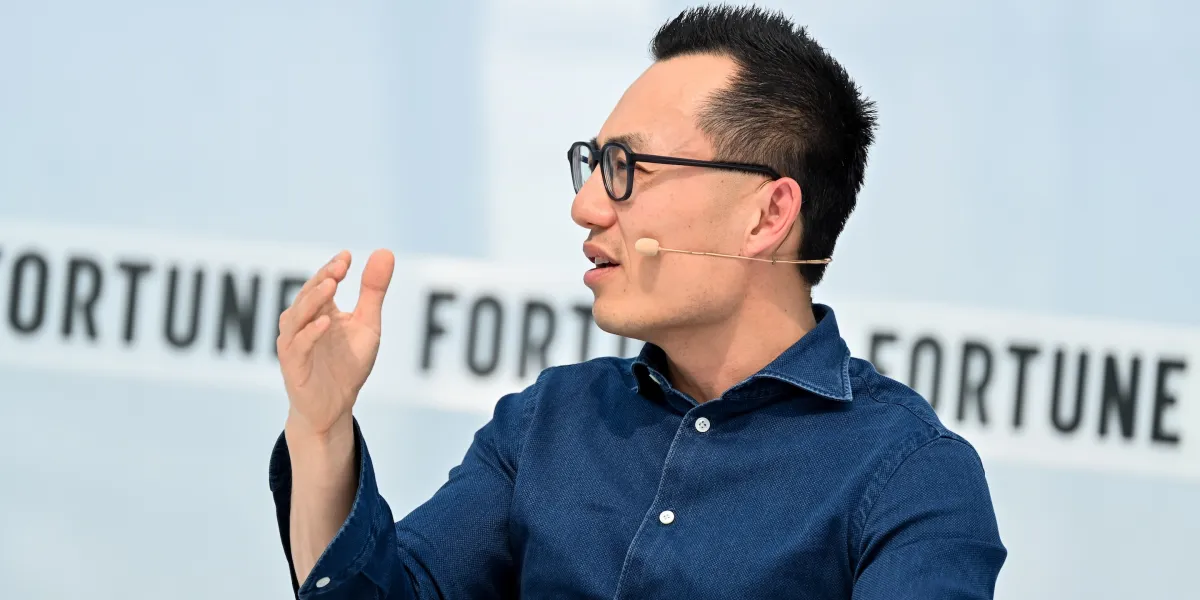
He added that “a LinkedIn connection likely won’t blow up a deal on its own”. The more difficult challenge will come if the acquisition is completed, with DoorDash chief executive Tony Xu previously observing: “M&A is very easy to get right on a sheet of paper; it’s very hard to get right in practice.”
