


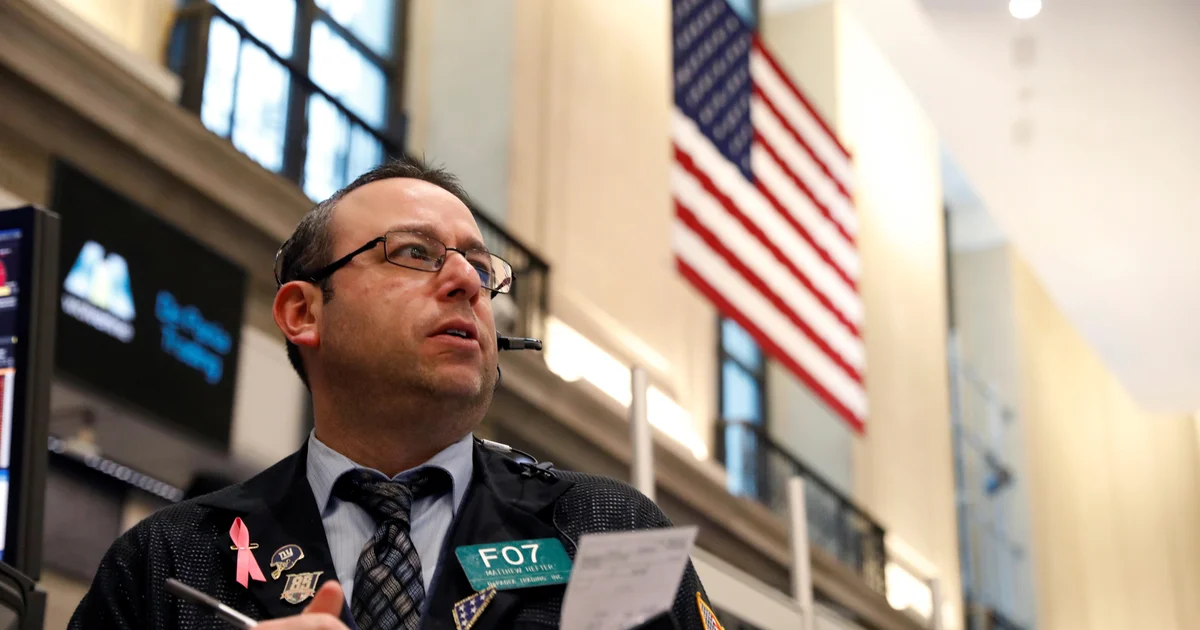
The US stock market surged on Wednesday as investors assessed the impact of the Democrats’ sweeping victories in the midterm congressional elections.
The Dow Jones Industrial Average climbed more than 1,500 points, or 2.9 per cent, in afternoon trading, putting it on course for its biggest gain of the year. The S&P 500 rose 1.7 per cent, while the technology-focused Nasdaq Composite gained 1.8 per cent.
Democrats’ control of both the House of Representatives and Senate is expected to increase political gridlock, particularly as President Trump has threatened to use his veto power against legislation he opposes.
Analysts said that prospect could reassure investors by limiting the chances of sweeping tax and spending measures, reducing the risk of abrupt policy changes. Stephen Brown of Capital Economics said the result would have little immediate effect because Democrats still lacked a filibuster-proof Senate majority and Mr Trump could block legislation.
“The magnitude of the gains for the Democrats in the midterms does not change too much for the near-term policy outlook,” Mr Brown said in a note to investors.
Markets focus on profits and growth
Wall Street analysts said the market’s performance was being driven more by strong corporate profits and solid economic growth than by the political make-up of Congress.
Shares in solar power companies, dollar-store operators and hospital owners helped lead the gains as investors assessed which sectors might benefit from the election result.
Wells Fargo Investment Institute analysts said economic growth, inflation, interest rates and corporate earnings had historically mattered more to broad investment performance than the party controlling Congress, particularly when the president and congressional leadership came from different parties.
“We do not expect sweeping policy changes,” they said. “More likely, in our view, is a split-government alignment on affordability, energy policy and opportunities from artificial intelligence.”
The election could nevertheless affect areas important to investors, including data-centre construction, cryptocurrency regulation and proposals to cap credit-card interest rates.
Jeff Buchbinder of LPL Research said decisions over data centres were often taken at state and utility-commission level, making gubernatorial and utility races significant alongside the congressional result.
LPL Research still expects data-centre construction to continue, he said, although strong Democratic performances in key states and opposition from local residents could slow the expansion and increase regulatory pressure on companies involved in artificial-intelligence infrastructure, including semiconductor, machinery and power-generation businesses.
Some companies associated with Republicans faced sharper falls. Trump Media & Technology’s shares dropped nearly 17 per cent in afternoon trading, while shares in Elon Musk-owned SpaceX and Tesla fell 3.4 per cent and 2 per cent respectively.
Investors also expect the market to remain supported by its historical performance after midterm elections. The S&P 500 rose by an average of 15.5 per cent in the six months following the previous 14 midterm contests dating back to 1970.
