


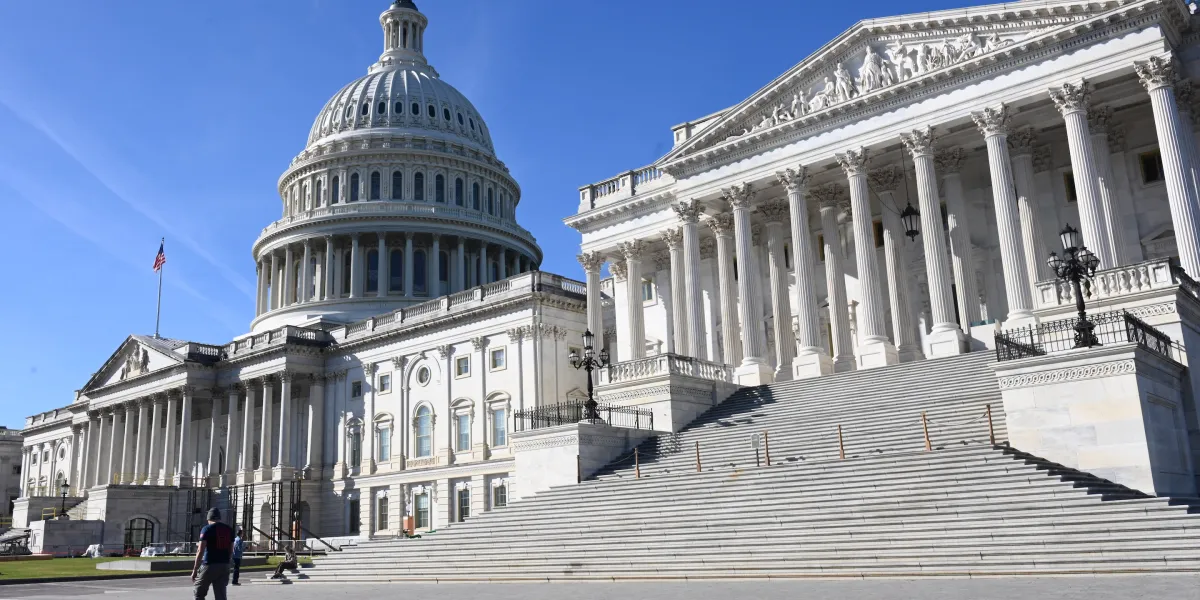
US midterm election results are unlikely to ease higher borrowing costs, finance chiefs have been warned, as companies prepare for continued volatility, fiscal uncertainty and increased scrutiny of artificial intelligence investment.
Democrats’ victory in both chambers of Congress could bring closer examination of AI projects and data-centre development. But Josh Putnam, EY-Parthenon’s global and Americas corporate finance leader, said the broader financing pressures facing businesses extended beyond the political result.
“CFOs should go into 2027 expecting sustained higher borrowing costs,” Mr Putnam said. He pointed to growing deficits, strong demand for capital, fluctuating inflation and policy uncertainty as factors likely to keep pressure on long-term interest rates.
Companies should stress-test investment plans, review debt maturities and preserve flexibility on their balance sheets, he said. Finance leaders also need to establish which projects can generate returns above their cost of capital and redirect resources where they cannot.
Companies urged to plan for fiscal uncertainty
A divided government would not necessarily push up long-term borrowing costs by itself, according to Gregory Daco, EY-Parthenon’s chief economist.
However, repeated budget disputes, the risk of government shutdowns, debt-ceiling tensions and wider fiscal uncertainty “would reinforce upward pressure”, Mr Daco said. He advised companies to test investments against a range of financing costs and maintain hurdle rates that reflect a higher and more volatile cost of capital.
The risks also extend to short-term credit. Mark Williams, a master lecturer in finance at Boston University’s Questrom School of Business and a former bank examiner for the Federal Reserve Bank, said markets charged more when uncertainty increased, whether the risk came from Washington or Wall Street.
He said banks could tighten lending terms and reduce credit, while legislative gridlock could create volatile funding cycles and send short-term borrowing costs higher. Companies dependent on commercial paper should consider longer-term funding, diversify their financing sources and arrange credit lines with several banks, he said.
Potential shutdowns could also delay the publication of economic data. Mr Williams said finance chiefs should develop internal models to fill those gaps, while government contractors should assess how delayed payments might affect cash flow.
AI investment faces rising financial and political scrutiny
AI and data-centre projects are facing particular pressure as financing costs rise and political uncertainty grows. Voters who campaigned on the effect of data centres on electricity bills won important races, while at least 14 towns in Ohio approved restrictions on their development.
That uncertainty could make projects more expensive and complicate financing, Mr Williams said. Private credit funds, which are the main lenders in the sector, could demand higher interest rates, while existing AI bonds could fall in value as yields rise.
Mr Williams said the market had already been reassessing the risks of AI investment before the election. He recommended more conservative net-present-value assumptions, analysis of several possible outcomes and stress tests based on higher borrowing costs and stricter lending conditions.
Mr Daco said a backlash was possible if households saw AI investment driving up power costs while its benefits remained concentrated. Companies should prioritise projects with measurable productivity gains, account fully for electricity and infrastructure expenses, and invest in workers and skills alongside technology, he said.
“Companies that demonstrate they can put capital to work effectively will be best positioned to pursue growth,” Mr Putnam said.
