


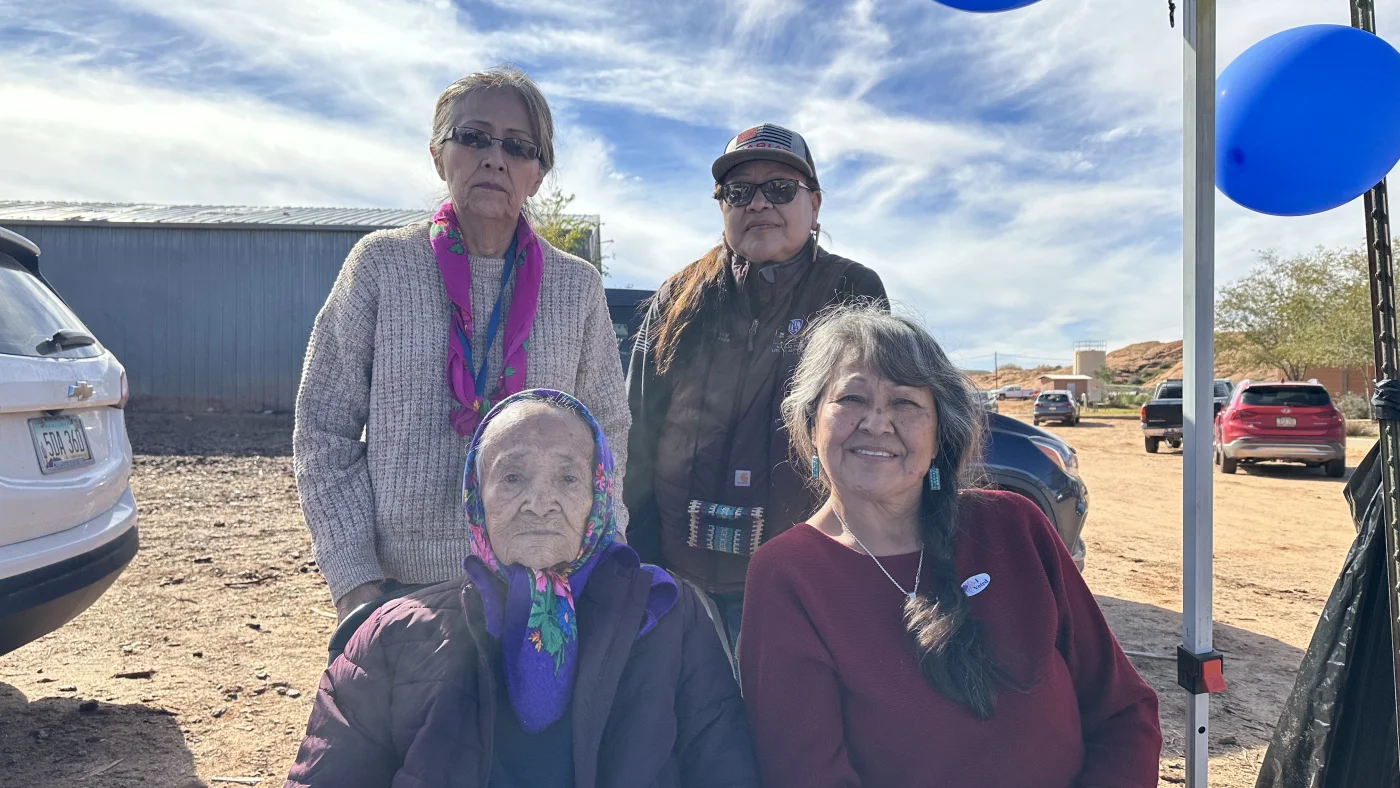
Navajo voters overcame widespread flooding to cast their ballots across parts of Arizona, Utah and New Mexico, with some travelling by tractor or relying on temporary roads to reach polling stations.
At the Dennehotso Chapterhouse in Arizona, trucks arrived with mud-caked tyres as residents gathered to vote, eat fry bread and mutton stew, and share news after a series of floods had damaged homes and cut off roads.
Three floods hit the community in a month. The most destructive began on October 22, when heavy rain sent water rushing towards the town from watersheds as far as 60 miles away.
Local contractor Kev Woolboy said earth dams intended to slow the floodwaters were overwhelmed. “There was so much rain, those earth dams didn’t stand a chance,” he said.
The flooding damaged homes and newly built roads, knocked out power and water supplies, and left parts of Dennehotso covered in thick mud.
Phyllis Yazzie, 74, said she had been eating a late breakfast with her son when a niece warned her to leave. Yazzie looked towards a nearby wash and saw the water rising.
They tried to drive away along their dirt road but were forced back to higher ground, while torrents carved ravines on either side of their house. They eventually spent the night in their car as attempts were made to rescue them.
Woolboy was helping the Navajo Police Department, which had brought an amphibious vehicle to the area. He said he carried children and elderly residents to safety, along with some of their belongings.
But as darkness fell, rain and reddish-brown silt made it impossible to distinguish the road from the floodwater. When the rescue team switched on its floodlights near Yazzie’s home, they found the road had disappeared and had to turn back.
Temporary road opened for Navajo voters
Two weeks later, residents were still clearing mud and debris. On election day, a backhoe was building a temporary road for people cut off from the town so they could reach the Chapterhouse.
Volunteers and Chapterhouse employees also drove voters to the polling station, while some people travelled for hours. Urbina Yazzie, 27, said others had been using tractors to get from one road to another simply to vote.
“It means a lot more to our people to come out and vote,” she said. “Because this is a very very important time to do so, especially with the flood and all that’s happening all over the Navajo Nation. It’s tough out here.”
Vera Begay brought her 92-year-old mother, Lilien, to vote. Lilien Begay had lost her home and all her identification documents, but her daughter said she had never missed an election.
“She’s never missed her vote- all her life she’s come here for voting,” Vera Begay said.
Despite the damage and disruption, voters who may have disagreed over politics laughed and cried together at the polling site, as the community gathered after a devastating month.
