


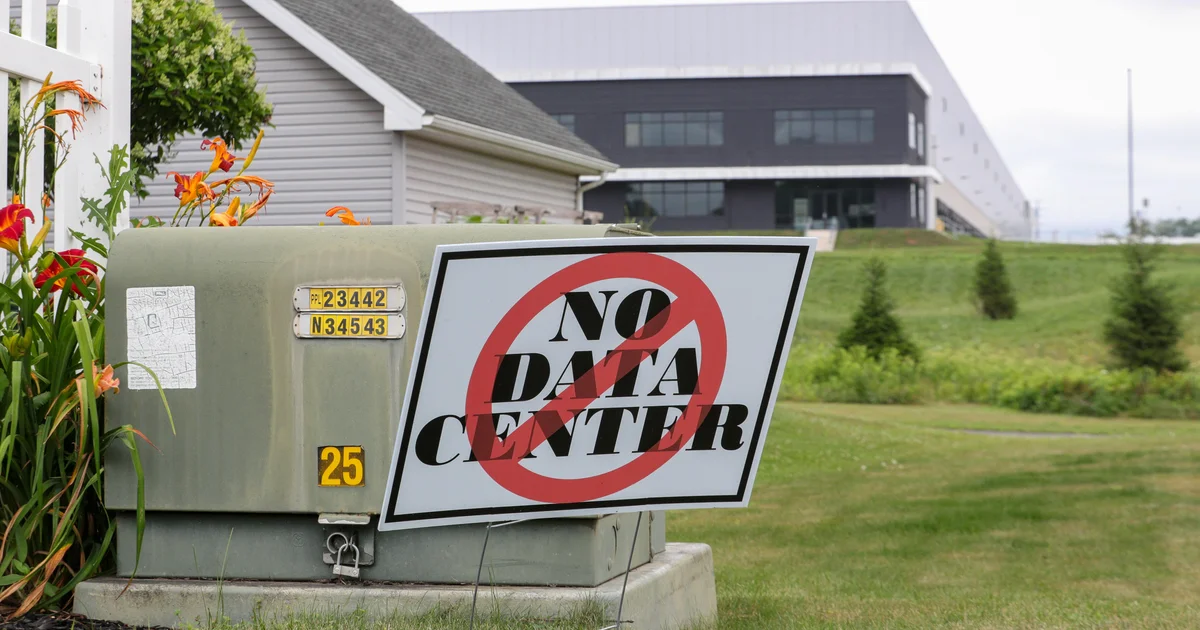
Democratic victories in the US midterm elections could slow the expansion of data centres powering the artificial intelligence boom, analysts have warned, as voters back tighter restrictions and newly elected politicians promise construction pauses.
Voters approved 37 ballot measures limiting data-centre development across California, Illinois, Maine, Ohio, New York and other states, according to an analysis by Redbud Consulting. Residents of Harwood, North Dakota, were the only voters to approve a data centre.
The results also elevated candidates who had made tougher regulation of the facilities a central part of their campaigns. Public opposition has grown as large-scale sites require significant amounts of power and investment to support the rapid development of artificial intelligence.
A poll conducted this summer found that more than twice as many Americans opposed building a new data centre in their area as supported it.
Texas at the centre of the data-centre expansion
Stephen Dover, chief market strategist at Franklin Templeton, said the election outcome was likely to bring a slowdown in construction, alongside additional regulation and higher costs for developers.
Dan Ives, a technology analyst at Yorkville Ives & Co, said the key question for investors was whether the results would affect plans for between 800 and 1,000 data centres across the US. “The answer in our view is a clear YES,” he said in a report.
Texas is expected to account for between 25% and 30% of the data-centre capacity due to come online by 2030. Democrat Gina Hinojosa, who defeated Republican incumbent Greg Abbott in the governor’s race, campaigned on a temporary ban on new data-centre construction.
“Texas is the foundation of the AI buildout in the U.S.,” Mr Ives said.
Gordon Johnson, chief executive and founder of investment adviser GLJ Research, said Ms Hinojosa’s victory could put the addition of 13 gigawatts of data-centre power in Texas at risk.
Mr Abbott had already suspended data-centre approvals, according to Mr Johnson. “Texas already has a moratorium — Abbott built it. All the new governor has to do is keep it in place. She doesn’t need a new law to keep data center permits frozen,” he said.
Georgia promises immediate pause
Georgia, the third-largest data-centre market, could also see development slowed after Keisha Lance Bottoms won the governor’s race. She campaigned on pausing new construction in the state.
Ms Bottoms said she would immediately “sign an executive order for that pause” before deciding what further administrative action was required. She also said she planned to review tax incentives that had encouraged data-centre development.
“Many local governments have already taken that first step,” she said, adding that she did not expect significant opposition across the state.
The expansion of data centres and investment in artificial intelligence have helped support US economic growth and stock-market gains. However, economists said a slower buildout would not necessarily damage the wider economy.
“It’s possible to argue that the AI trade and data center buildout was getting overheated, and this could dampen some of the excessive investment that might not have a good return on capital,” Mr Dover said.
Analysts at Oxford Economics said restrictions could lengthen the timetable for future projects, but argued that slower construction over the medium to long term would not necessarily be a bad outcome for the economy.
