


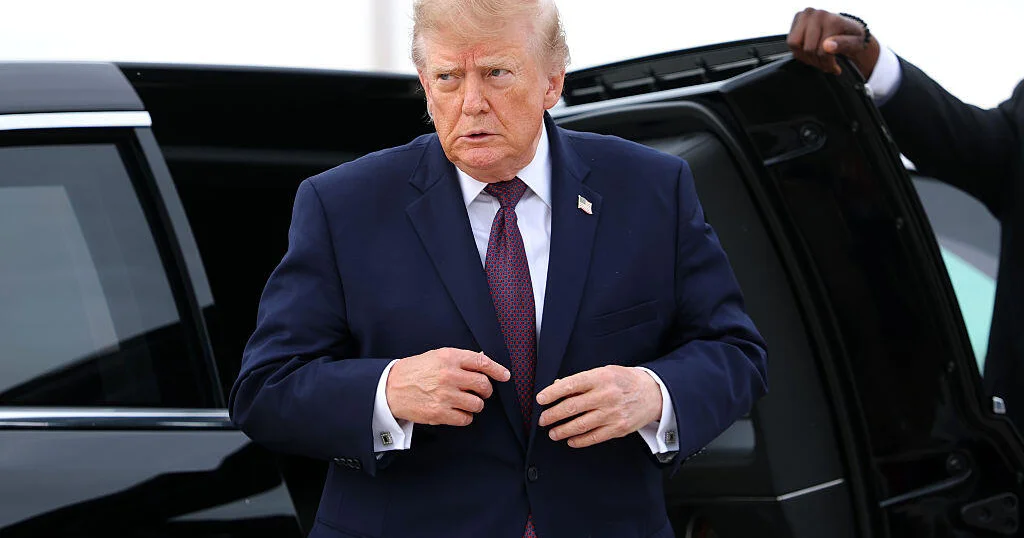
Donald Trump’s lawyers are due to argue against his 34-felony conviction in the New York hush-money case on Thursday, more than two years after a jury found him guilty over a payment made during the 2016 presidential election campaign.
The appeal will be heard by the Appellate Division, First Department, New York’s mid-level appeals court. Lawyers for Mr Trump and Manhattan District Attorney Alvin Bragg will each have 15 minutes to answer questions from the panel.
Both sides have indicated that the dispute could proceed to New York’s highest court, the Court of Appeals, and potentially the US Supreme Court.
Mr Trump’s current legal team has continued to advance arguments made during his 2024 trial. In an October filing, his lawyer Robert Giuffra opened with a statement frequently used by the president: “The case, ‘should have never been brought.’”
The conviction arose from reimbursements made to Michael Cohen, Mr Trump’s former attorney. Mr Cohen paid $130,000 to adult film star Stormy Daniels days before the 2016 election in exchange for her silence about an alleged sexual encounter with Mr Trump, which he has denied.
Mr Trump’s lawyers argue that the payment should have been dealt with under federal election law, which they say prevents a state prosecution. They also claim that prosecutors breached presidential immunity and failed to establish that Mr Trump had an “intent to defraud”.
Mr Giuffra has further argued that statements and political strategy introduced at trial were part of Mr Trump’s official presidential conduct. “The question here is whether the White House statements and strategy introduced at trial in this criminal case—responding to public allegations of personal wrongdoing bearing directly on the President’s integrity and fitness for office—were official,” he wrote.
Mr Bragg’s lawyers reject that position, describing the hush-money arrangement as “a conspiracy to defraud the American public and government regulators”. In a July filing, they said the charges concerned Mr Trump’s “unofficial, non-presidential conduct—as multiple courts have already found”.
The arguments come a week after the death of Alvin Hellerstein, the judge who had overseen a separate, years-long attempt by Mr Trump to transfer the case from state to federal court.
Judge Hellerstein repeatedly rejected that effort, including Mr Trump’s claim that the reimbursements to Cohen were connected to his official work as president.
“Reimbursing Cohen for advancing hush money to [Stormy Daniels] cannot be considered the performance of a constitutional duty,” Judge Hellerstein wrote. “Falsifying business records to hide such reimbursement, and to transform the reimbursement into a business expense for Trump and income to Cohen, likewise does not relate to a presidential duty.”
