


Neoliberalism is losing its meaning as a political label, even as the market-based policies associated with it continue to shape major economies, according to an analysis of changing public attitudes and political language.
The term is rejected by populists on both the left and the right, while few people identify themselves as neoliberals. Instead, it has become a broad insult applied to positions ranging from corporate power and high prices to international trade, immigration and technocratic government.
James Lloyd Dusenbury recently argued in the Wall Street Journal that political terms including communism and capitalism have become outdated. Neoliberalism, the analysis suggests, belongs on the same list.
There is no universally accepted definition of the word. Its supporters have used it to describe the belief that markets generally work better than governments, which should play a limited role in regulating capital and redistributing wealth.
Its critics, by contrast, use it as shorthand for aspects of global capitalism they oppose. The label has been attached to billionaires, Silicon Valley, technocrats and immigration, as well as individual politicians.
The term has also failed to develop a meaningful popular following. Socialists, libertarians, progressives and conservatives openly describe themselves using those labels, but there is no comparable political movement organised around neoliberalism.
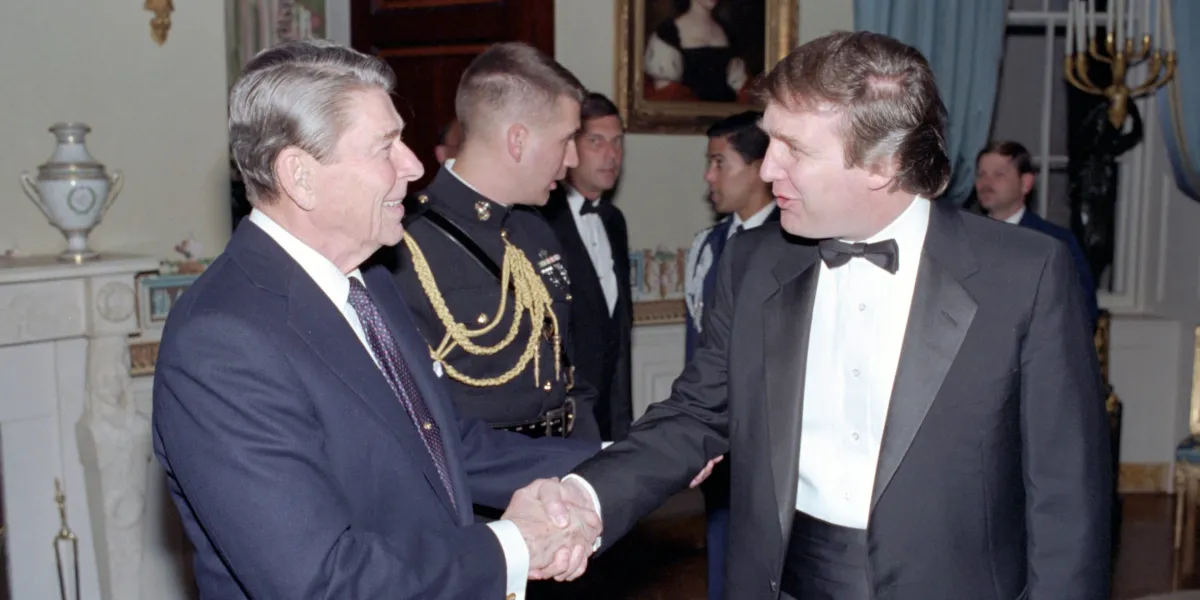
Its meaning has shifted over time. During the Reagan-Thatcher and Clinton-Blair years, it was commonly associated with deregulation, international trade agreements and the Washington Consensus. It is now more often used to signal opposition without identifying a specific policy or explaining why it is objectionable.
Public support for free enterprise
Polling cited in the analysis suggests that opposition to neoliberalism should not be confused with rejection of markets or private enterprise.
Gallup found that 77 per cent of Americans view free enterprise favourably, compared with 55 per cent who say the same of capitalism. The distinction is particularly marked among Democrats: 65 per cent view both socialism and free enterprise positively, while only 35 per cent have a favourable view of capitalism.
Attitudes towards different types of business point to a similar divide. Small business receives a favourable rating from 95 per cent of respondents, while big business stands at 35 per cent. Socialism scores 43 per cent.
The figures suggest that many voters object to concentrated corporate power rather than enterprise itself. They also indicate that support for policies linked with socialism, such as expanded health coverage, does not necessarily amount to support for socialism as an economic system.
Free enterprise continues to be associated by many Americans with choice, innovation and the possibility of personal advancement. The analysis says the figures do not show a wholesale movement away from markets and towards socialism.
The same confusion surrounds debates in other countries. Emmanuel Macron, once presented as the face of French neoliberalism, is leaving office deeply unpopular, while polls indicate that voters are looking towards the far left and far right when considering his successor.
In Canada, Mark Carney has been praised by many Democrats for standing up to Donald Trump, but has also been labelled a neoliberal by the political left.
The competing uses of the term can obscure the policy choices at stake. Voters may support a market economy with stronger safeguards, a Nordic-style welfare state or a more state-directed approach to industry. They may also disagree over how open trade should be.
Those questions can be debated clearly only when they are stated directly. Criticism of corporate power, opposition to data centres or H-1B visas, and demands for improved healthcare each describe a specific position more precisely than the word neoliberalism.
Market-based policies are likely to persist regardless of whether the label survives. Countries admired for their generous welfare systems, including Canada and nations in Western Europe, also retain market economies and substantial private enterprise.
The argument is therefore not a eulogy for free enterprise, but for a political word that has become too imprecise to support a useful discussion about the role of markets and government.
