


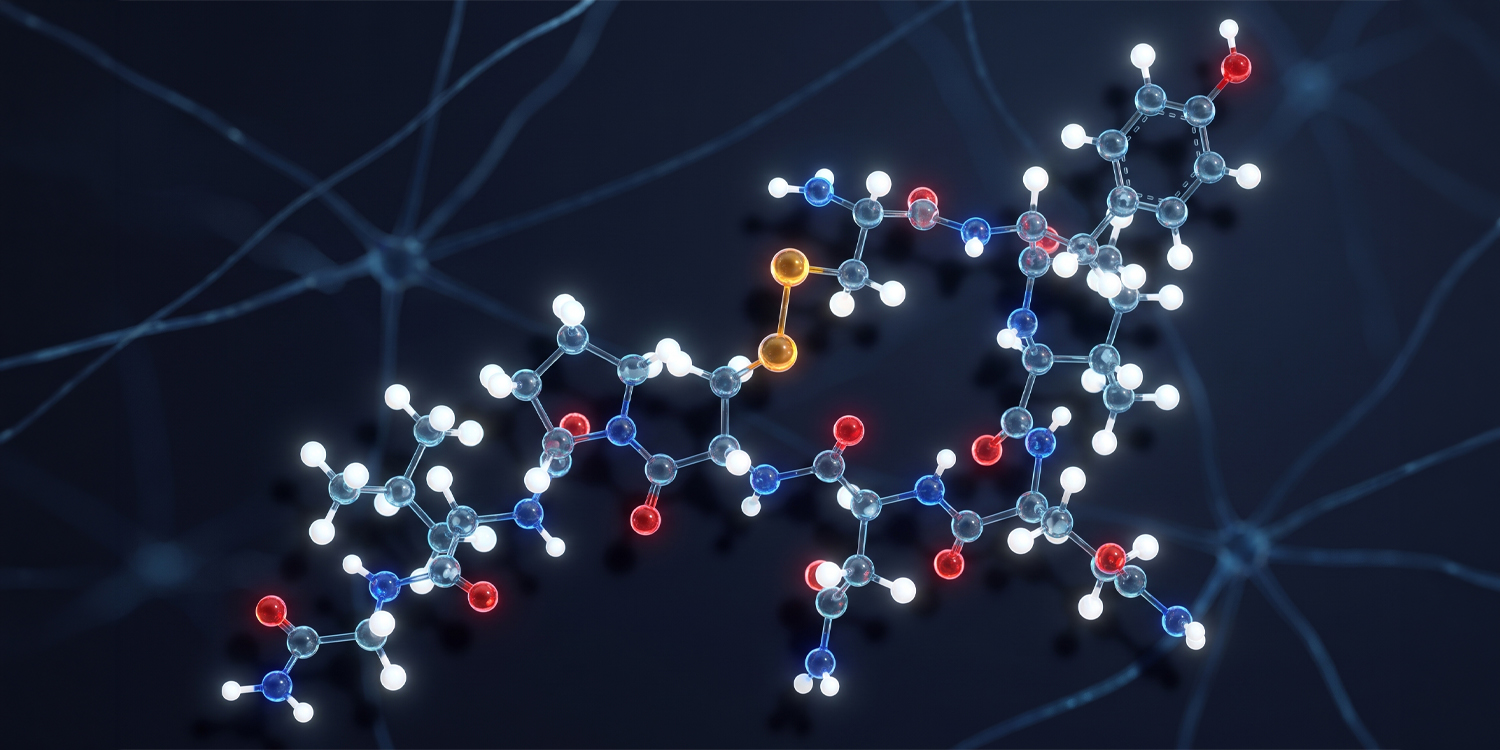
The study raises questions about the long-held belief that oxytocin universally promotes warmth in social relations, suggesting instead that the so‑called love hormone can intensify negative memories for people who struggle with relationship anxiety. Researchers from McGill University report that oxytocin amplified the emotional negativity of maternal memories in individuals with high attachment anxiety, with implications for how the hormone might be used in therapeutic contexts. The work appears in the journal Emotion.
Attachment theory holds that early interactions with caregivers shape lasting patterns in how people relate to others. Securely attached individuals tend to expect reliability and support, while those with anxious attachment crave closeness but fear abandonment, sometimes over-focusing on relationship threats. Avoidantly attached people, by contrast, withdraw from intimacy to shield themselves from disappointment.
Oxytocin has long been studied for its role in childbirth, nursing and bonding, and initial experiments suggested it broadly enhanced trust and empathy. More nuanced theories, however, describe oxytocin as a social salience amplifier, heightening attention to social cues whether they are positive or negative. Animal studies have shown oxytocin can, for example, amplify fear responses after social defeat.
In their two-part, double-blind study, the McGill team led by Melissa Shemirani and Jennifer A. Bartz recruited 77 participants, including both men and women. Each participant attended two visits, on different days, receiving a dose of oxytocin via nasal spray on one visit and a placebo on the other, with neither participants nor researchers knowing which spray was administered at a given session. The design allowed a direct within-person comparison of responses under the two conditions.
After allowing time for the hormone to take effect, participants were prompted with attachment-related words such as “protect” or “upset” and asked to retrieve specific memories involving their mothers. From these, researchers selected one positive and one negative memory for each participant and asked them to elaborate on the memories aloud for several minutes.
Independent raters listened to the transcripts and judged them for positive and negative emotional content. The researchers also used two computer-based text analysis tools to measure emotional tone: one counted emotion words from a large dictionary, while the other examined grammatical context to assess how words were modified by surrounding language.
Among participants with high attachment anxiety, oxytocin led to descriptions of their mothers that were more negative and less positive than when they received the placebo. This supports the notion that oxytocin can magnify underlying relationship insecurities rather than simply boosting social warmth.
The automated analyses mirrored the human evaluations in showing that attachment anxiety shaped the impact of oxytocin on negative language. Nonetheless, the software analyses produced a different nuance: the significant effect appeared among those with lower anxiety, with oxytocin reducing the negative tone in their memories. No consistent effects were found for positive emotional language in either set of analyses.
For participants with avoidant attachment, oxytocin did not alter the emotional content of their maternal memories. After the memory task, they answered questions about how much information they shared with the researchers; overall, avoidant individuals were less willing to disclose personal detail, and oxytocin appeared to heighten this tendency to withhold.
The researchers note that the findings are specific to recollections of mothers, whom early psychology historically treated as primary caregivers. They caution that the study did not address memories involving fathers or other guardians, and that the participant pool was relatively young and predominantly White and Asian, which may limit applicability to other groups.
A further caveat is the divergence between human evaluators and automated text analyses. Automated tools can struggle to interpret the mixed emotions typical of family histories, while spoken memories often include tangents and stylistic quirks that confuse software designed for shorter written texts.
Overall, the team emphasises that oxytocin is not a universal remedy for relationship difficulties. Rather, as a social amplifier, it can intensify pre-existing social fears, which could require careful clinical oversight if used therapeutically to avoid increasing distress for those with high anxiety about their connections.
The study is titled “Attachment, Oxytocin, and Maternal Recollections: Further Evidence for the Salience Hypothesis,” and is credited to Melissa Shemirani, Willis Klein, Jonas P. Nitschke, Sonia A. Krol, Signy Sheldon, and Jennifer A. Bartz.
