


Cruise ships are getting bigger, with the largest vessels now carrying thousands of passengers and further expansion planned across the industry. Royal Caribbean, MSC, Norwegian Cruise Line and Carnival are all developing ships that will match or exceed today’s megaship scale.
The world’s largest cruise ship in 2000 was Royal Caribbean’s Voyager of the Seas, measuring 137,276 gross tonnage (GT). Gross tonnage refers to a vessel’s internal volume rather than its weight.
Since then, the average volume of the ten largest ships has doubled. Royal Caribbean’s Icon of the Seas, which entered service in early 2024, measures 248,663 GT, stretches 364.75 metres and has 20 decks.
Icon of the Seas can accommodate up to 5,610 passengers, supported by 2,350 crew. It has since been joined by two further Icon-class ships, Star of the Seas and Legend of the Seas, while two more are on order.
More giant cruise ships are on the way
Norwegian Cruise Line’s latest vessel, Norwegian Aqua, has capacity for 3,571 passengers. In the 2030s, however, the company plans to introduce four ships capable of carrying 5,000 passengers each and measuring just under 225,000 GT.
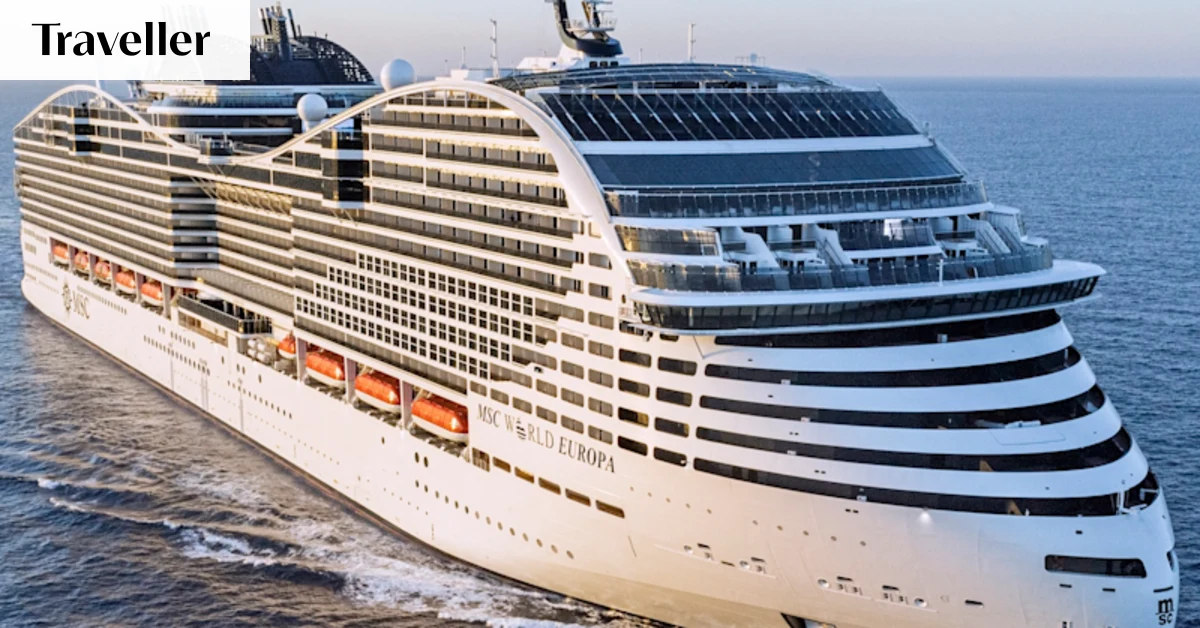
MSC has also pursued the megaship market. MSC World Europa, which entered service in 2022, can carry 6,762 passengers and has been followed by MSC World America. MSC World Asia is due to arrive later this year, with more World-class ships under construction or on order.
Carnival Cruise Line is planning vessels larger still in terms of passenger numbers. The first of three ships scheduled for delivery in 2029 will be capable of carrying 8,000 passengers, although the vessels’ 230,000 GT will remain below the size of Icon of the Seas.
The growth is not limited to the largest budget-focused ships. Viking’s ocean vessels have increased from carrying 930 guests to 998 on its most recent ships, while Silversea’s new Evolution-class vessels will accommodate 728 passengers, compared with 596 on earlier ships.
Regent Seven Seas is also preparing to launch its largest ship to date. Seven Seas Prestige, due later this year, will carry 850 passengers.
Larger vessels can offer economies of scale, costing less per passenger to build and operate, including for luxury cruise companies. But the expansion raises questions about whether customers paying for a premium experience will accept sharing it with substantially more people.
Ports and shipyards limit further growth
Filling the biggest ships is another challenge, which helps explain why they operate mainly in the Caribbean and, to a lesser extent, the Mediterranean. Both regions have large nearby customer markets.
Cruisers continue to be attracted by the size of the ships, their social atmosphere and the range of amenities and entertainment on board. Yet growth is constrained by infrastructure: no current shipyard can build or service a vessel larger than Icon of the Seas, while some ports cannot accommodate the biggest ships because of low bridges, tight turns or short quays.
Public opposition has also led some ports to prohibit very large vessels, placing further limits on how far the cruise industry’s supersizing trend can go.
