


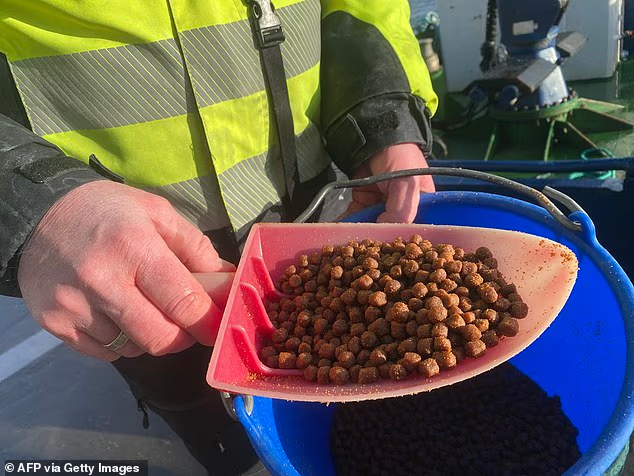
Salmon fed chicken by-products could soon be sold in British supermarkets as Europe’s major fish farmers turn to cheaper alternatives to traditional fishmeal.
Lerøy Seafood Group, one of Norway’s largest salmon producers and a supplier to Tesco, has introduced feed made from poultry bones and organs at all its offshore farms.
Mowi, the world’s biggest salmon producer and a supplier to Sainsbury’s and Asda, plans to introduce poultry-based feed at farms in Scotland and Norway. SalMar, the second-largest salmon producer, began testing chicken-based feed at some farms in March.
The pellets contain parts of birds unsuitable for human consumption, including bones, livers and brains. Feathers and other inedible material are generally excluded.
Why salmon producers are turning to poultry feed
Fishmeal, a protein-rich powder made from fish by-catch and other fish products, has almost doubled in price over the past two years. Poultry-based products cost about half as much per tonne.
Professor Margareth Øverland, an aquaculture nutrition expert at the Norwegian University of Life Sciences, said chicken by-products were safe for salmon and provided high-quality protein and valuable fats.
“These products are high-quality proteins similar to high-quality fish meal, they do not contain any antinutritional factors and they are available in large quantities,” she said.
She said conflicts, climate change and a “super El Niño” had restricted supplies of fishmeal and fish oil, prompting the aquaculture industry to seek alternatives.
Using poultry products in salmon feed was illegal until 2013 under restrictions introduced to prevent the spread of diseases including bovine spongiform encephalopathy, or BSE.
The rules were later relaxed after evidence indicated that chicken did not carry the bovine prions associated with BSE. Salmon farmers in Chile and Canada have used poultry-based feed for years.
However, the prospect has prompted concern among some consumers, who have described poultry-fed fish as unnatural and unpleasant.
A 2026 study by the food institute Nofima found that consumers in Britain and France were largely unaware of the ingredients used in salmon feed. Researcher Florent Govaerts said chicken was met with “strong scepticism” and was associated with “something unnatural and disgusting”.
Feed ingredients do not have to be listed on the packaging of the final product, meaning shoppers may not know whether their salmon was raised on fishmeal or poultry products.
Supermarket policies on poultry-fed salmon
Marks & Spencer said its own salmon feed did not contain chicken or any other land animal protein, and that it did not sell other salmon brands in the UK.
Waitrose and Sainsbury’s also confirmed that poultry-fed fish were not permitted in their own-label salmon products. Neither retailer confirmed whether third-party brands used salmon raised on poultry-based feed or whether they had a specific policy covering those products.
Tesco and Asda were contacted for comment but had not responded before publication.
Supporters of the change argue that poultry feed makes use of unwanted chicken products and could be more sustainable than fishmeal, which requires large quantities of edible fish to be caught and processed into powder.
Jørgen Skeide, feed manager at Lerøy, said the scale of the company’s operations had made finding an alternative to fishmeal necessary. “Poultry meal was the only raw material that checked all of these boxes,” he said.
Professor Øverland said consumers would accept poultry-fed salmon because of its safety and the principles of a circular economy.
