


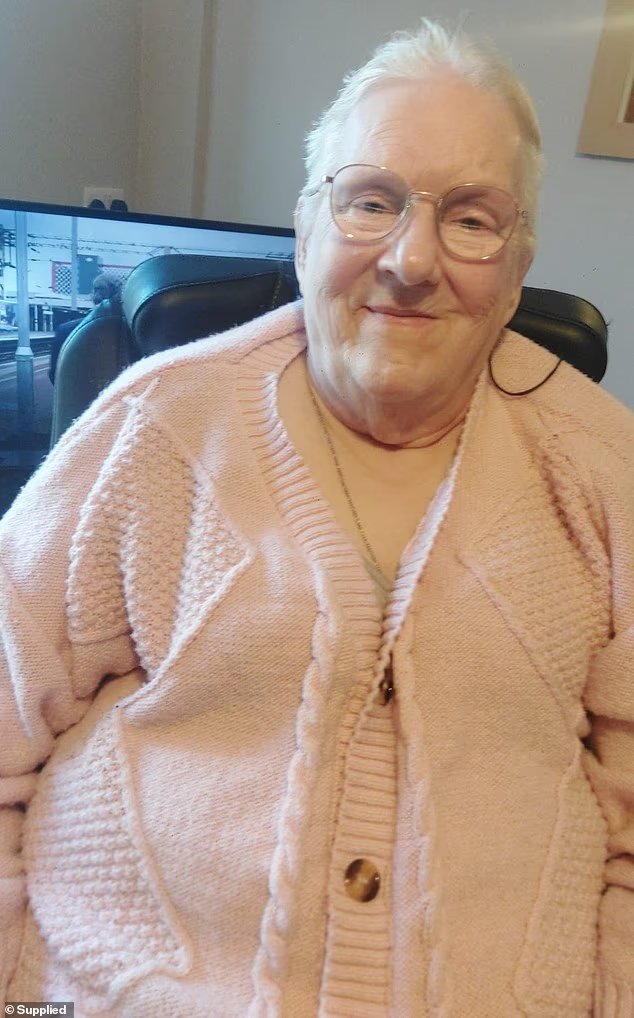
A woman from Weston-super-Mare was drawn into a romance scam in which she sent about £167,000 to a man she believed was a US Air Force officer, before threats over intimate photographs exposed the deception.
Helen Larn had been single and living alone for around a decade when she received a Facebook message from a man calling himself Maxwell Johnson. He said he was serving in Syria and quickly began confiding in her, telling her he was falling in love.
Ms Larn, who has mild cerebral palsy as well as diabetes, arthritis and thyroid problems, said the daily messages brought comfort during a period when her health had deteriorated and she had begun using a wheelchair outside the home.
“It was so lovely to know my partner Maxwell Johnson was thinking of me,” she said. “He would message me most days and if I was having a rough night he would stay awake with me too.”
The pair moved their conversations to WhatsApp. Maxwell sent her a photograph and praised her appearance after she returned the attention. He later asked for intimate images, promising they would remain private.
He then said he wanted to visit Ms Larn at her home, but claimed his money was inaccessible because of US Air Force rules and asked her to pay for his flight.
Ms Larn, who relied on sickness benefits, initially sent £500. Further requests followed. When Maxwell claimed to have reached London, he asked for money for accommodation, food and dry-cleaning before saying he had to return to the United States at short notice.
Over the following years, the promised visit never happened. Maxwell said his money and paperwork were tied up in Ghana and that he needed funds for legal costs. At other times, he asked for Apple or Amazon gift cards.
By 2023, six years after their relationship began, Ms Larn was in debt and sending money every week despite struggling to pay for her own needs.
Family discovered the romance scam
Her daughter, Chantelle, became suspicious when Ms Larn finally told her about Maxwell. Chantelle and her partner, Tony, searched for the photograph he had used and found that it belonged to somebody else, who was also reporting that they had been scammed.
When challenged, Maxwell denied the allegations and told Ms Larn her daughter was jealous and wanted to damage their relationship. She said she found it difficult to accept that the man she had spoken to every day for two years did not exist.
Chantelle eventually moved into her mother’s home with Tony and persuaded her to change her telephone number and close her social media accounts. She also reported Maxwell to police, but said officers initially told her they could not help.
Ms Larn later resumed contact after receiving a message from one of Maxwell’s supposed friends. In September 2023, he asked her for £700 in Apple vouchers.
She said she was distressed and frightened of losing him, but drove to a supermarket to buy the cards despite being unwell. On the way, she crashed her car into a wall.
While she was being taken to hospital, Maxwell sent angry messages. He threatened to distribute the intimate photographs to her daughter unless she sent the money.
Chantelle later confirmed that the images had been emailed to her. Ms Larn’s injuries from the crash were described as minor, but the stress caused complications with her diabetes and she spent time in hospital, including several days in a coma while doctors stabilised her.
After returning home, she said she could no longer drive and was unable to leave her wheelchair. It was then that she began to understand the extent of the deception.
“I felt so foolish and ashamed,” she said. “The only one who should feel ashamed is the scammer,” Chantelle told her. “You did nothing wrong, mum.”
The messages continued and became threatening. Ms Larn said Maxwell sent abusive messages and appeared to know which cars were parked outside her home, leaving her afraid he might be nearby.
The family moved house in May after becoming frightened by the threats. Chantelle contacted police again and said the matter was taken seriously on the second occasion.
Officers brought in the National Crime Agency and told the family that the scam was being orchestrated by a Nigerian gang. Ms Larn was told that Maxwell Johnson did not exist.
In total, she estimates that she transferred about £167,000. She now owes around £9,000 to energy companies and £8,000 to her carers.
“All I wanted was a little bit of happiness,” Ms Larn said. “These scammers are ruthless and they will take everything you have.”
Chantelle, 34, said her mother had been “groomed and exploited” and that the family had struggled to persuade police to act at first.
“When they sent me her naked photos, I was horrified,” she said. “That’s something no daughter should ever have to see.”
She said her mother had eventually been sending money “out of fear, not love” and is now raising funds to improve the garden at her mother’s new home.
“We’re speaking out to make other families aware,” Chantelle said. “Anyone can be a target.”
