


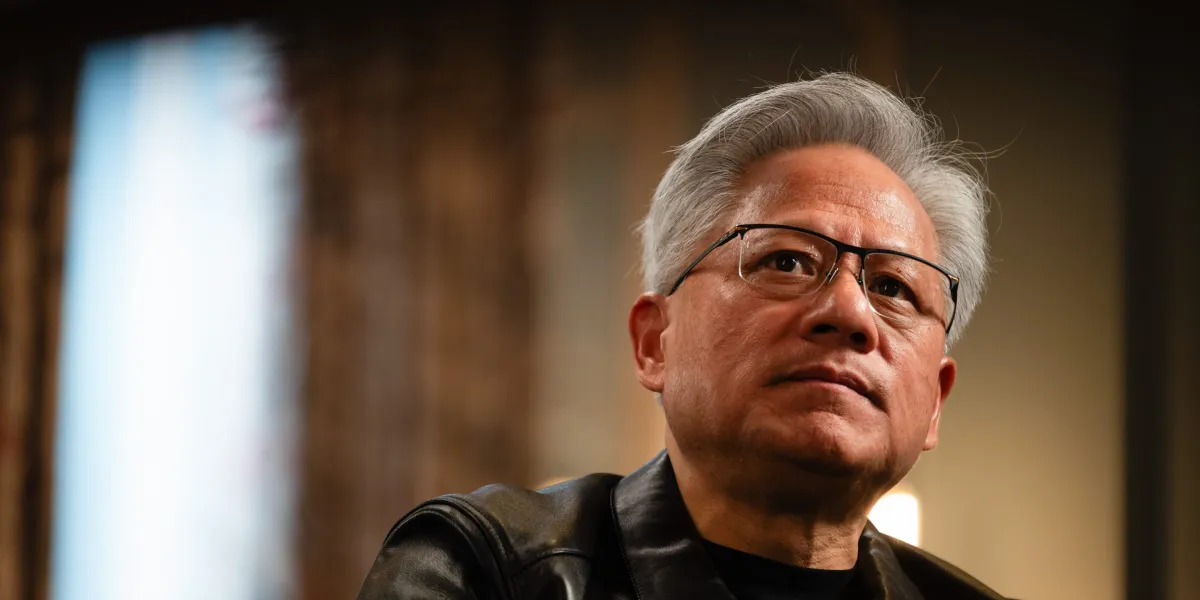
Nvidia’s board has ruled out a return by co-founder Jensen Huang as chief executive, despite his saying he would be honoured to resume the role. Chairman Harvey Jones made the announcement during the company’s first earnings call since Huang’s resignation, while declining to discuss the circumstances surrounding his departure.
Jones said Huang had “voluntarily resigned” on 12 November after the disclosure of personal behaviour “inconsistent with the company’s code of conduct, standards, and cultural norms”. The board accepted his resignation unanimously and has appointed a search firm to consider internal and external candidates.
“We do not intend to reinstate Jensen as CEO,” Jones said. He added: “We will not be addressing or taking questions on today’s call regarding the circumstances of Jensen’s resignation and the ongoing investigation.”
Huang wrote earlier on Tuesday that he “would be honored” to return. “I own my mistakes completely, and I am committed to cooperating with the Board’s independent investigation,” he said.
Nvidia board rules out Jensen Huang comeback
The call allowed each analyst to ask one question, but none pressed Nvidia on Huang’s departure, Singapore, Megaspeed or a reported Securities and Exchange Commission investigation into whether the company misled investors.
Bank of America analyst Vivek Arya asked about staff retention and the leadership transition. Interim chief executive Colette Kress said employees held “diverse opinions”, but added that “from a business perspective, it’s business as usual”.
The board’s decision came as Nvidia reported quarterly revenue of $115.8 billion, around $7 billion above Wall Street expectations. Its shares rose by nearly 5 per cent in after-hours trading to about $163.
Jones said the new chief executive would need to navigate national security and export-control issues carefully. Nvidia has also created a national security and export control oversight committee, which he said would strengthen engagement with the US government and its agencies.
The unanswered questions centred partly on Nvidia’s reported sales through Singapore. In the quarter ending in July 2025, the company attributed $10.2 billion, or 22 per cent of its revenue, to customers billed there.
Nvidia said customers used Singapore to centralise invoicing while products were usually shipped elsewhere. It also said that more than 99 per cent of controlled data-centre compute revenue billed to Singapore related to orders from US-based customers.
The following quarter, Nvidia began reporting revenue according to the locations of customers’ headquarters, saying the change gave a better representation of its geographical revenue profile. Singapore no longer appeared as a separate line.
US authorities have confirmed criminal investigations into Megaspeed, a Singapore-based data-centre company suspected of helping move Nvidia’s most powerful technology to China. Nvidia placed the company on a “no sell” list in June 2025, according to the details disclosed in the source material.
The allegations have also been linked to reports about Huang’s personal relationships, including one involving Alice Huang, a former Megaspeed executive whom US authorities suspect of spying for Beijing. She is not related to Jensen Huang. Megaspeed has said it will work “constructively” with the government.
A civil investigation by the SEC into Nvidia’s investor disclosures has also been reported. The company is expected to file its next 10-Q in the coming weeks, providing the first regional revenue breakdown since Huang’s departure.
Nvidia says China sales will stop
Kress said Nvidia recorded $2.4 billion in sales of licensed Hopper data-centre chips to China during the quarter. “We are no longer shipping licensed Hopper data center products to China,” she said, adding that the company’s next-quarter forecast assumed no data-centre compute revenue from the country.
She said Nvidia was still studying new Commerce Department export rules tightening access to advanced chips through other countries. Demand continued to exceed supply, she said, while the company raised its forecast for fiscal 2028 revenue growth to about 75 per cent from 70 per cent.
Frontier artificial-intelligence laboratories are expected to account for about 15 per cent of Nvidia’s data-centre revenue this year, Kress added.
Huang and Nvidia’s general counsel, Tim Teter, have agreed to transcribed interviews with three House committees. Huang’s interview is expected before Thanksgiving. Kress ended the earnings call by saying: “We’ve got this.”
