


Andy Burnham’s first Labour conference as leader has been overshadowed by claims that the Government is preparing for an early general election, despite his insistence that he will not call a snap poll.
Burnham told reporters on Friday that an immediate election was not planned. However, Labour sources have alleged that a forthcoming “ten-year plan” could be used to set out a manifesto and create the case for seeking a fresh mandate as early as November.
The plan, promised by Burnham on the steps of No 10, is intended to “lay out a path from where we are now to where I believe we all want Britain to be”. One Labour source described it as “nothing but a Trojan horse for an early election”.
The claims match Kemi Badenoch’s prediction last week that the country could face a December poll. The Conservative leader branded Burnham a “gambler” as she made the forecast.
Senior Labour sources expect No 10 to argue that the previous manifesto’s red lines are preventing progress on issues including the cost of living. They also believe the ten-year plan could go beyond Sir Keir Starmer’s commitments to voters, including on Brexit, leaving Burnham under pressure to ask for a new mandate.
Louise Haigh, described by allies as a de facto deputy prime minister, is said to be acting as the Prime Minister’s general election campaign manager. Lord Alli is also understood to be bringing together 20 donors to build Labour’s campaign funds.
Pressure on Burnham at Labour conference
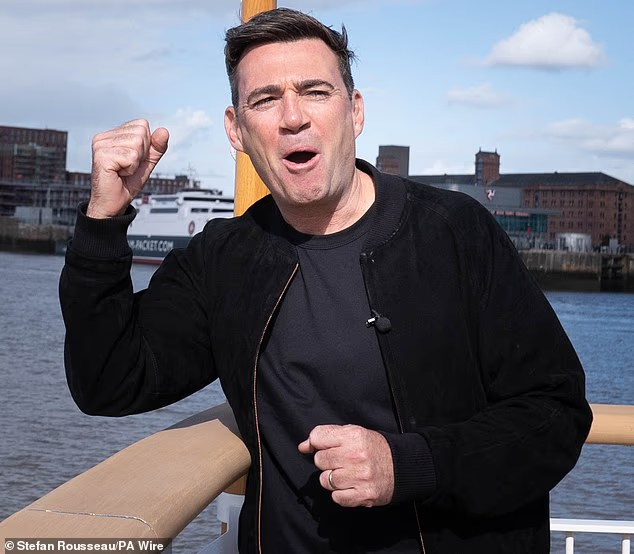
Burnham arrived in Liverpool on Saturday in a relaxed mood, posing for photographs with his wife, Marie-France van Heel, and appearing more confident than his predecessor. But behind the informal presentation is a party facing deep divisions over its political direction and the prospect of an election in marginal constituencies.
The Labour conference is expected to offer the new leader a relatively easy passage. Critics of Burnham are not expected to try to upstage him in Liverpool, despite a Cabinet dispute over migration and a challenge to the Government’s approach to economic growth from former minister Peter Kyle.
Nevertheless, union demands could create difficulties. Internal critics fear delegates will press for further spending commitments without identifying how they would be funded.
One delegate said: “I think it’s going to be spend, spend, spend. Delegates are going to think that because there’s a new leader we can spend loads of money we don’t have.”
A senior party official claimed that smaller unions were making demands and that No 10 lacked the resolve to reject them. “Burnham’s not got the balls or the skill to face down the unions,” the official said.
The tensions extend to Westminster, where rival Labour factions are establishing their own bases of support before the Budget. Darren Jones, a former ally of Sir Keir who was removed from his role by Burnham, has formed a grouping of MPs described as concerned about the party’s electability and public finances.
A senior insider claimed the group had about 100 members, including ministers. Rachel Reeves is said to have joined, with one Whips’ Office source describing the former Chancellor as still “sore” after losing her post.
One member of the group said it was also a contingency vehicle “for when it all goes wrong for Burnham, [so we] have a group ready to pounce”. Downing Street is concerned that the grouping is intended to undermine the Government, although Jones maintains that its purpose is to help Labour remain electable before the next election, whenever it takes place.
The group’s activity has prompted hostility from some Government figures. One source said Jones was “clearly not in a good place at the moment”.
Budget and spending review threaten further Labour divisions
Talk of an early election is expected to continue because figures around Burnham believe the Government could be forced into a corner over the coming months, rather than because they think the leader actively wants to go to the country.
The Budget is expected to be a relatively low-key event, with devolution pledges helping to mask the limited departure from the previous administration’s agenda. Greater pressure is expected to come with next year’s spending review, when the scale of the country’s financial difficulties is due to become clearer.
That process is expected to force Labour MPs to confront welfare cuts they oppose. Sir Keir and Rachel Reeves had pushed many spending reductions towards the end of the anticipated five-year term, leaving difficult decisions to be made later.
One MP warned that Labour’s Left-wing MPs were “lying in wait” if Burnham cut departmental budgets, saying welfare reductions would once again “trigger a Left-wing revolt”.
Burnham may leave Liverpool without a serious challenge to his leadership, but the competing factions and the prospect of difficult spending decisions are likely to make his return to Westminster considerably more testing.
