


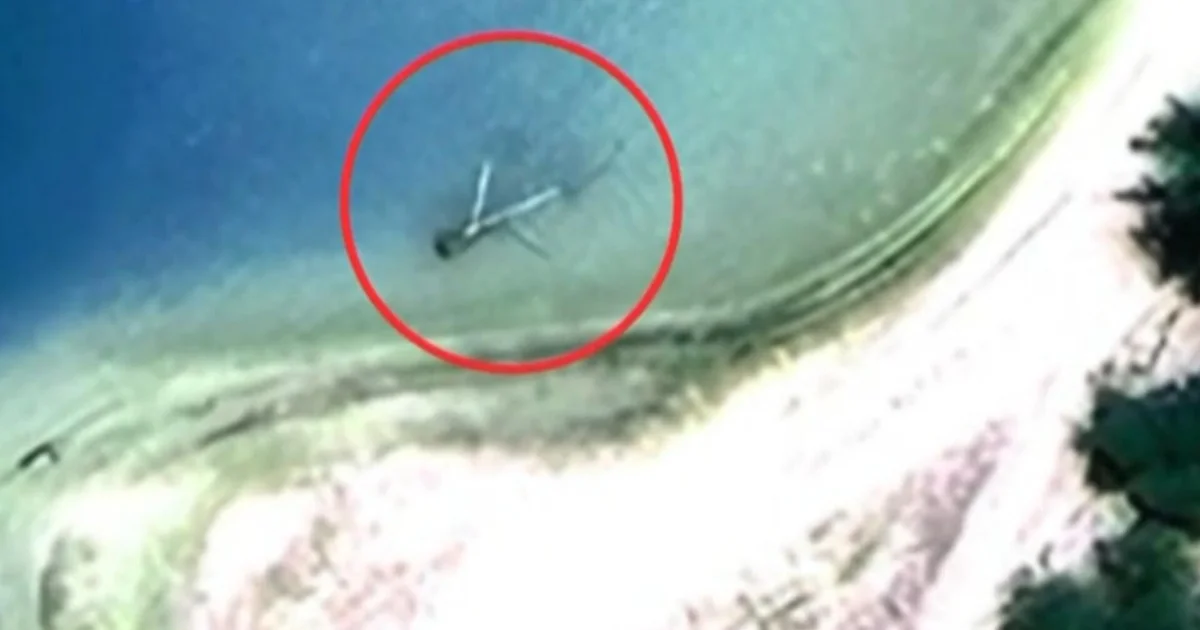
A remote Pacific object once thought to be the wreckage of Amelia Earhart’s missing aircraft has been identified as a collection of trees, researchers have said, dealing another setback to the search for the aviator nearly 90 years after her disappearance.
The finding follows an expedition to the Taraia Peninsula on Nikumaroro, where a Y-shaped feature seen in satellite images had appeared to resemble part of Earhart’s Lockheed Electra 10-E.
Evidence gathered at the site indicated that the anomaly was “likely a collection of large trees deposited along the peninsula’s sandspit”. By the time the team arrived, much of the debris had fragmented or been washed away, leaving only the single Y-shaped section that had prompted hopes it could be aircraft wreckage.
A 17-member team led by Steve Schultz of Purdue University and Richard Pettigrew of the Archaeological Legacy Institute began the expedition on 14 October. Their plans included photographing and filming the lagoon, surveying the area with magnetometers and sonar, and attempting to retrieve the object for identification.
However, severe weather kept the researchers aboard their ship for three of the five days allocated to the search. Limited fuel and supplies meant the expedition could not be extended, while reaching the remote search area took five days at sea.
The search for Amelia Earhart’s plane
The Taraia Object was first noticed in satellite imagery during the Covid pandemic by a Navy veteran, although it could be seen in aerial photographs dating back to 1938. Before the expedition, Pettigrew said researchers believed it might be metal rather than a tree and that further investigation was needed.
The team had previously described the evidence for the object being Earhart’s aircraft as “very strong”. The latest assessment has now ruled out that possibility.
Earhart and her navigator, Fred Noonan, disappeared on 2 July 1937 while attempting to fly around the world. They were about 22,000 miles into the journey and were heading towards Howland Island when contact was lost.
Nikumaroro, part of Kiribati, lies about 400 miles south-east of Howland Island, roughly halfway between Australia and Hawaii. Pettigrew believes Earhart and Noonan landed there and survived for a period, citing 1930s relics and human remains found on the island, although the remains were later lost.
Several theories about the disappearance have emerged over the decades without conclusive evidence. A sonar image captured during another expedition in 2024 appeared to show an aircraft on the ocean floor, but it was later identified as a rock formation.
