


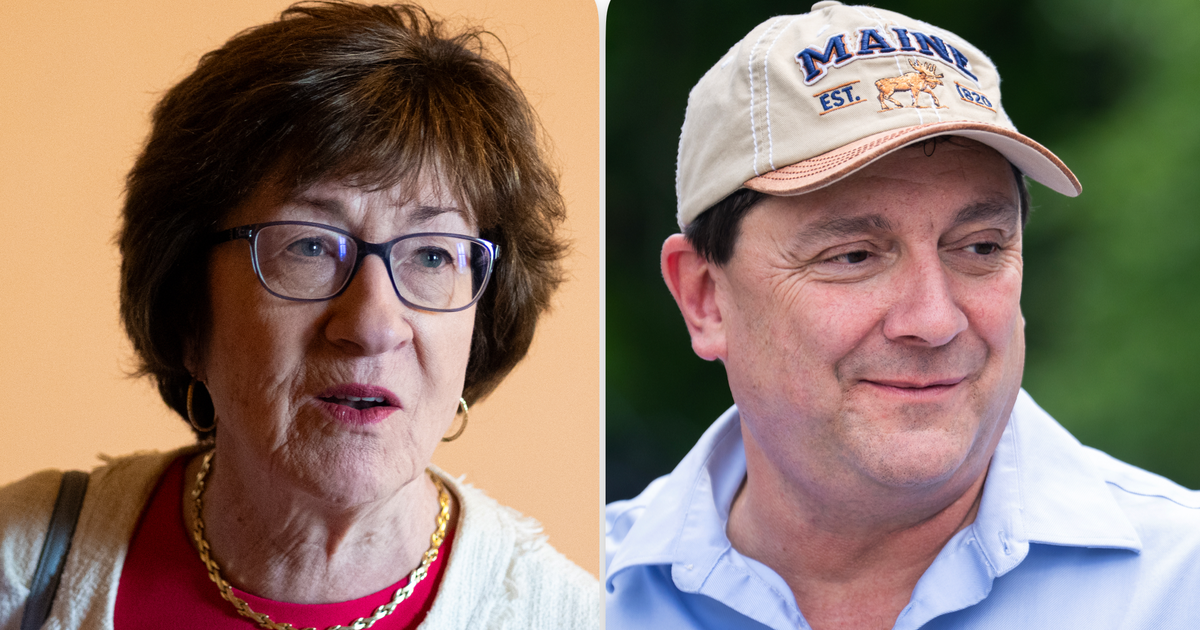
Republican Senator Susan Collins and Democrat Troy Jackson clashed over Donald Trump’s policies and their records in office during a tense debate in Maine’s closely watched Senate race.
Collins, who is seeking a sixth term, defended her three decades in Congress and emphasised her seniority as chair of the Senate Appropriations Committee. She said her experience had helped secure federal funding for projects in the state and ease pressure on taxpayers.
“I’ve been able to bring home federal dollars to help ease the burden on our taxpayers,” she said.
Jackson, a former president of Maine’s state Senate, accused Collins of failing to use her influence to challenge the Trump administration. He argued that she had sided with the president too often, despite her record of occasionally breaking with him.
The contest could help determine which party controls the US Senate next year. Maine has leaned Democrat in presidential elections and has not backed a Republican presidential candidate statewide since the 1980s, but Collins has repeatedly survived difficult re-election campaigns. Most polling shows the race narrowly balanced.
Collins and Jackson clash over Trump legislation
Collins highlighted her opposition to the Trump-backed One Big Beautiful Bill Act, citing cuts to Medicaid among her reasons for voting against it. Jackson nevertheless criticised her for supporting an earlier procedural measure that allowed the legislation to advance through the Senate.
Collins said Jackson had “misrepresent[ed] the facts”. She argued that permitting the bill to proceed enabled her to secure a $50 billion fund for rural hospitals.
Jackson replied: “Senator Collins is like an arsonist who helped set the fire, and then she wants credit for bringing a cup of water to put it out.”
The candidates also differed over Collins’s record on the Supreme Court. Jackson attacked her decision to vote for Brett Kavanaugh’s confirmation, saying it helped pave the way for the court to overturn Roe v Wade and allow states to ban abortion.
“Would you trust her to pick the next Supreme Court justice?” Jackson asked.
Collins said she assessed Supreme Court nominees according to their qualifications and reiterated that she disagreed with the decision to overturn Roe. But she added: “There’s only one of us on this stage who has always been pro-choice” — a reference to Jackson’s previous opposition to abortion.
Trade, Iran and immigration policy
Both candidates criticised Mr Trump’s tariffs on Canada, which have triggered a retaliatory trade dispute with Maine’s neighbour. Collins said she opposed the trade war and had been seeking exemptions for goods important to Maine, including road salt used by local authorities.
“Canada is our friend. It should be treated as such,” she said.
Jackson mocked what he described as Collins’s limited response. “What about everything else?” he asked. “I mean, we can’t eat road salt.”
Collins also pointed to votes intended to limit Mr Trump’s power to wage war against Iran, saying the conflict was “not well-thought out” and had affected global energy markets. Jackson criticised her for opposing earlier measures relating to Iran.
The two candidates condemned the conduct of Immigration and Customs Enforcement after an individual in Maine was fatally shot by an ICE officer during a traffic stop over the summer. Collins described the incident as “horrific”, while Jackson said the man was “murdered”.
Jackson said ICE should be disbanded and opposed increased funding for the agency. Collins said it required “serious reforms” but should continue to exist. “It needs reform, not to be abolished,” she said.
Collins also attacked Jackson’s record in Maine politics, blaming lawmakers in the state capital, Augusta, for affordability problems including energy costs and Medicaid reimbursement rates. She questioned his ability to pass legislation, noting that bills he had introduced were rejected by committees without Democratic support.
“If you can’t find one person in your own party to vote for your bills when you were the Senate president in Maine … how do you think you’re going to get things done in a closely divided Senate as the most junior senator?” Collins asked.
Jackson responded that Collins “doesn’t understand the legislative process”, arguing that it was pointless to have one or two people vote for a bill that could not pass.
Jackson, who comes from the same largely rural northern Maine county as Collins, entered the Senate contest after losing the Democratic primary for governor. He replaced Graham Platner as the party’s Senate candidate after Platner withdrew amid sexual misconduct allegations, which he has denied.
