


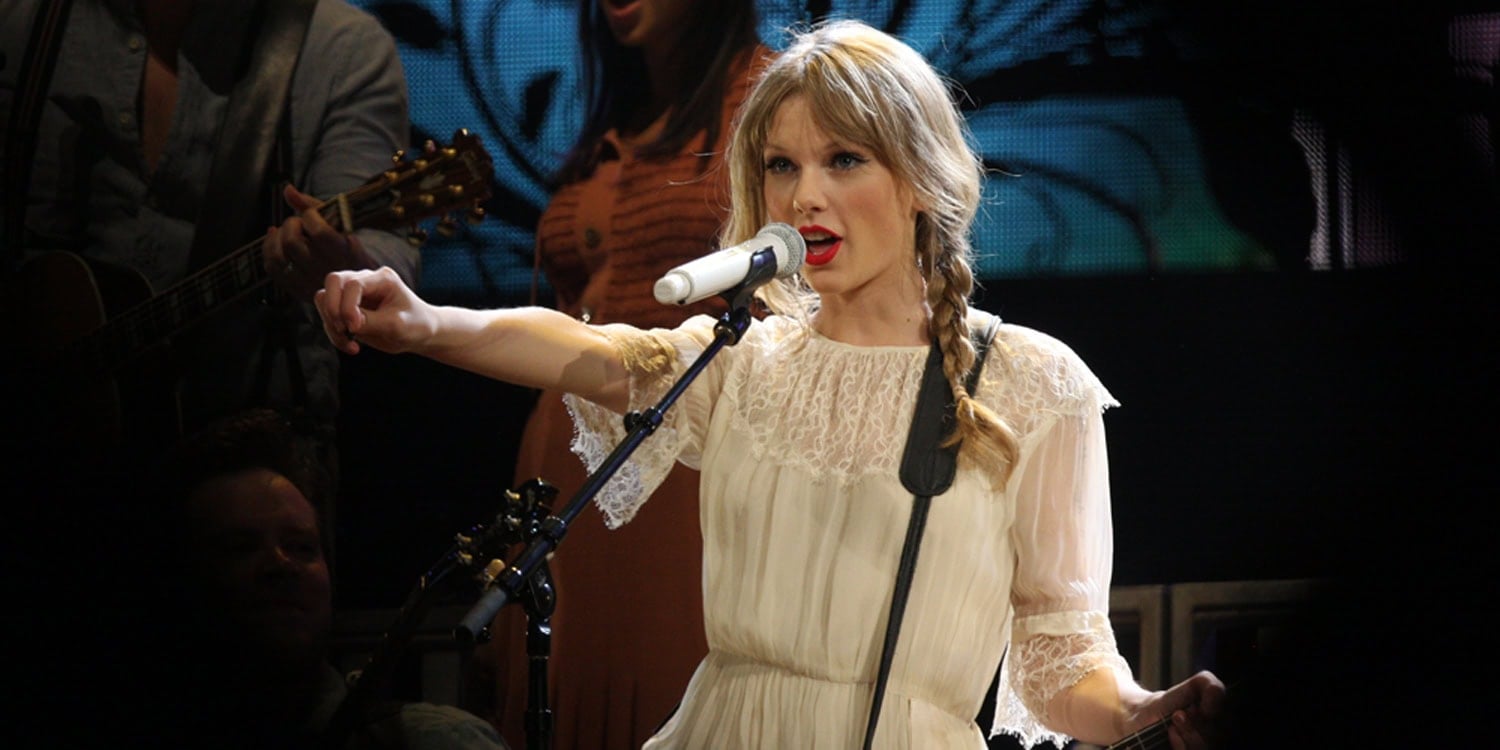
A new study published in Psychology of Popular Media examines how Taylor Swift fans respond to reports of the singer’s high carbon footprint, suggesting that deeply identified fans may rationalise the emissions to protect their admiration for her. The research indicates that such rationalisation can dampen individuals’ concern for climate issues and lessen their stated intent to take pro-environment actions.
The study sits against a backdrop where Generation Z is often portrayed as highly attuned to environmental concerns, yet also immersed in celebrity culture and social media. In 2022, data tracking private jet flights singled out Swift as a leading source of carbon dioxide emissions, with her private jet use estimated to generate far more CO2 than the average person in a year.
The researchers behind the project were Leah Dajches of New Mexico State University, Taylor A. Foerster of Oregon State University, Juliana L. Barbati of the Union of Concerned Scientists, and Jessica Gall Myrick of Good Pug Media. They explored how fans employ moral reasoning when a beloved figure appears to harm the environment.
Moral reasoning, in this context, refers to mental strategies people use to manage discomfort when a public figure they admire breaches ethical norms. One such strategy is decoupling, where a person separates their judgement of the bad behaviour from their assessment of the celebrity’s artistic work. Another is rationalisation, the act of downplaying the severity of the behaviour or excusing it.
The team proposed that those with a strong fan identity—feeling part of a broader community of supporters—might be especially motivated to use these strategies to defend the group’s reputation.
In testing their ideas, the researchers recruited roughly 1,000 undergraduate students from two public universities in the United States, restricting the sample to adults aged 18 to 29. Participants first completed a survey measuring how strongly they identified with Taylor Swift as a fan.
Participants were then randomly assigned to read one of three mock news articles. The first described celebrity carbon footprints in general, the second named Swift in the headline and included specific data about her private jet emissions, and the third served as a neutral control about an unrelated topic such as multitasking.
After reading, participants answered questions designed to assess their use of rationalisation and decoupling, along with their personal concern about carbon emissions and their intentions to adopt climate-friendly behaviours. A representative rationalisation item asked whether “High CO2 emissions are not as bad as some other things celebrities do,” while a decoupling item stated that “A celebrity’s CO2 emissions do not change my assessment of them as an artist.”
The findings showed no universal shift in environmental views across the entire group simply from reading about Swift’s emissions. Instead, the results depended on how strongly participants identified as Swift fans. High‑identification fans who read the article focusing on Swift’s emissions exhibited the greatest tendency to rationalise the behaviour, compared with high‑identification fans who read about general celebrity emissions or the control story.
Rationalisation among these highly identified fans correlated with lower overall concern about carbon emissions and a reduction in stated intentions to engage in environmentally friendly behaviours. In other words, safeguarding the fan identity appeared to trump climate values for these individuals.
Conversely, strong fan identity was itself associated with higher environmental concern overall, but the act of rationalising Swift’s transgression undermined those pro‑environment attitudes. The study suggests that the personal connection to the celebrity can outweigh climate concerns in the minds of ardent fans.
The researchers note several limitations. The participant pool was predominantly white, heterosexual, cisgender women who were college students who leaned Democratic, which may limit the applicability of the findings to broader populations. They could not reliably measure a third moral reasoning mechanism known as coupling, and the study centred solely on Taylor Swift, raising questions about whether results would extend to other public figures. They also did not assess whether participants already knew about Swift’s jet usage prior to the survey.
Looking ahead, the authors suggest examining how different kinds of fandom—such as sports enthusiasts or political followers—respond to environmental controversies, and tracking participants over longer periods to determine whether changes in environmental concern are temporary or lasting.
The study is titled “Don’t Blame Me”: Testing the Effects of Taylor Swift Fan Identity on Emerging Adults’ Moral Reasoning Strategies and Environmental Cognitions,” and is authored by Leah Dajches, Taylor A. Foerster, Juliana L. Barbati, and Jessica Gall Myrick.
