


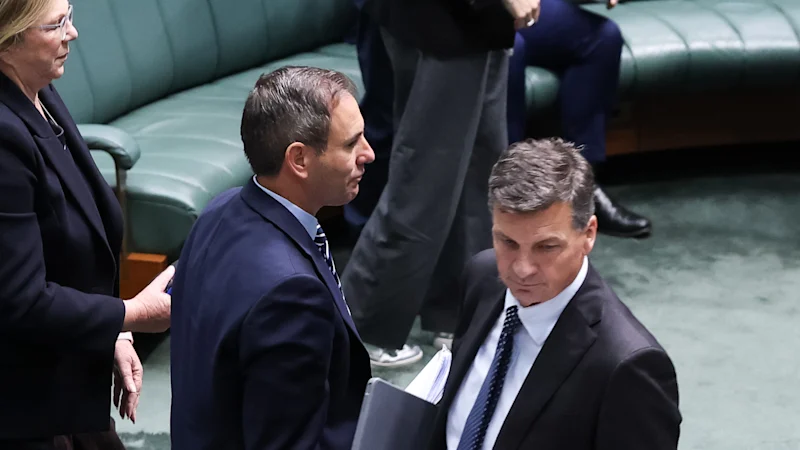
Australia’s opposition leader has accused the government of facing an $83 billion budget black hole after a long-term Treasury report cast doubt on Labor’s projection of a return to surplus by 2035.
Angus Taylor said the Intergenerational Report revealed a substantial gap between the tax revenue forecast in the May budget and the figures used in the 40-year economic outlook. He challenged Treasurer Jim Chalmers to explain how the difference had emerged within four months.
The May budget projected a surplus in 2035, based partly on savings from the National Disability Insurance Scheme, reduced property and superannuation tax concessions, and rising income tax receipts as workers moved into higher brackets.
But the new report included a hypothetical cap on taxation from 2032-33, assuming future governments would reduce income taxes. The cap would limit tax receipts to 24.2 per cent of gross domestic product, although it is not current government policy.
Mr Taylor said his party’s analysis showed an $83 billion difference between the 10-year tax forecast in the budget and the hypothetical revenue figures in the report. He also questioned why the report had introduced uncertainty into the government’s forecasts six years before the end of the projection period.
“Four months ago Australians were given one set of budget numbers. The government’s own Intergenerational Report now shows a very different picture,” Mr Taylor said.
The Coalition has previously attacked Labor over bracket creep, while proposing to link tax brackets to inflation. Mr Taylor said the government now appeared to be considering a similar approach.
Labor had accused Mr Taylor of creating a $12.5 billion budget shortfall in May through the Coalition’s proposed tax-bracket indexation policy.
Mr Chalmers said governments should return as much bracket-creep revenue as they could when economic conditions allowed. He also argued that Labor’s decisions to reduce negative gearing and the capital gains tax discount would lessen reliance on income tax.
Asked whether the government had abandoned its goal of returning the budget to surplus, Mr Chalmers said: “No, not necessarily.”
He said the government was facing significant pressure from an ageing population and other economic demands, but maintained that Australia’s budget position was stronger than those of other countries.
The dispute comes as Labor and the Coalition prepare for a likely election contest focused on competing tax-cut proposals, after years of declining real wages.
