


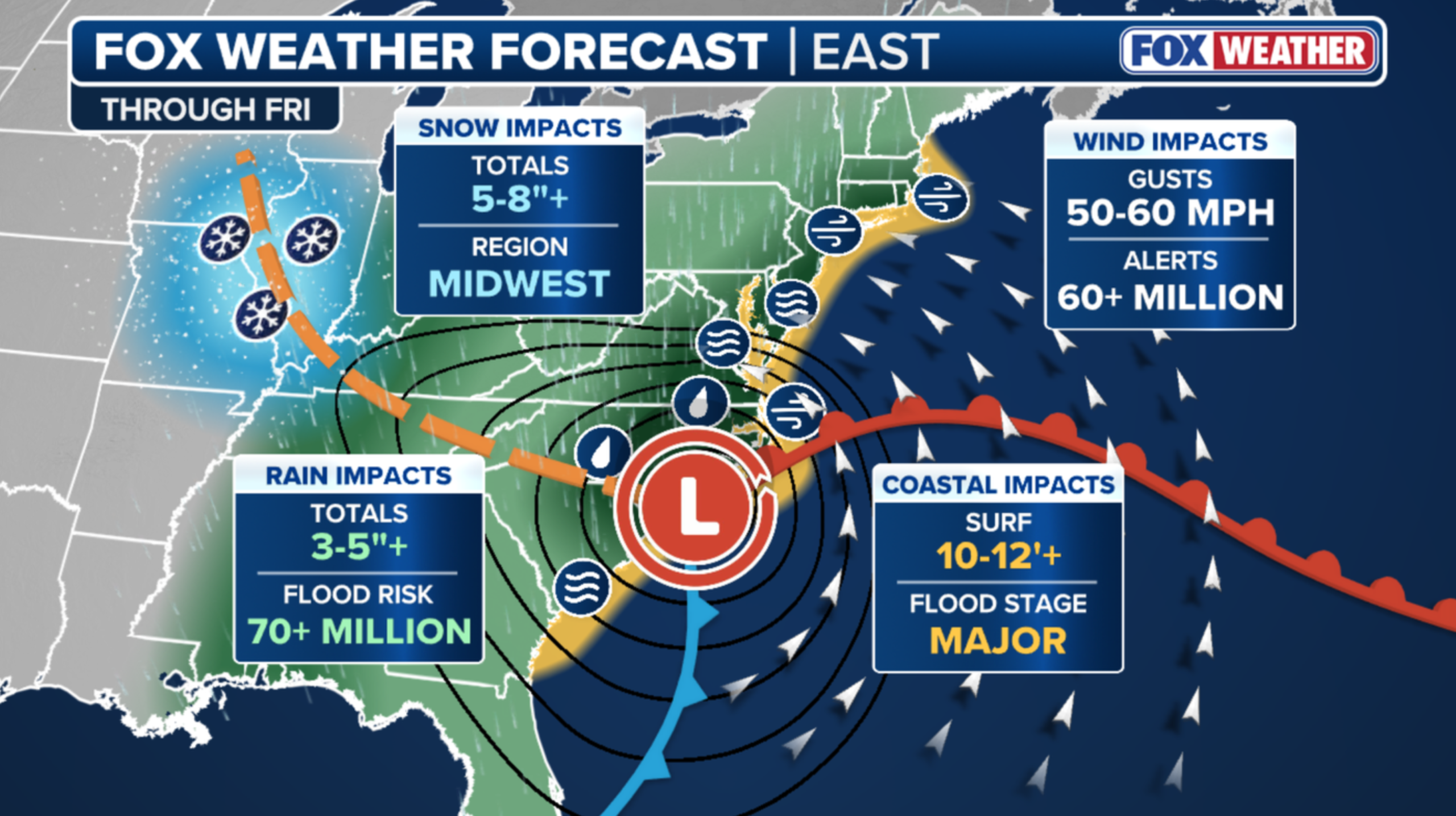
A major Thanksgiving storm has brought heavy rain, damaging winds and coastal flooding to New York and the surrounding Tri-State area, leaving more than 53,700 customers without power.
New Jersey has recorded the highest number of outages, with more than 49,900 customers affected. A further 3,582 customers are without power in New York and 205 in Connecticut.
JCP&L reported 42,534 outages across central and southern New Jersey, while PSE&G recorded 7,403. PSEG Long Island had 2,117 customers without electricity.
Con Edison reported 1,306 outages, including 1,241 in New York City and 65 in Westchester. Orange & Rockland had 159 customers without power, while Eversource reported 205 outages in Connecticut.
New York City mayor Zohran Mamdani said two people had been rescued from vehicles after becoming trapped by flooding.
Thanksgiving storm brings flooding and high winds
Cape May, New Jersey, recorded 3.75 feet of coastal flooding, while several inches of water inundated railway tracks at a station in Hoboken on Thanksgiving morning.
New Jersey and parts of New York, including New York City, Long Island and Westchester County, were placed under a state of emergency as conditions worsened along the coast.
A high wind warning covering New York City, Long Island and parts of north-eastern New Jersey remained in force through 1am on Friday. East winds of between 30mph and 40mph, with gusts reaching 65mph, were expected to bring down trees and power lines.
The rest of the Tri-State area was covered by a wind advisory through 5am on Friday, with gusts of up to 55mph. Gusts of up to 60mph were forecast along the Connecticut coast and in southern Westchester.
Coastal flood warnings were issued for most coastal areas through Friday afternoon, with moderate flooding expected during high tides. Locally major flooding of between 2.5ft and 3.5ft was possible along the southern shore of Nassau County, south-western Suffolk County and the western Great South Bay.
Breaking waves of between 8ft and 12ft were expected to cause beach flooding, dune erosion and localised overwashing. Waves of up to 8ft were also forecast along the Twin Forks and western Long Island Sound.
Forecasters expected between 1in and 2in of rain, with isolated totals of up to 3in. Intense rainfall could cause flooding in urban areas and places with poor drainage, particularly where fallen leaves had blocked storm drains.
The storm was forecast to create hazardous driving conditions and travel delays across the north-east during one of the busiest periods of the holiday week, with roughly 60 million people facing a flash flood risk between Virginia and New England.
