


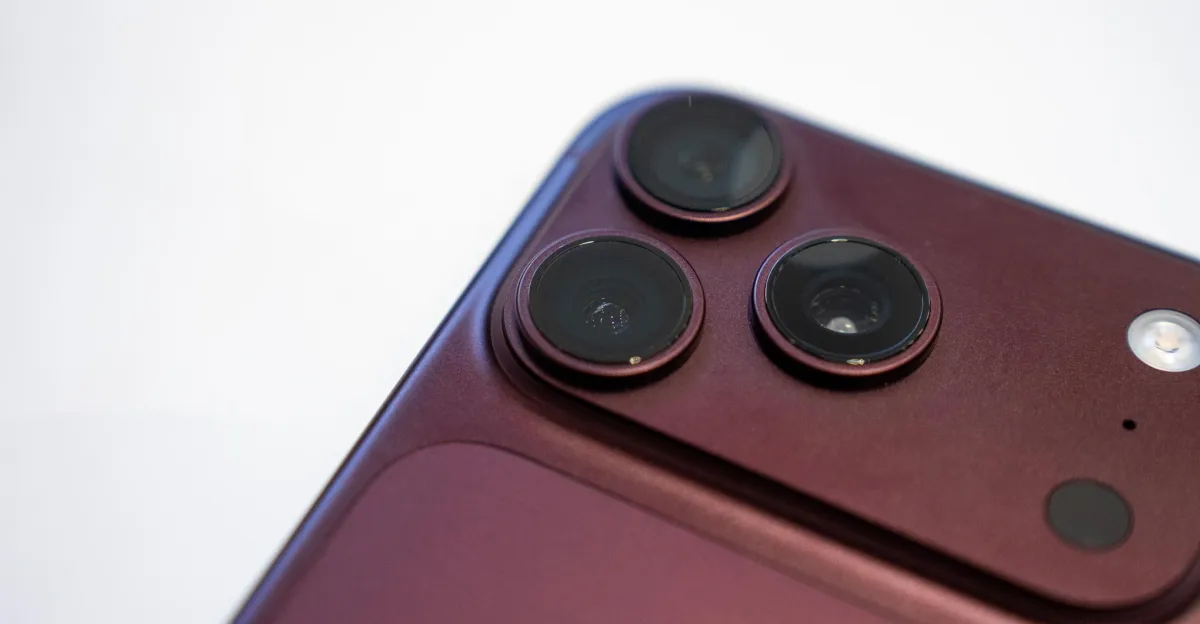
Apple’s iPhone 18 Pro and iPhone 18 Pro Max are set to introduce a variable aperture, allowing photographers to adjust how much light reaches the main camera sensor. The feature offers settings of f/1.48, f/1.8, f/2.8 and f/4, alongside new manual controls for shutter speed, white balance and focus.
The adjustable mechanical iris can also be left to the camera to manage automatically. For users who want greater control, however, the settings will be available directly within Apple’s standard Camera app rather than requiring specialist software such as Halide.
Despite the attention likely to surround the variable aperture, its practical benefits may be limited. Smartphone camera sensors remain comparatively small, meaning photographs taken at normal distances are generally already in focus across much of the scene.
Stopping the lens down to f/4 could help with close-up subjects or group photographs, particularly when people are positioned at different distances from the camera. It may also make it easier to control exposure when recording video in very bright conditions.
But the narrower settings will not necessarily produce sharper images. At such a small sensor size, diffraction can soften detail at f/4, potentially making the result less crisp than photographs captured at wider settings such as f/1.8 or f/2.8.
Other smartphone manufacturers, including Samsung and Xiaomi, have previously experimented with variable-aperture systems but later moved away from them. That history suggests Apple’s implementation may be more of a specialist tool than a transformative change for everyday photography.
The more meaningful upgrade could be the iPhone 18 Pro’s wider maximum aperture of f/1.48. The previous generation’s Pro cameras used an f/1.7 aperture, so the new lens should offer a modest improvement in low-light performance and produce slightly more background blur.
The difference will not match the pronounced separation produced by a fast lens on a full-frame camera. Nevertheless, a wider aperture can give portraits a softer background and a more distinctive look — one of the reasons smartphone makers introduced computational Portrait modes in the first place.
The combination of manual controls and a wider aperture should make the iPhone 18 Pro’s camera more appealing to enthusiasts. For most users, the adjustable iris may receive attention when the phone is new before automatic settings take over, while the faster f/1.48 lens could remain the feature with the greatest everyday value.
