


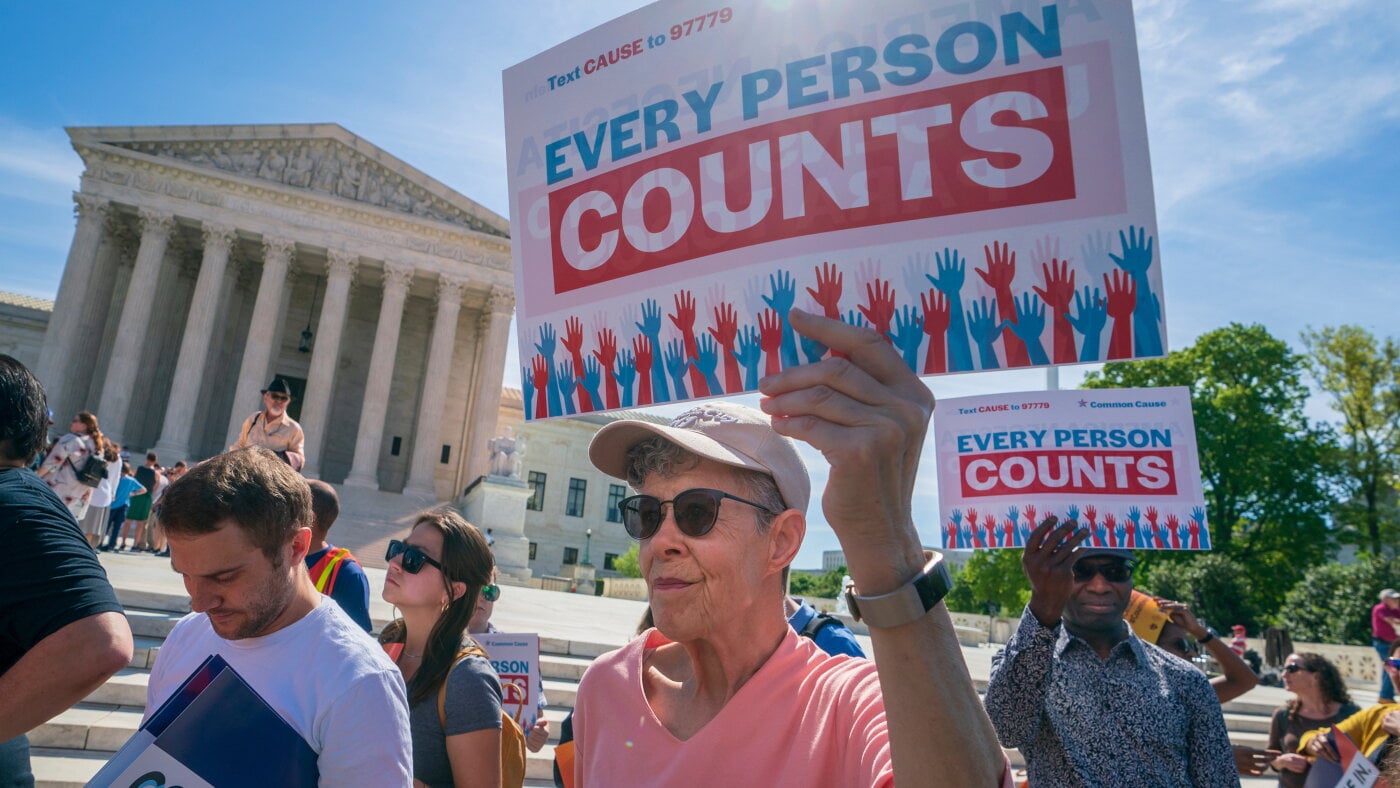
The Trump administration has proposed sweeping changes to the 2030 US census that would exclude many non-citizens from the figures used to allocate political power, while removing questions on race, ethnicity and sexual orientation from the national questionnaire.
The proposals, issued by the Census Bureau and posted for public inspection on Wednesday, 9 September 2026, would represent a fundamental change to the way the United States counts its population. They are expected to face legal challenges and have not yet been finalised.
Under the plan, lawful permanent residents would continue to be included in the apportionment count, but people in the US illegally and foreign nationals whose immigration status is considered less permanent could be excluded. The resulting figures are used to divide seats in the House of Representatives and Electoral College votes between the states.
The 14th Amendment says representatives must be apportioned according to the “whole number of persons in each state”. The Census Bureau has historically interpreted that requirement as covering people living in the country regardless of their immigration status.
The proposed rule argues that people without a sufficiently durable legal connection to the United States should not be treated as having a “usual residence” for apportionment purposes. It also suggests that the bureau could use government records, including information held by the departments of Homeland Security, Treasury and State, to determine a person’s status.
The bureau is considering whether to include a legal-status question on the census form, reviving an issue that triggered a major constitutional dispute during Donald Trump’s first term. The Supreme Court blocked the administration’s attempt to add a citizenship question to the 2020 census after finding that the explanation given for the measure was inadequate.
President Trump later sought to remove people living in the US illegally from the figures used to allocate congressional seats, but that policy was abandoned before it could be implemented. In August 2025, he again directed officials to work on a “new” census and called for people without legal status to be left out.
Race and ethnicity questions also targeted
A separate part of the proposal would prohibit the short-form decennial census from asking about race and ethnicity. The census has collected information on those subjects since the first national count in 1790.
The restriction would apply to the questionnaire used to enumerate the population, rather than to every federal survey. The Census Bureau would still be able to collect demographic information through the American Community Survey and other surveys, as well as from administrative records.
The proposed rule would also bar a question about sexual orientation from the census. The 2020 count did not ask individuals directly about their sexuality, but it did ask people living together to identify their partners as either “opposite-sex” or “same-sex”.
Officials say reducing the number of personal questions could make the form simpler, improve response rates and lessen the risk that individuals could be identified in published data. The bureau also argues that administrative records can fill some information gaps without placing additional demands on households.
Civil rights organisations, researchers and census advocates have warned that abandoning race and ethnicity data could undermine redistricting and enforcement of the Voting Rights Act. Such information is also used to monitor discrimination, allocate public funds and shape government policy.
The proposal would overturn plans developed after a lengthy review of federal race and ethnicity standards under Joe Biden. Those changes, due to be introduced in the 2030 census, included a combined question on race and ethnicity and new categories for Hispanic or Latino and Middle Eastern or North African identities.
Census Bureau research has suggested that the revised format would better reflect how many people describe themselves. It was partly prompted by the growing number of Latino respondents who selected “Some other race” on previous forms, producing data that researchers said were less useful for enforcing anti-discrimination laws.
The changes come as preparations for the 2030 census are already under way. The bureau says the count will determine representation in Congress, guide the redrawing of electoral districts and influence the distribution of hundreds of billions of dollars for services including schools, hospitals, roads and emergency response.
The administration’s proposed rules are due to be formally published in the Federal Register on Thursday, 10 September, after which members of the public will be able to submit comments. Congress is expected to receive a report on proposed census topics by 1 April, and lawmakers retain final authority over the content and conduct of the count.
Opponents fear the proposals could discourage participation, particularly among Latino households and families with mixed immigration statuses, even if the changes are eventually blocked. The Census Bureau has historically struggled to count some of those communities accurately.
A new administration taking office in 2029 could also reverse the plans. Until then, the proposals are likely to intensify a political and legal battle over whether the census should measure everyone living in the United States or only those whom the government considers to have a lasting legal connection to the country.
