


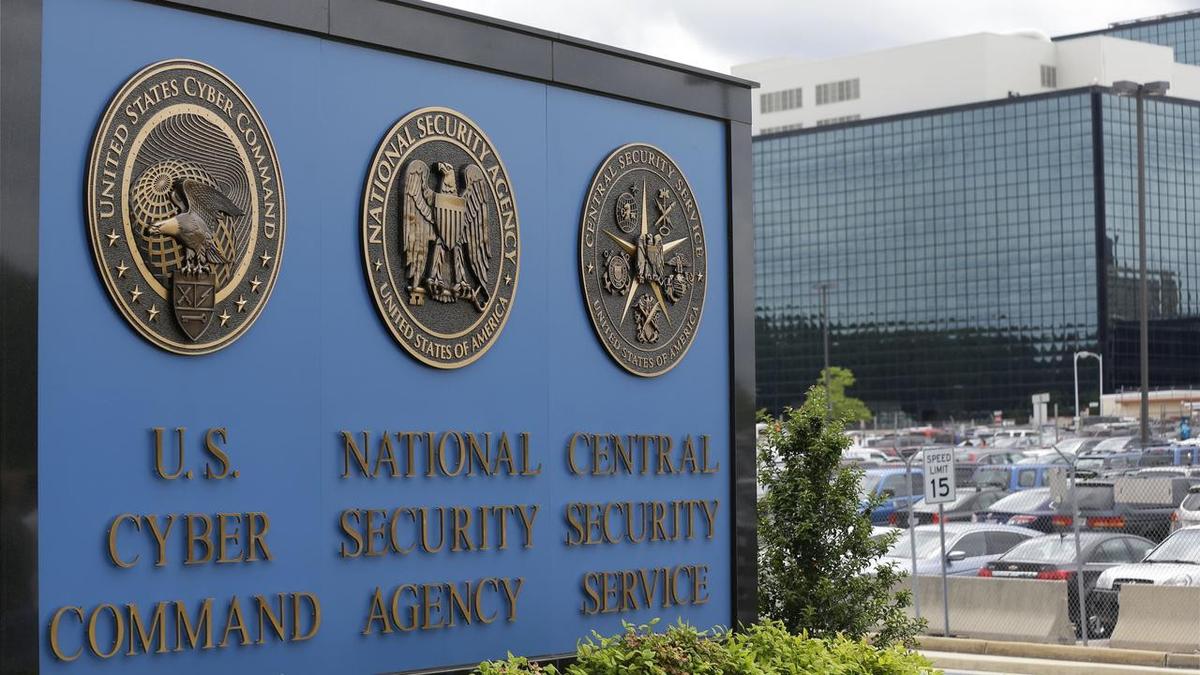
Technology outages affecting email services, airlines and banks have reached the US National Security Agency, as the Trump administration seeks to reassure the public that the disruptions do not represent a wider attack.
The NSA said its network suffered a “temporary degradation” during routine maintenance on Tuesday, while insisting that “mission-critical capabilities” remained operational.
The incident came after a series of failures across critical systems, including a nationwide ground stop by the Federal Aviation Administration, a United Airlines technology problem and disruption to some JPMorgan Chase banking services.
President Donald Trump dismissed concerns about a broader crisis while speaking in Manila, where he was attending meetings with the Association of Southeast Asian Nations.
“It’s like when you’re big and powerful, and you have all the money, things like that happen. It’s fine,” Mr Trump told reporters.
Secretary of State Marco Rubio, who also serves as national security adviser, said the incidents were unsettling but unrelated. He said there was “zero evidence” they had been caused by “nefarious actors” and added: “We are not under systemic attack.”
Republican senator Josh Hawley, however, called for more information. “If this is all a coincidence, it’s like the greatest coincidence in the history of the world,” he told reporters.
Technology outages spread across critical systems
The disruptions have occurred on every weekday since Thursday, when a Microsoft outage affected several services, including email.
The following day, the FAA ordered a nationwide ground stop lasting four-and-a-half hours, the longest suspension of US air travel since the attacks of September 11, 2001.
On Monday, a technology failure at United Airlines delayed about 150 flights, while a software problem at JPMorgan Chase disrupted some banking services.
Apple said on Tuesday that it was working to restore systems after an internal update caused an outage affecting customer services including iCloud and Apple Pay. The company said the incident was not the result of a cyberattack.
Jay Clayton, the US director of national intelligence, said the NSA disruption was linked to patches deployed for a PHP vulnerability discovered using AI last month. The flaw could allow hackers to take control of servers remotely.
“Everybody recognises it’s time to upgrade their systems, and as they upgrade them, they’re not coming back as expected in all cases, and in some cases, systems have to hand off to other systems, and those hand-offs are not coming back as expected,” Mr Clayton told Fox Business.
The incidents have raised questions over whether organisations have moved too quickly to reduce technology staffing while modernising their systems. At the FAA, Congress warned that an accelerated modernisation programme was poorly organised and could trigger service outages after job cuts driven by Elon Musk following Mr Trump’s return to office in 2025.
United Airlines said in 2025 that advances in AI had helped it reduce management headcount by 4%, with a further 4% reduction planned for 2026. Microsoft’s email outage came a month after the company said it was offering buyouts to a quarter of its global workforce, following earlier reductions in staffing.
Meanwhile, insurance provider Marsh said its clients had reported 105 cyber incidents in the final two weeks of October, more than twice the 48 recorded in the last two weeks of May. Cybersecurity companies have also been finding examples of hackers using AI to launch large numbers of intrusions simultaneously.
