


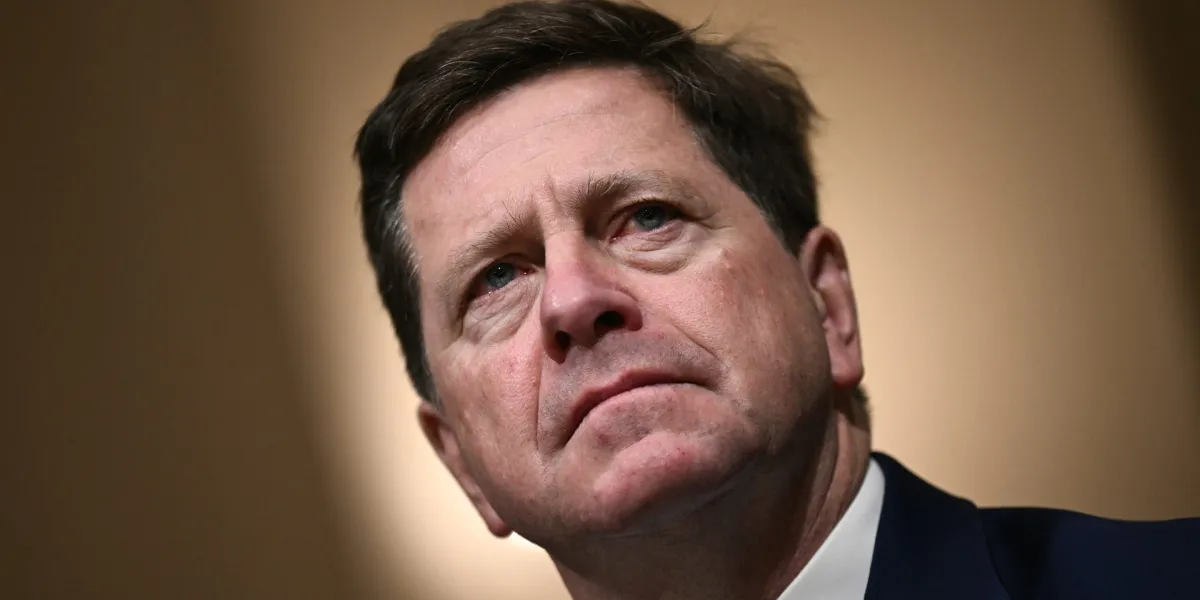
US intelligence chief Jay Clayton has urged Americans not to panic-buy supplies amid a string of network outages, saying the country is resilient and will cope with upgrades to critical systems.
Asked during a CNN interview whether people should stock up in preparation for potentially prolonged disruption, the Director of National Intelligence referred to the experience of the Covid pandemic.
“America is the most amazing and resilient place, and we have been living with interruptions,” Mr Clayton said. “Let’s give ourselves some credit. Let’s go back to COVID, other things. Americans fought their way through these terrible things in an incredible, resilient way.”
The comparison prompted presenter Dana Bash to ask whether the country could be facing another Covid-like situation.
“Not at all, let me be clear. But what I’m saying is the American people are resilient,” Mr Clayton replied, adding that officials and companies were being open about the problems.
He said Americans should prepare by understanding that systems were being upgraded and could be interrupted temporarily while the work was carried out.
“How do you prepare? By knowing that systems are going to be upgraded,” Mr Clayton said. “They may be interrupted for a period of time and that companies and the government are dealing with this on the front foot.”
Recent outages fuel concern
His comments came after a succession of disruptions affecting businesses, transport and government communications. Microsoft’s email and office tools went down last Thursday, while the Federal Aviation Administration grounded all flights for more than four hours the following day.
The FAA later attributed the incident to a copper wire being upgraded to fibre-optic cable. Chase, Wells Fargo, United Airlines and Apple subsequently experienced temporary service problems, while the National Security Agency’s internal classified communications network also suffered an outage.
US officials, including Mr Clayton, have said there is no evidence that the incidents were coordinated, state-sponsored attacks. They have suggested that network upgrades intended to address vulnerabilities recently identified by artificial intelligence may have been implemented before all the faults had been resolved.
However, cyber attacks have also been reported at the FBI and the Agriculture Department, while the previous month was described as “Black October” because of the volume of attacks.
Two Federal Emergency Management Agency officials said they were concerned about the outages and found it difficult to believe they were coincidental. One said: “There is nothing on this scale that has happened before in this many sectors this close together. This is scary, and there is no leadership.”
Public anxiety had already been heightened by a Pentagon initiative known as FORTRESS, which aims to enable every major US military base to operate for 90 days without outside assistance if war disrupts power supplies and supply chains.
The UK Government’s advice that people keep canned food, bottled water and cash at home to manage three days of disruption added to the unease.
But Mark Giles, director of research at Ookla, said there was no link between the various outages. He described the events as “a big blip” within longer-term trends, saying most incidents were contained and resolved quickly, while those affecting access to money or email attracted the greatest attention.
