


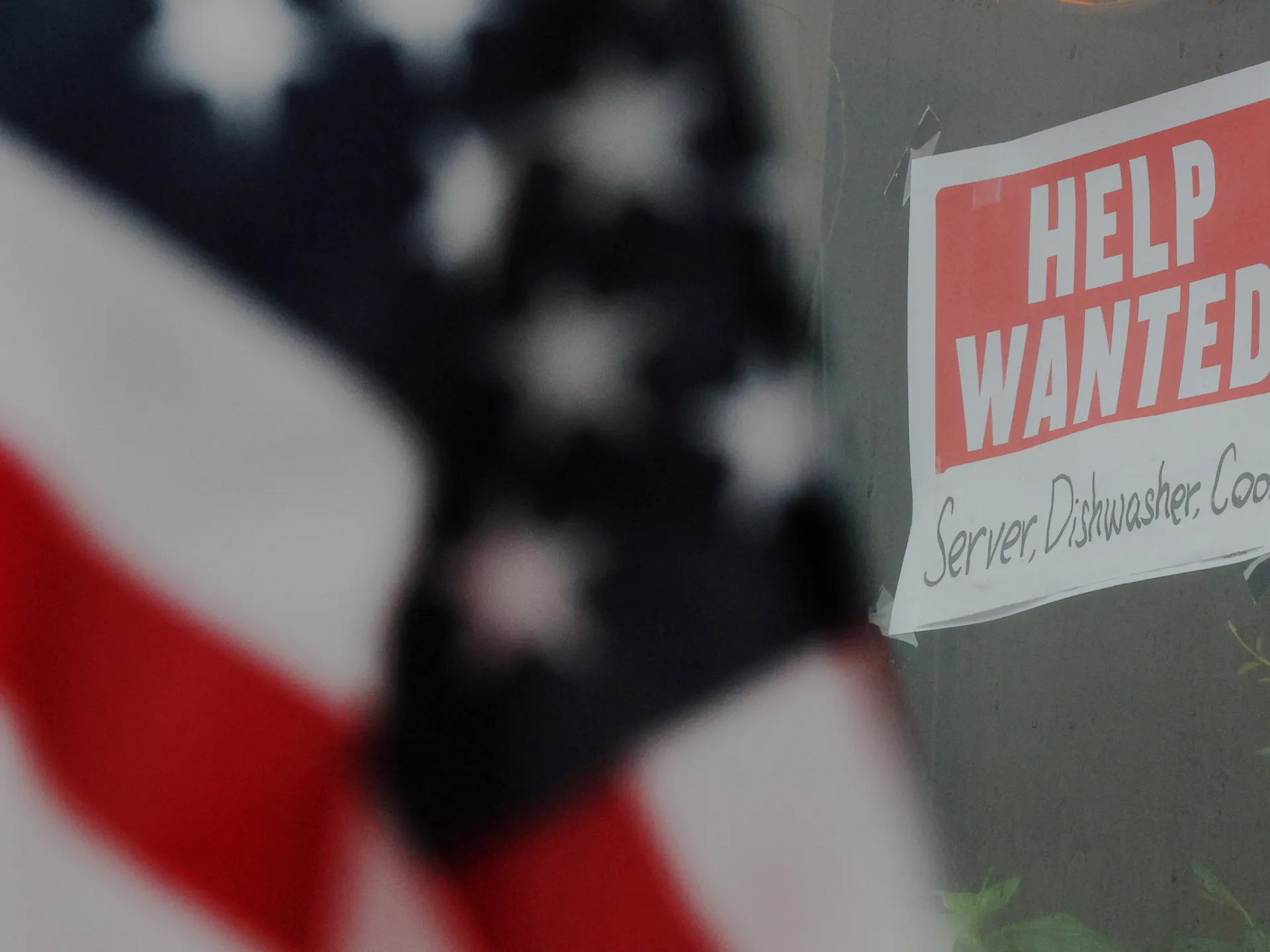
US lawmakers are pressing for the federal minimum wage to rise to $25 an hour and for the separate tipped wage to be abolished, as Democrats prepare to take control of both chambers of Congress.
A group of 17 current and newly elected House members is backing the Living Wage For All Act, which was introduced in April but has yet to make progress. The bill’s original lead sponsors include Representatives Delia Ramirez and Jesus “Chuy” Garcia of Illinois, and Representative Analilia Mejia of New Jersey.
The proposed increase would be phased in according to the size of an employer. Businesses with more than 500 employees nationwide, or annual revenue of at least $1bn, would have until 2031 to reach the $25 rate, while smaller employers would have until 2038.
Once the target was reached, the federal minimum wage would be set at two-thirds of the US median hourly wage and adjusted each year to preserve that ratio.
Brad Lander, a congressman-elect from Brooklyn, New York, said he would join the bill as a co-sponsor when the next congressional session begins in January.
“Doing it federally is the right way to go. Tying it into broader legislation that raises the minimum wage for all workers is a great approach,” he said.
The legislation would also end the federal subminimum wage for tipped workers, which is currently $2.13 an hour. Under the existing system, employers can count tips towards their obligation to ensure workers receive the minimum wage.
The standard federal minimum wage has remained at $7.25 an hour since 2009, despite variations between states. Washington DC has the highest minimum wage among US jurisdictions at $18.40 an hour, followed by Washington state at $17.13.
Twenty states, including Texas, Georgia and Iowa, do not have a minimum wage above the federal rate. Rules for tipped workers also differ: seven states, including Alaska, California and Nevada, require employers to pay the full minimum wage before tips are added.
New York permits a tip credit, allowing employers to pay a lower cash wage provided tips make up the difference. In New York City and the surrounding suburbs, the minimum wage is $17 an hour, while it is $16 across the rest of the state.
For restaurant workers, the minimum cash wage is $11.35 in the New York City metropolitan area and $10.70 elsewhere in the state. For tipped workers outside the food service industry, the figures are $14.15 and $13.30 respectively.
“All workers deserve a raise. The 45 million working people who make less than $20 an hour deserve a raise, and the tipped subminimum wage is inexcusable at this point,” Mr Lander said.
The long-running fight over tipped pay
The tipped wage has been criticised as a legacy of racial and economic inequality. When Congress introduced the first federal minimum wage through the Fair Labor Standards Act in 1938, domestic and agricultural workers were excluded from protections, despite those sectors employing disproportionately large numbers of Black Americans.
Restaurant and other service workers gained federal minimum-wage protection in 1966, but Congress allowed employers to count tips towards the required rate. The federal tipped cash wage was frozen at $2.13 an hour in 1996.
The purchasing power of the standard federal minimum wage has also fallen. The $7.25 rate set in 2009 would be worth $11.32 today after adjusting for inflation, while the purchasing power of the $1.60 minimum wage in 1968 would be significantly higher than that of the current rate.
A poll released by One Fair Wage, which campaigns against the subminimum wage, found that 78 per cent of voters considered raising the minimum wage to $25 an hour an important factor in their vote in the recent US midterm elections.
“Washington has allowed the federal minimum wage to become increasingly disconnected from the economic reality facing American families,” said Saru Jayaraman, the organisation’s president.
The last major attempt to raise the federal minimum wage came in 2021, when Democrats sought to increase it to $15 as part of the proposed American Rescue Plan. The effort failed after the Senate rejected a motion to set aside budget rules, with the 42-58 vote opposed by all Republicans, seven Democrats and independent Senator Angus King of Maine.
Joe Biden later raised the minimum wage for federal contract workers to $15 through an executive order in 2022. President Donald Trump revoked that order in 2025.
