


A federal judge has ordered East Potomac Park in Washington DC to remain open for at least two weeks, blocking the Trump administration’s plan to close the site while it pursues a wholesale redevelopment of its historic golf course.
Judge Ana Reyes issued the restraining order late on Saturday, only hours before the National Park Service was due to restrict public access indefinitely. Runners and cyclists can continue using the park, although the golf course has lost its usual hole flags and some golfers have stopped playing.
The order came as the lease held by the National Links Trust, which had operated the course since 2020, expired. Judge Reyes did not initially require the government to continue running the course, but has since asked both sides to address whether she has the power to make it do so.
“Defendants cannot use the absence of golf operations as a reason to exclude the public from the Course,” Judge Reyes wrote in a 30-page ruling.
She described the administration’s justification for the closure as “pretextual” and its timetable as “arbitrary”, warning that the decision would cause irreparable harm to golfers, preservationists and other regular visitors.
President Trump has criticised the ruling on social media and said his administration will appeal. Asked about the case, he said: “What she’s done is she stopped it for 15 days. You can’t stop that.”
The dispute centres on plans to replace East Potomac’s three existing courses, which cater for different abilities, with a single 18-hole championship layout. Architect Tom Fazio’s proposal would cover almost the entire peninsula and remove the perimeter road used by runners and cyclists.
The administration is due to present the design to the federal Commission of Fine Arts. Its submission says the existing courses would be replaced, along with parts of the open space used for picnics and birdwatching.
Critics fear the proposed course would be less welcoming to beginners and more expensive. Current prices range from 17 to 48 dollars per round, while the administration has not said what the new course would cost, beyond promising a discount for local residents.
Mr Trump has said local players would receive a 50 per cent reduction and described the proposed venue as one that would be acclaimed as the “Best Golf Course anywhere”. Government lawyers have pointed to championship courses in California, Texas and New York as benchmarks, where local weekend prices can reach 90 dollars even after discounts.
Judge Reyes has also questioned whether the proposed layout would remain accessible to younger and older players. From the shortest tees, its holes would total 6,013 yards, but officials did not provide figures comparing that distance with recommended averages for different groups of golfers.
Why East Potomac golf course matters to Washington
East Potomac Park is a man-made peninsula created from land dredged from the Potomac River. Congress designated it as public parkland in 1897, stating that it should be “forever held and used as a park for the recreation and pleasure of the people”.
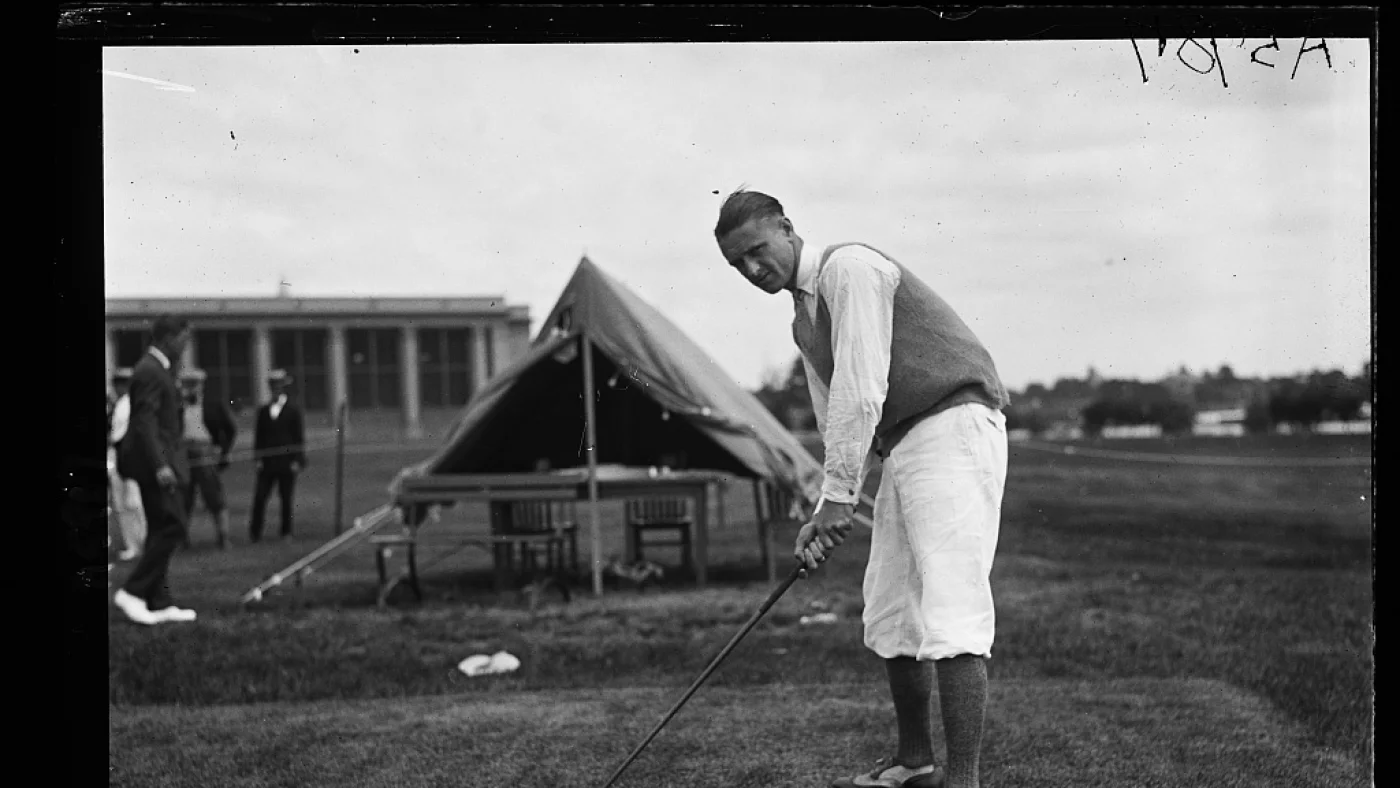
The golf course opened in stages from 1920, when a round cost 25 cents. Its first 18 holes were designed by Walter Travis in a links-style layout, with views of the river and the Washington Monument.
The site later expanded to three courses and a miniature golf course featuring small replicas of the White House and the US Capitol. It remains the busiest of Washington’s three public golf facilities, recording about 125,000 rounds in 2025.
Its history also includes a significant episode in the struggle to desegregate public spaces. In June 1941, three Black golfers were initially refused permission to play despite having tickets. After they returned with government allies, they completed 18 holes under police escort while white spectators booed and shouted insults.
The following day, the interior secretary ordered the course to be opened to players of all races. Although discrimination and harassment continued at municipal courses, the National Park Service has described the protest as a turning point that helped lead to the integration of national park facilities.
Judge Reyes referred to that history during an earlier hearing, saying the course carried a “deep amount of meaning” for local people. “There was bravery in the people who first desegregated this golf course,” she said.
The legal challenge was brought by local preservationists and golfers who argue that East Potomac’s historic design and public role should be protected. They accept that improvements are needed, including repairs to the long-eroded seawall, but say that is different from replacing the entire course.
The government has cited the seawall, the lack of a current operator and the availability of other recreational areas as reasons for closing the park. Officials acknowledged in court, however, that there is not yet a plan for repairing the seawall.
Judge Reyes described the absence of an operator as “entirely self-inflicted”. The National Park Service ended the National Links Trust’s lease last December, accusing the organisation of failing to make capital improvements, although the trust continued to run the course temporarily until its role ended on November 15.
“The Government’s hands are tied,” the judge wrote. “But the Government tied the knot itself.”
She has ordered an inquiry into possible misconduct by government lawyers and officials after hundreds of trees were cut down at short notice in October and officials gave accounts in court that appeared to conflict with the president’s social media announcements.
The administration maintains that its redesign is not final and must undergo federal reviews involving experts and the public. Lawyers have also told the court that there is no contract between the government and Mr Fazio, despite Mr Trump’s claims that work would begin on November 15.
For now, Judge Reyes is considering whether the government must operate East Potomac’s golf course to preserve the existing position while the dispute continues. Her decision could determine whether the historic public facility remains in use or becomes the centrepiece of the proposed redevelopment.
