


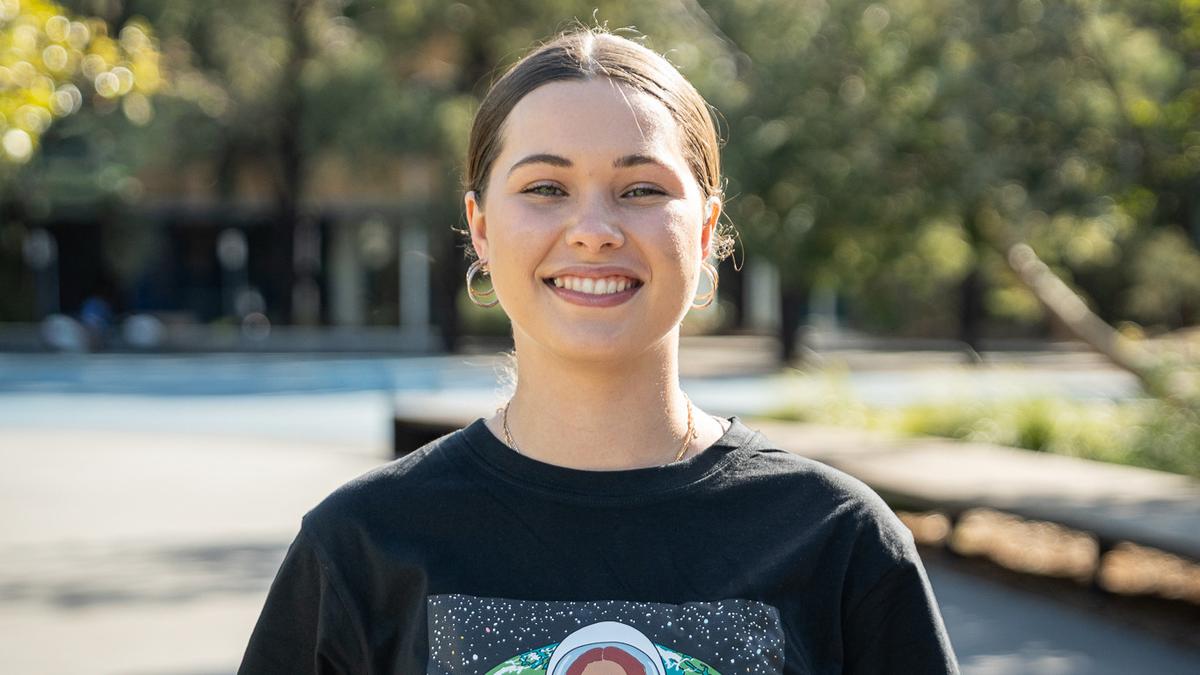
A University of Western Australia student has become the first from the state to be selected for a pioneering Indigenous space programme, securing a 10-week placement at NASA’s Jet Propulsion Laboratory in California.
Alaxandrea O’Brien, a third-year environmental engineering student, was chosen for Monash University’s National Indigenous Space Academy. She is one of eight First Nations tertiary students undertaking placements in the United States and the UK, including at JPL and RAL Space.
The Dulgubarra-Mamu and Jirrbal woman, who grew up in the Kimberley and Goldfields, said the opportunity had exceeded anything she imagined while developing her interest in science and space.
“Growing up in the Kimberley . . . never did I ever think that my love for science and space would end up in me working on projects for the benefit of all humanity,” O’Brien said.
At JPL, she has been paired with a scientist or engineer mentor and is contributing to projects linked to current space missions.
Her work involves analysing satellite data from spacecraft in the outer atmosphere to examine how water moves through areas of dense vegetation. The research closely matches her environmental engineering studies and could help improve understanding of flooding and drought.
“With our changing climate, we have extreme flooding events and extreme droughts all of the time, so to be able to get knowledge as it’s first being received ever, and then apply it, is definitely the best thing about this experience so far,” she said.
Bringing Indigenous knowledge into space science
O’Brien plans to apply what she learns at JPL to an honours thesis next year, combining environmental science with Indigenous approaches to land management.
She said her studies were based on understanding the links between waterways, land, environmental health, the movement of species and people’s quality of life.
“Everything that I’ve grown up getting taught by my own elders, and from elders in the communities in which I’ve had the privilege of growing up on . . . so to be able to draw on and appreciate all of that, and bring it all together in my own degree and career pathway, I see it as just the culmination of that knowledge into the modern world,” she said.
O’Brien also hopes her achievement will encourage other women and First Nations students to pursue careers in science, technology, engineering and mathematics.
She said science and maths had been among her weakest subjects at school, but urged young people not to abandon their ambitions because they did not yet know how to achieve them.
“If you can dream it and you can see it, then you can do it,” she said. “Never let anyone tell you no, and don’t be afraid of getting it wrong.”
