


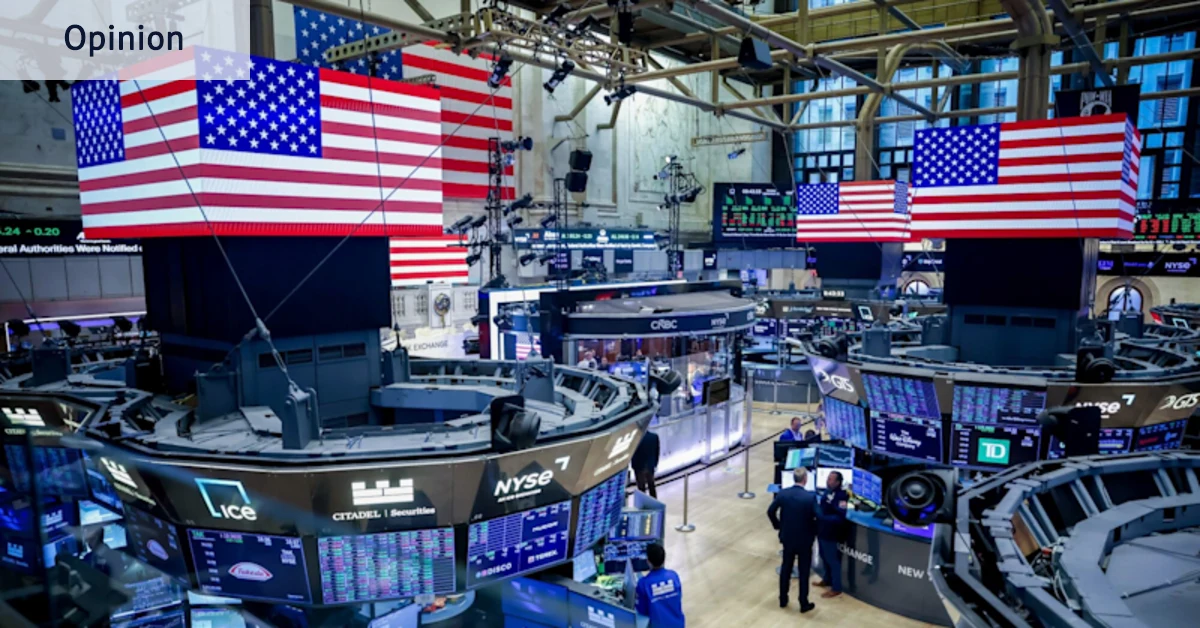
The US sharemarket has reached another record despite a sharp rise in bond yields, higher fuel prices and continuing uncertainty over the war in Iran, with a narrow group of artificial intelligence companies driving the gains.
The S&P 500 has risen by just over 14% this year, while the technology-heavy Nasdaq is up more than 18%. An index tracking the largest technology stocks, NYFANG+, has gained about 25%.
That performance has defied the usual relationship between shares and bonds. Rising yields increase borrowing costs and offer investors a more attractive source of relatively low-risk income, normally reducing the appeal of equities.
US Treasury yields have reached levels last seen in 2002, yet the headline sharemarket indices have continued to climb. The apparent resilience, however, masks a rally concentrated in a handful of companies.
Only four stocks – Nvidia, Apple, Micron and AMD – account for roughly half of the S&P 500’s rise this year. Since mid-August, the index would have fallen without the performance of Nvidia and Micron, both major chipmakers.
Last month, about three-quarters of the companies in the S&P 500 fell. The equal-weighted version of the index, which gives every company the same influence, has risen 10.8% this year but has dropped by almost 3% over the past month.
The contrast suggests that the US market is not experiencing a broad-based bull run. The gains are instead being led by companies at the centre of the boom in AI investment, leaving the wider market exposed to any deterioration in confidence over the technology.
Bond yields add to pressure on US companies
Several forces are pushing bond yields higher. US inflation is running at 3.4%, while a budget deficit of two trillion US dollars, equal to about 6% of economic output, is increasing concerns about the sustainability of the country’s finances.
Government debt has exceeded 40 trillion US dollars, adding to the supply of bonds that investors must absorb. Debt issued to fund AI investment is also creating alternative opportunities in the market and intensifying competition for buyers of Treasury securities.
Yields began rising from around mid-August, accelerating after Federal Reserve chairman Kevin Warsh delivered a hawkish speech at the annual Jackson Hole gathering of economists and academics. The central bank then made its first interest rate increase in more than three years last month.
Higher rates, inflation, rising petrol and diesel prices linked to the Middle East conflict, and increased costs resulting from Donald Trump’s trade tariffs are weighing on companies outside the AI boom.
JPMorgan estimates that about 140 billion US dollars of loans are trading at less than 80% of their face value. Spreads and defaults in leveraged loans and distressed debt markets have also been rising.
AI boom supports growth but leaves market exposed
The scale of AI investment is supporting the wider US economy, which is growing at 2.2%, and helping to underpin a stable jobs market. Yet consumer sentiment is at a record low, the savings rate is historically weak and household debt is at record levels.
Consumer spending has remained strong, suggesting that wealthier households benefiting directly or indirectly from rising technology shares are continuing to spend. The effect of those gains may be supporting the broader economy, although growth appears to be as narrowly based as the sharemarket’s advance.
Only two of the S&P 500’s 11 sectors – information technology and communications services – rose last month. Expectations for the next quarterly earnings season, which begins next week, point to average profits being 25% higher than in the same period last year.
Much of that anticipated increase is concentrated in major technology companies, including Alphabet, Amazon and Meta. Their earnings are also closely tied to investment in, and commercial arrangements with, other AI businesses.
Investors are continuing to price in exceptionally strong future growth for the technology giants, specialist AI companies and infrastructure providers. They appear willing to overlook the higher borrowing costs faced by firms funding unprecedented levels of investment, despite uncertainty over when those projects may generate returns.
The market is also reflecting an expectation that the Middle East conflict will end and that oil, petrol and diesel prices will ease. But without a clear resolution to the war, lower fuel costs or an end to the expansion of US tariffs, the conditions facing AI companies and the wider sharemarket are likely to become more difficult.
The bond market is signalling rising risk while the sharemarket remains buoyed by AI. That divergence could persist, although continued increases in interest rates would eventually test the strength of the technology sector and the investors supporting it.
