


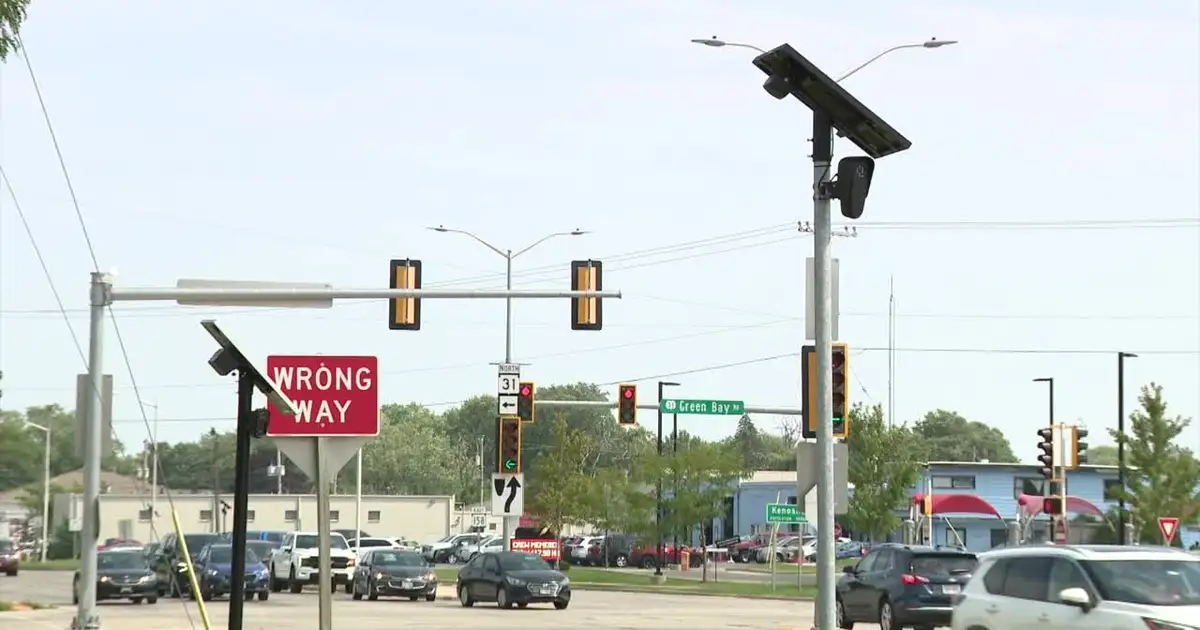
Flock cameras in Wisconsin are more widespread than many residents may realise, with a Pew Research analysis identifying 1,618 automated licence plate readers across 69 counties.
Milwaukee County had the highest estimated total, with 248 cameras, followed by Waukesha County with 124, Brown County with 94, Racine County with 79 and Dane County with 63.
The cameras photograph passing vehicles and use artificial intelligence to record details including the registration plate, make, model, colour and time of travel. They are installed in communities across the United States and can be operated by police departments, sheriffs’ offices, neighbourhood associations and private businesses.
Flock cameras in Wisconsin: how the figures were calculated
Flock Safety, the Atlanta-based company that sells the technology, has not published a public map of its camera network. Pew therefore used locations recorded by volunteers on OpenStreetMap to estimate the number operating across the country.
The figures are not an official count and are likely to be conservative. Flock told The Washington Post in August 2026 that it operated more than 120,000 cameras in 6,000 communities, while a separate map compiled by cybersecurity researcher Joshua Michael listed about 175,000 cameras, according to Pew.
The Pew analysis estimated that roughly 110,000 Flock cameras were scanning number plates nationwide.
The company says it supplies the technology, while each organisation buying the cameras decides who can access the footage and how long it is retained, subject to local laws.
Privacy concerns prompt backlash
The spread of the cameras has fuelled a debate over public safety, surveillance and the handling of drivers’ movements.
In Wisconsin, three police officers were investigated in August over allegations that they had misused the system to track personal contacts. Police later agreed to limit access to supervisors, stop sharing data with neighbouring jurisdictions and undergo independent audits twice a year.
Milwaukee County Executive David Crowley separately prohibited the sharing of county camera data with other states, as well as searches linked to immigration or reproductive health.
Several agencies in south-eastern Wisconsin also moved to end their Flock contracts in September 2026 after raising concerns about additional traffic data collection and out-of-state open-records requests. The Racine County Sheriff’s Office and five Fond du Lac County law enforcement agencies withdrew immediately, while officials in Kenosha and Sheboygan sought to cancel existing agreements.
In some locations, cameras were temporarily covered with bin bags while officials worked towards ending the contracts.
Flock announces changes to system
The American Civil Liberties Union has urged communities to abandon Flock contracts and support state bans, arguing that police can search and share travel histories with limited oversight. It has also said fewer than 1 per cent of scanned vehicles are connected to a crime.
A Data for Progress survey conducted ahead of the November midterm elections found that 52 per cent of likely voters viewed the cameras unfavourably. That figure rose to 60 per cent after respondents were given a brief explanation of how the system operates.
Flock and law enforcement agencies that support the technology say the cameras are an important crime-fighting tool. Company spokesperson MoMo Zhou said in September that the system had helped solve about one million crimes and reunite roughly 10,000 missing people with their families.
Flock announced platform changes in August 2026 following concerns about privacy and alleged misuse by officers. The measures are due to become mandatory for law enforcement agencies on 1 January 2027.
Under the changes, the standard data retention period will be reduced from 30 days to seven unless footage is connected to an active case. Police buyers will also have to use an audit tool designed to identify unusual searches and suspend users while an internal review takes place.
