


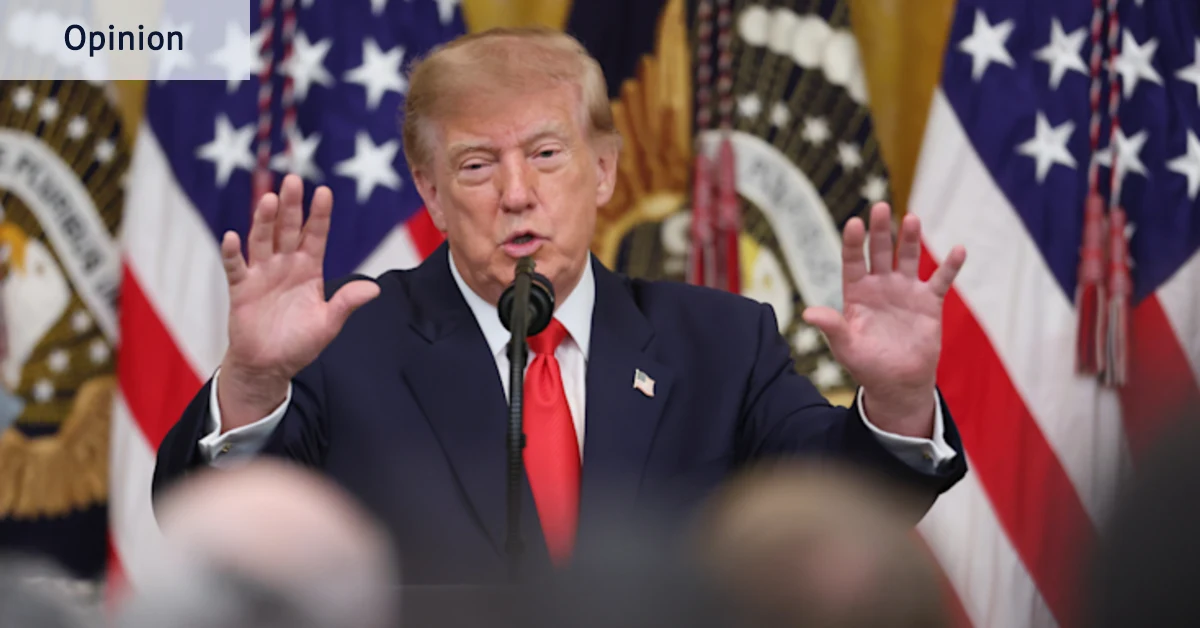
Donald Trump is on course to become a severely weakened lame-duck president after November’s US midterm elections, a prospect that could bring relief to financial markets and the wider global economy, according to the analysis.
Republicans are expected to suffer major losses on November 3, with prediction markets putting the chances of the party losing control of the House at more than 80 per cent. The probability of Democrats taking the Senate has been placed at 69 per cent.
Democrats would need to gain four Senate seats to secure control of the chamber. Trump’s approval rating has also fallen to 32 per cent this month, its lowest level in the figures cited.
A Republican defeat could leave the president facing impeachment efforts and legal challenges while political opponents take control of Congress. As the final stretch of his second term begins, his ability to advance legislation or pursue major initiatives would be sharply reduced.
A weaker Trump could ease economic uncertainty
Presidential paralysis would normally be regarded as a threat to the global economy, particularly during a crisis. But the argument presented is that, after two years of abrupt policy changes and international disruption, a less powerful White House could provide markets with greater stability.
Trump’s record is not uniformly negative. The United States has taken a leading position in artificial intelligence, Wall Street has reached record highs and tariffs have not caused the collapse in global trade that some had predicted. The duties have also generated additional revenue, although that could be affected if the courts require the money to be repaid.
Even so, the administration’s economic policy has been marked by rapid reversals. Tariffs have been imposed, withdrawn and altered, often leaving businesses uncertain about how to organise their supply chains.
Relations with European allies have also been unsettled, while the White House’s position on Ukraine and negotiations with Vladimir Putin has appeared unclear. The administration has further faced criticism over deals involving major backers and the prospect of government stakes in companies such as Intel.
Wall Street has adopted the acronym “Taco” — short for “Trump always chickens out” — to describe the cycle of threats followed by retreat. The analysis argues that avoiding such threats altogether would be preferable to repeatedly reversing them.
If Congress falls under Democratic control, tariffs could gradually weaken as their legal basis is challenged in the courts and the president’s ability to restore them diminishes. That could allow businesses to resume longer-term planning and reduce the prospect of continuing trade wars, including with Canada, one of the US’s most important trading partners.
A slowdown in the administration’s immigration clampdown could also allow the American labour market to return closer to normal, the analysis suggests. The wider US economy, meanwhile, would continue operating even if the White House became politically paralysed.
Federal Reserve chairman Kevin Warsh has been willing to raise interest rates despite opposition from the president who appointed him, while Treasury secretary Scott Bessent has worked to keep bond yields under control. Their presence could help maintain the functioning of the financial system during a period of political uncertainty.
The result would be an effectively leaderless United States for the next two years. Yet after the disruption of Trump’s second term, that loss of political momentum could give the global economy room to recover before a new president emerges.
